
Beautiful Plants For Your Interior
Beautiful Plants For Your Interior
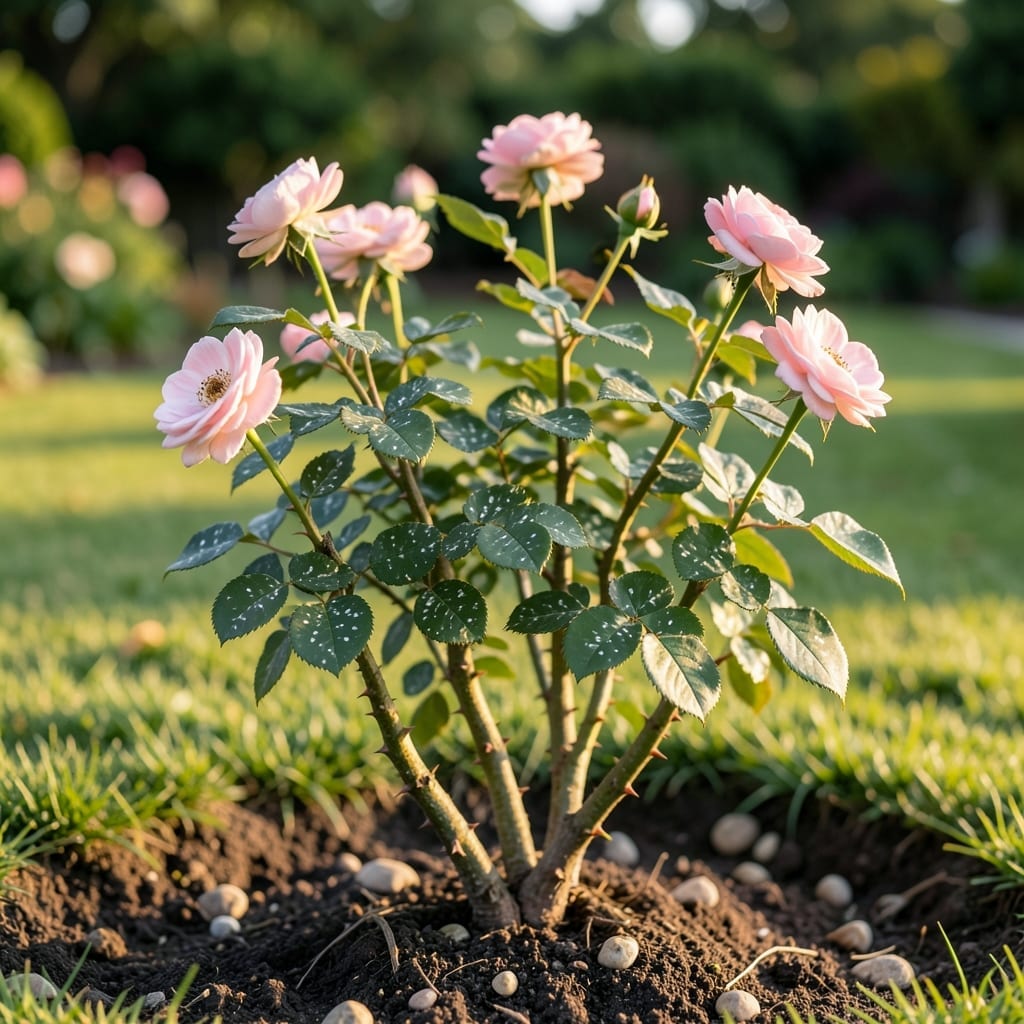
White spots on your roses aren’t just ugly—they’re a distress signal. I’ve battled these fungal invaders for seasons, and the key is catching them early before they spread to every leaf and bloom.
Powdery mildew shows up as a dusty coating, while downy mildew creates yellow patches with white undersides. Both thrive in humid conditions with poor air circulation, and they’ll weaken your plants if left unchecked.
The good news? You can treat this with simple sprays and better garden hygiene. I’ve saved countless rose bushes with 3 basic steps that work every time.
Prevention is even easier once you know what to watch for. Here’s how to keep your roses spot-free all season.
White spots on rose leaves often stem from environmental stress or pathogenic attacks. Below are the most common causes, explained scientifically for clarity and actionability.
The primary culprit is Podosphaera pannosa, a fungus that thrives in warm, dry conditions with high humidity. It forms white, powdery patches by drawing nutrients from leaf cells, weakening the plant. Spore dispersal is rapid in crowded gardens with poor air circulation.
Overwatering or sudden temperature fluctuations cause edema—a physiological disorder where roots absorb water faster than leaves can transpire. This creates blister-like spots that may turn white or tan as cells burst. Common in greenhouse-grown roses with inconsistent moisture.
Tiny Tetranychus urticae mites pierce leaf cells to feed, leaving stippled white or yellow spots. Their webbing (visible under leaves) exacerbates stress. These pests proliferate in hot, dry weather, often on dusty or drought-stressed plants.
Foliage exposed to concentrated fertilizers, herbicides, or hard water (high pH) can develop necrotic white spots. For example, calcium buildup from tap water disrupts cellular function, while synthetic pesticides may cause phytotoxicity in sensitive rose varieties.
Tackling those pesky white spots on your roses starts with identifying the cause and applying the right fix. Here’s a practical guide to restoring your plants’ health:
Mix 1 teaspoon of baking soda, 1 quart of water, and a few drops of dish soap. Spray this solution on the affected leaves weekly until the spots disappear. Prevention tip: 💡 Improve air circulation by pruning dense foliage and watering at the base to keep leaves dry.
Apply a copper-based fungicide as soon as you notice yellowish-white spots on the undersides of leaves. Follow the product’s instructions for dilution and frequency. Prevention tip: ✨ Avoid overhead watering and space plants properly to reduce humidity.
For spider mites or aphids, mix 2 tablespoons of neem oil with 1 gallon of water and spray evenly on both sides of the leaves. Repeat every 5-7 days until pests are gone. Prevention tip: 🎯 Regularly inspect leaves for early signs of pests and encourage beneficial insects like ladybugs.
If white spots are crispy and appear after intense sunlight, move potted roses to a shadier spot or provide afternoon shade. Prevention tip: 🌡️ Gradually acclimate roses to direct sun, especially young or newly transplanted ones.
Act quickly at the first sign of trouble, and your roses will bounce back with vibrant, spot-free foliage!
Powdery mildew looks like white dust on the surface, while downy mildew appears as yellow patches with white undersides. Spider mites leave tiny stippled dots, often with webbing.
Yes, fungal spores can travel by wind or water to nearby roses and other plants. Isolate affected plants and treat immediately to prevent spreading.
A mix of 1 teaspoon baking soda and 1 quart water works well for powdery mildew. For pests, neem oil is a natural solution.
Check leaves weekly during growing season, especially after rain. Early detection makes treatment much easier.