
Beautiful Plants For Your Interior
Beautiful Plants For Your Interior
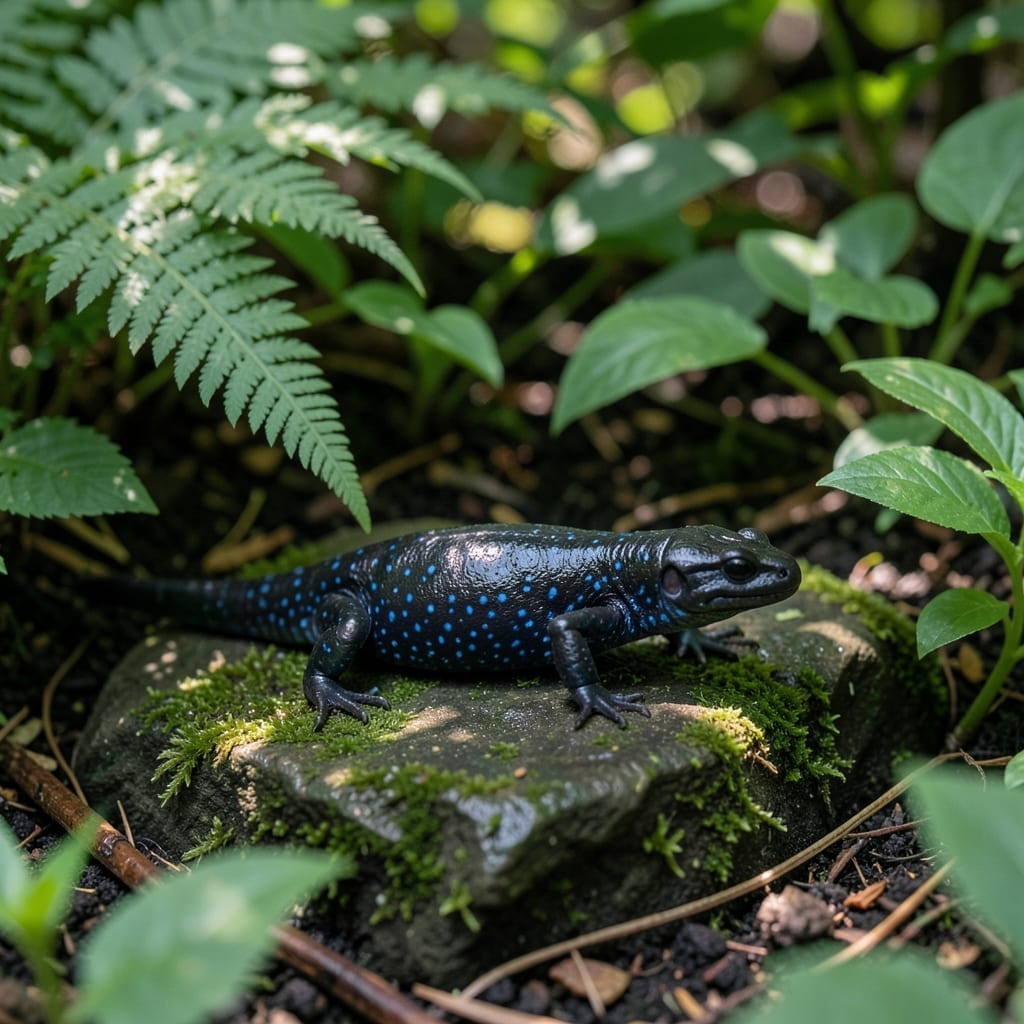
The black salamander with blue spots is typically the Eastern Newt, a harmless amphibian with bright orange spots in its juvenile stage. The blue-spotted variant is rare and often indicates a specific subspecies or genetic variation.
I’ve noticed these unique creatures thrive in moist woodlands near clean freshwater sources. Their distinct coloration often serves as a warning to predators, though the blue-spotted version is less common than the orange. This variation can signal a localized population or a rare genetic mutation that’s fascinating to herpetologists. 🌟
💡 In This Article
The blue-spotted variant typically measures 3-5 inches in length, with smooth, moist skin that glistens under moisture. Unlike the Eastern Newt’s bright orange juvenile spots, these blue markings appear as irregular, cobalt flecks concentrated along the back and tail. The contrast against their dark skin serves as a visual warning to predators. ✨
These salamanders thrive in damp environments, often found near vernal pools, moist forests, or under rotting logs. Their skin texture is slightly granular, which helps retain moisture in their preferred 70-80% humidity habitats. The blue spots are more pronounced in adults, with some individuals displaying a metallic sheen under direct light.
Behaviorally, they’re most active during warm, rainy nights when temperatures hover around 50-60°F. Their movements are deliberate and slow, using a unique lateral undulation to navigate their environment. This makes them easier to spot compared to faster amphibians like frogs. 🌟
One fascinating detail is their ability to regenerate lost limbs or tails, a trait shared with other salamander species. The blue pigmentation is due to iridophores—specialized cells that reflect light, creating that distinctive shimmer. This adaptation may play a role in communication or camouflage in their dimly lit habitats.
For identification, look for a slender body, rounded snout, and the absence of costal grooves (vertical lines) along the sides. The blue spots are usually 0.2-0.5 inches in diameter, randomly scattered rather than forming patterns. This randomness helps distinguish them from other spotted amphibians. ⚡
No, they’re completely harmless. The blue-spotted variant, like most salamanders, poses no threat to humans. They don’t bite and their skin secretions are mild, though it’s still best to avoid handling them to prevent stress.
They thrive in temperatures between 50-60°F with 70-80% humidity. These conditions mimic their natural forest floor environment. A shallow water dish helps maintain the necessary moisture levels.
Look for their 0.2-0.5 inch irregular blue spots and lack of costal grooves. Their slender bodies and rounded snouts also help distinguish them from other spotted amphibians.
They naturally eat small insects, worms, and other invertebrates. Avoid feeding them directly. Instead, create an ecosystem with leaf litter and decomposing wood to attract their natural prey.