
Beautiful Plants For Your Interior
Beautiful Plants For Your Interior
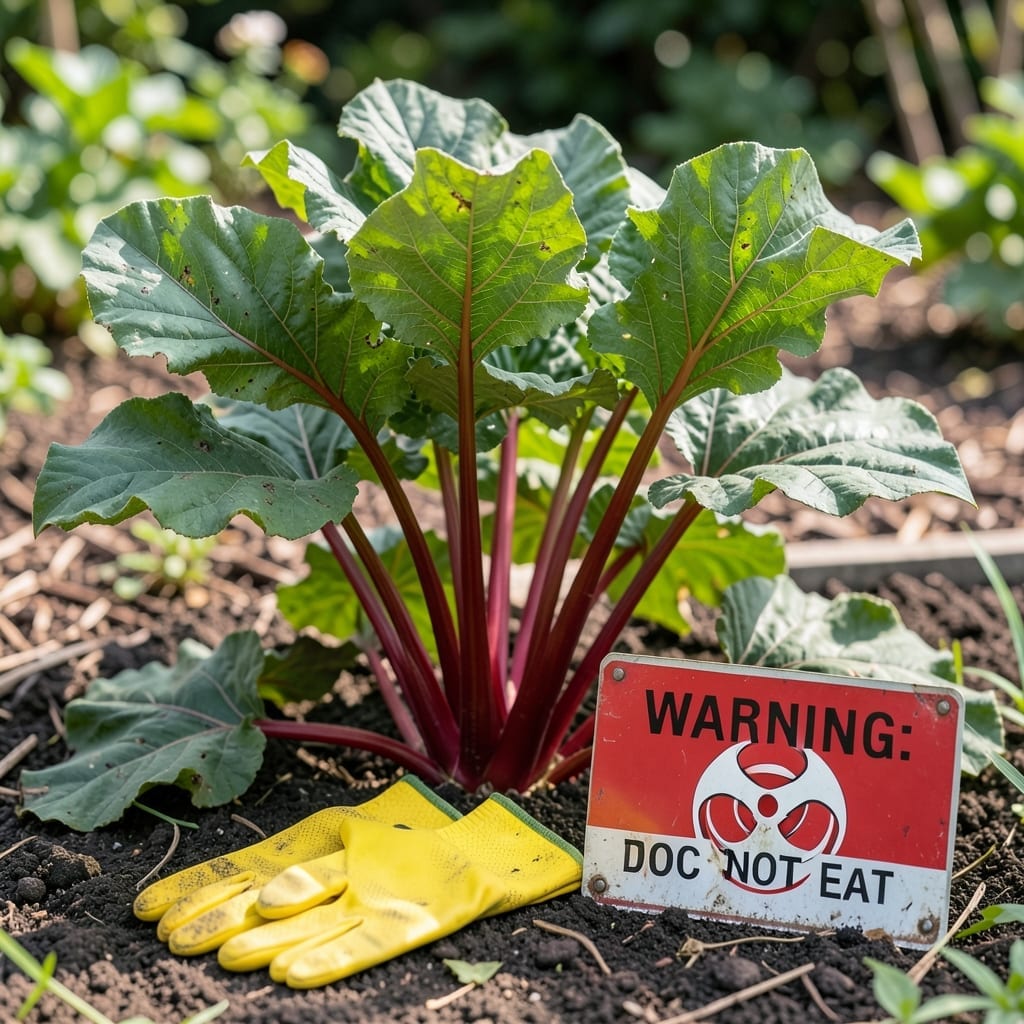
Yes, rhubarb leaves contain high levels of oxalic acid and anthraquinone glycosides, which are toxic to humans and can cause severe poisoning if ingested.
I always emphasize caution with rhubarb because the leaves pack a dangerous mix of oxalates and other toxins that can trigger kidney damage or worse. These compounds disrupt cellular function, particularly affecting the kidneys and digestive system. Even small amounts can lead to nausea or vomiting, so proper disposal is critical. ✨
💡 In This Article
The danger lies in two primary compounds: oxalic acid and anthraquinone glycosides. Oxalic acid binds with calcium in the body, forming insoluble crystals that damage kidneys and urinary tract. A single raw leaf can contain 0.5-1% oxalic acid by weight—that’s 500-1000mg in just 100g of leaves. 🔥
Anthraquinone glycosides act as powerful laxatives, causing severe diarrhea and dehydration. These compounds disrupt cellular function by interfering with sodium-potassium pumps in intestinal walls. The combination creates a double threat: kidney damage from oxalates plus electrolyte imbalance from anthraquinones. ✨
Cooking doesn’t eliminate these toxins. In fact, wilting or boiling leaves can concentrate oxalates as water evaporates. Studies show boiling reduces oxalic acid by only 10-20%, leaving dangerous levels. The toxins remain stable at normal cooking temperatures, unlike some plant poisons that break down with heat. ⚡
Your body’s reaction starts within 30 minutes to 2 hours of ingestion. Initial symptoms include burning in the mouth and throat, followed by nausea and vomiting. Severe cases progress to kidney failure and seizures. The lethal dose for humans is estimated at 5-15g of pure oxalic acid—easily reached with 1-2 pounds of fresh leaves. 💫
What makes this particularly insidious is that rhubarb stalks contain only trace amounts of these compounds. The plant concentrates its defenses in the leaves, where the oxalic acid content can be 100 times higher than in the edible stems. This natural adaptation protects the plant from herbivores but creates a deadly trap for unsuspecting foragers.
They contain high concentrations of oxalic acid and anthraquinone glycosides. These compounds can form harmful crystals in your kidneys and cause severe digestive distress. Even small amounts may trigger nausea or vomiting.
No, boiling or wilting only reduces toxins by 10-20%. The remaining levels are still dangerous. Heat doesn’t break down these compounds effectively.
Snip leaves off at the base and place them in a sealed trash bag. Never compost them, as toxins can persist. Double-bag and discard with regular garbage.
Contact your vet immediately. Symptoms like drooling, vomiting, or lethargy may appear within 1-2 hours. Keep plants out of reach to prevent accidental ingestion.