
Beautiful Plants For Your Interior
Beautiful Plants For Your Interior
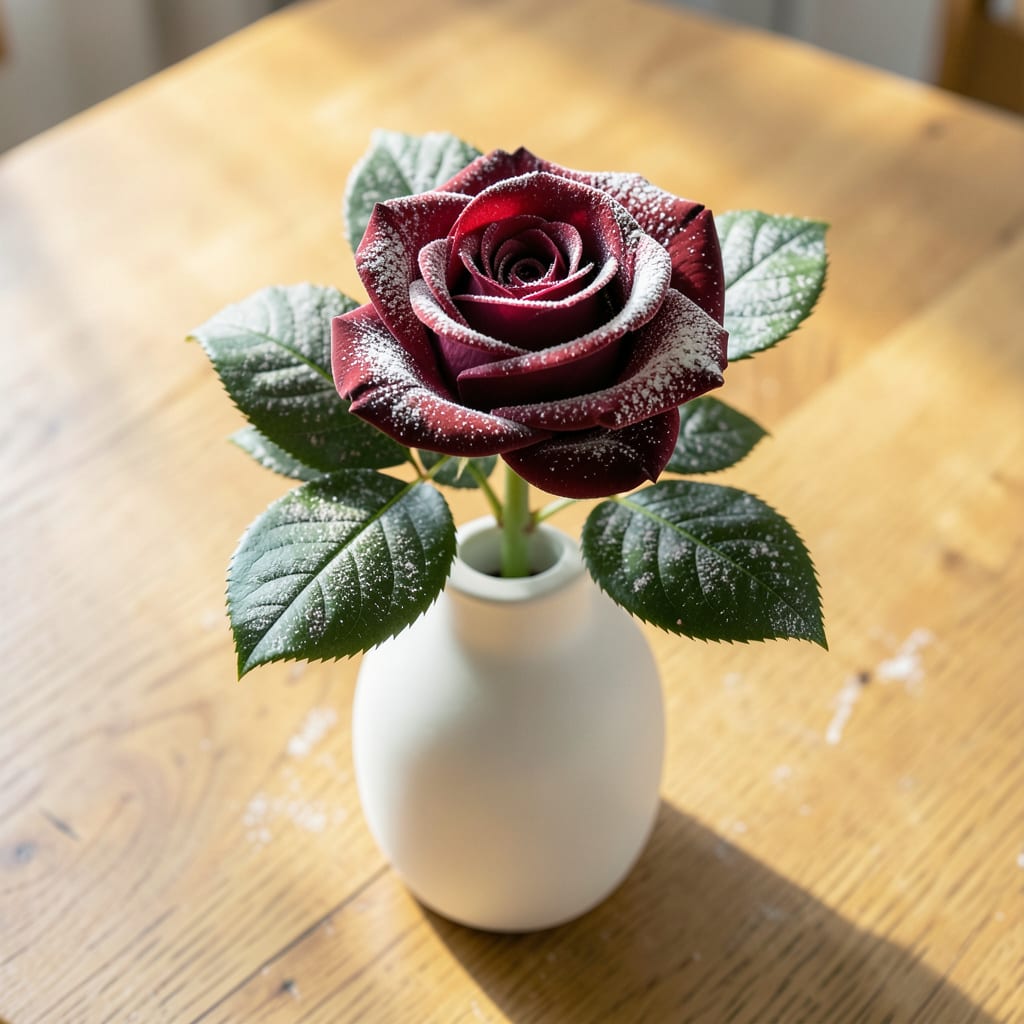
White dust on rose leaves isn’t just ugly—it’s a warning sign. I first noticed it on my knockout roses last summer, and ignoring it led to stunted blooms and weak plants.
This powdery mildew thrives in humid conditions with poor air circulation. Left untreated, it spreads fast, coating leaves and stems in a ghostly film that blocks sunlight and weakens the plant.
With a few simple steps—better spacing, organic sprays, and proper pruning—you can stop it in its tracks and keep your roses healthy and blooming all season.
Prevention is easier than cure, so start checking your plants now. Your roses will thank you with stronger growth and more vibrant flowers.
The white, powdery coating on your rose leaves is most commonly caused by powdery mildew, a fungal disease triggered by specific environmental and plant health conditions. Below are the primary causes, explained scientifically:
The culprit is often Podosphaera pannosa or Sphaerotheca pannosa, fungi that thrive in dry foliage with high humidity. These pathogens spread via airborne spores, germinating when leaf surfaces are dry but ambient moisture is high (60–80% relative humidity).
Powdery mildew flourishes in temperatures between 60–80°F (15–27°C) with low rainfall but high humidity. Poor air circulation (common in dense rose plantings) exacerbates the problem by trapping moisture near the leaves.
Wetting the foliage during watering creates ideal conditions for spore germination. Roses watered from above—especially in the evening—retain moisture longer, promoting fungal growth. Drip irrigation at the base avoids this issue.
Some roses, particularly hybrid teas and older cultivars, lack genetic resistance to powdery mildew. Their dense canopies and soft new growth are more vulnerable to infection.
Plants stressed by low potassium or phosphorus are more susceptible. Over-fertilization with nitrogen (promoting lush, weak growth) can also increase risk by creating tender leaves that fungi easily penetrate.
Tackling white dust on rose leaves starts with identifying the cause and taking targeted action. Below are practical solutions mapped to common triggers, along with prevention tips to keep your roses thriving.
Fix: Mix 1 tablespoon of baking soda, 1 teaspoon of dish soap, and 1 gallon of water. Spray the solution on affected leaves every 7–10 days until the dust disappears. For severe cases, use a fungicide labeled for powdery mildew,
Prevent: Improve air circulation by pruning crowded stems and avoiding overhead watering. Water early in the day so leaves dry quickly. Choose mildew-resistant rose varieties like ‘Knock Out’ or ‘Iceberg’.
Fix: Wipe leaves with a damp, soft cloth or rinse them with a gentle spray of water. Avoid harsh scrubbing to prevent damage.
Prevent: Reduce dust buildup by keeping the garden area clean and mulching around the base of the plant. If pollen is the culprit, there’s little you can do beyond regular cleaning.
Fix: For spider mites or mealybugs, spray leaves with insecticidal soap or neem oil, focusing on the undersides. Repeat every 3–5 days until pests are gone. For severe infestations, remove heavily affected leaves and dispose of them in sealed bags.
Prevent: Encourage beneficial insects like ladybugs and lacewings by planting companion flowers such as marigolds or alyssum. Regularly inspect leaves for early signs of pests.
Fix: If high humidity or poor air flow is the issue, move potted roses to a sunnier, breezier spot. For in-ground plants, thin out dense foliage to improve ventilation.
Prevent: Maintain consistent watering (not too much, not too little) and ensure roses get at least 6 hours of sunlight daily. Avoid crowding plants too closely together.
💡 Pro Tip: Always sterilize pruning tools with rubbing alcohol between cuts to prevent spreading fungal spores or pests to healthy parts of the plant.
A baking soda solution is safe and effective for mild cases. Mix 1 tablespoon baking soda, 1 teaspoon dish soap, and 1 gallon of water, then spray every 7–10 days.
Yes, powdery mildew spores travel easily by wind or water. Isolate affected roses and avoid working with them when wet to prevent spreading the fungus.
Water early in the morning so leaves dry quickly in the sun. Avoid evening watering, which leaves foliage damp overnight and encourages fungal growth.
