
Beautiful Plants For Your Interior
Beautiful Plants For Your Interior
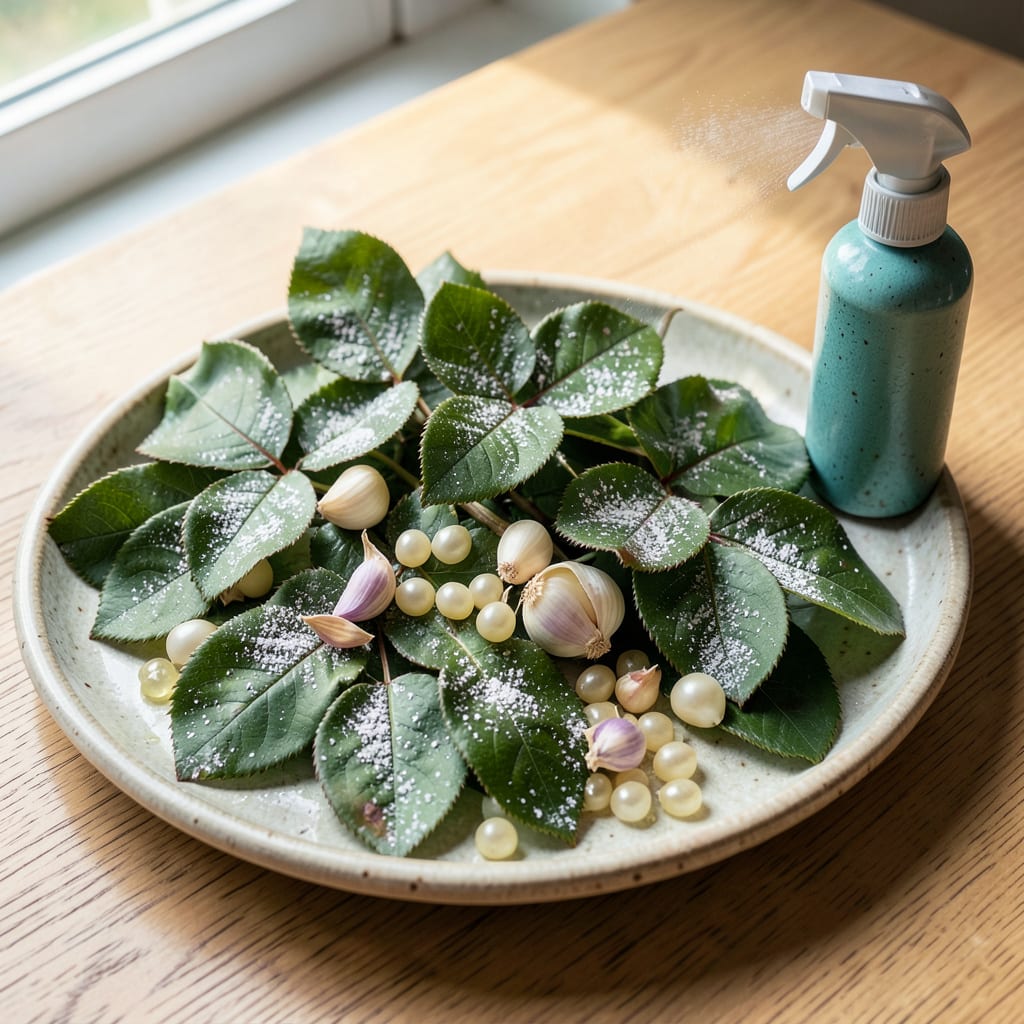
White spots on your roses aren’t just unsightly—they’re a warning sign. I’ve battled powdery mildew and pest damage on my own bushes, and the solution is simpler than you’d think.
Most cases come down to fungal infections or sap-sucking insects. The good news? A neem oil spray tackles both without harsh chemicals. One application can stop the spread within 48 hours.
You’ll see cleaner leaves in days, not weeks. The key is catching it early and treating consistently. Prevention is even easier: improve airflow and avoid wetting foliage.
Works for all rose varieties, from climbers to shrubs. Here’s exactly how to mix and apply the treatment.
White spots on rose leaves often signal underlying issues that disrupt the plant’s health and appearance. Understanding the root causes is the first step toward effective treatment. Below are the most common culprits behind this frustrating problem.
Fungi like Powdery Mildew (Podosphaera pannosa) and Downy Mildew (Peronospora sparsa) thrive in humid, poorly ventilated conditions. Powdery mildew appears as white, powdery patches on the upper leaf surface, while downy mildew causes pale, yellowish spots with a downy growth underneath. These pathogens spread via spores, which germinate when moisture levels are high and temperatures are moderate (60–80°F).
Insects such as spider mites, aphids, and whiteflies can cause white stippling or spots by feeding on leaf tissue. Spider mites, in particular, pierce cells to suck out sap, leaving behind tiny white or yellow dots. Their webbing may also create a dusty appearance. Aphids excrete honeydew, which can foster sooty mold—a secondary black fungus that contrasts with white damage spots.
Excessive sunlight or sunscald can bleach patches of leaves, creating white or tan spots. This occurs when roses—especially young or newly transplanted ones—are exposed to intense, direct sunlight without acclimation. Similarly, water stress (over- or under-watering) can lead to nutrient imbalances, manifesting as discolored spots. Poor drainage, in particular, encourages fungal growth.
Deficiencies in key micronutrients like magnesium or iron can cause interveinal chlorosis, where leaf tissue between veins turns pale or white. Magnesium deficiency often starts in older leaves, while iron deficiency typically affects newer growth. Over-fertilization, especially with high-nitrogen products, may also disrupt nutrient uptake, leading to similar symptoms.
Tackling white spots on rose leaves starts with identifying the cause and applying the right fix. Below are targeted solutions for common culprits, along with prevention tips to keep your roses thriving.
Fix: Mix 1 tablespoon baking soda + 1 teaspoon dish soap + 1 gallon water and spray affected leaves weekly. For severe cases, use neem oil (1 tbsp per gallon of water) every 5–7 days until spots vanish. Remove heavily infected leaves to stop the spread.
Prevent: 💡 Improve air circulation by pruning dense foliage. Water at the base (not overhead) and avoid evening watering to reduce moisture buildup.
Fix: Blast pests off with a strong water spray or apply insecticidal soap (follow label instructions). Neem oil also works—spray undersides of leaves where pests hide. Repeat every 3–4 days until gone.
Prevent: 🎯 Encourage natural predators like ladybugs. Inspect leaves weekly, especially in dry weather when pests thrive.
Fix: Trim damaged leaves to redirect energy to healthy growth. If caused by herbicides or fertilizers, flush the soil with water to dilute residues.
Prevent: ✨ Apply fertilizers in the evening and shield roses from harsh midday sun. Always test sprays on a small area first.
Fix: Wipe leaves with a damp cloth dipped in distilled water + mild soap. For stubborn deposits, use a vinegar-water solution (1:3 ratio) sparingly.
Prevent: 🌡️ Use filtered or rainwater for misting. Avoid overhead watering with hard tap water.
Consistency is key—monitor your roses regularly and act at the first sign of trouble for the best results!
Apply neem oil every 5-7 days for active infections, or weekly for prevention. Always spray in the evening to avoid leaf burn from sun exposure.
No, if used correctly. Mix 1 tablespoon baking soda with 1 gallon water and a drop of dish soap. Avoid overuse—once a week is safe for most varieties.
Recurring spots often mean the root cause persists. Check for poor airflow, overwatering, or hidden pests. Adjust care habits to prevent reinfection.
Yes, but dilute it. A 1:3 vinegar-water ratio removes mineral deposits safely. Test on a small area first to avoid damage.
