
Beautiful Plants For Your Interior
Beautiful Plants For Your Interior
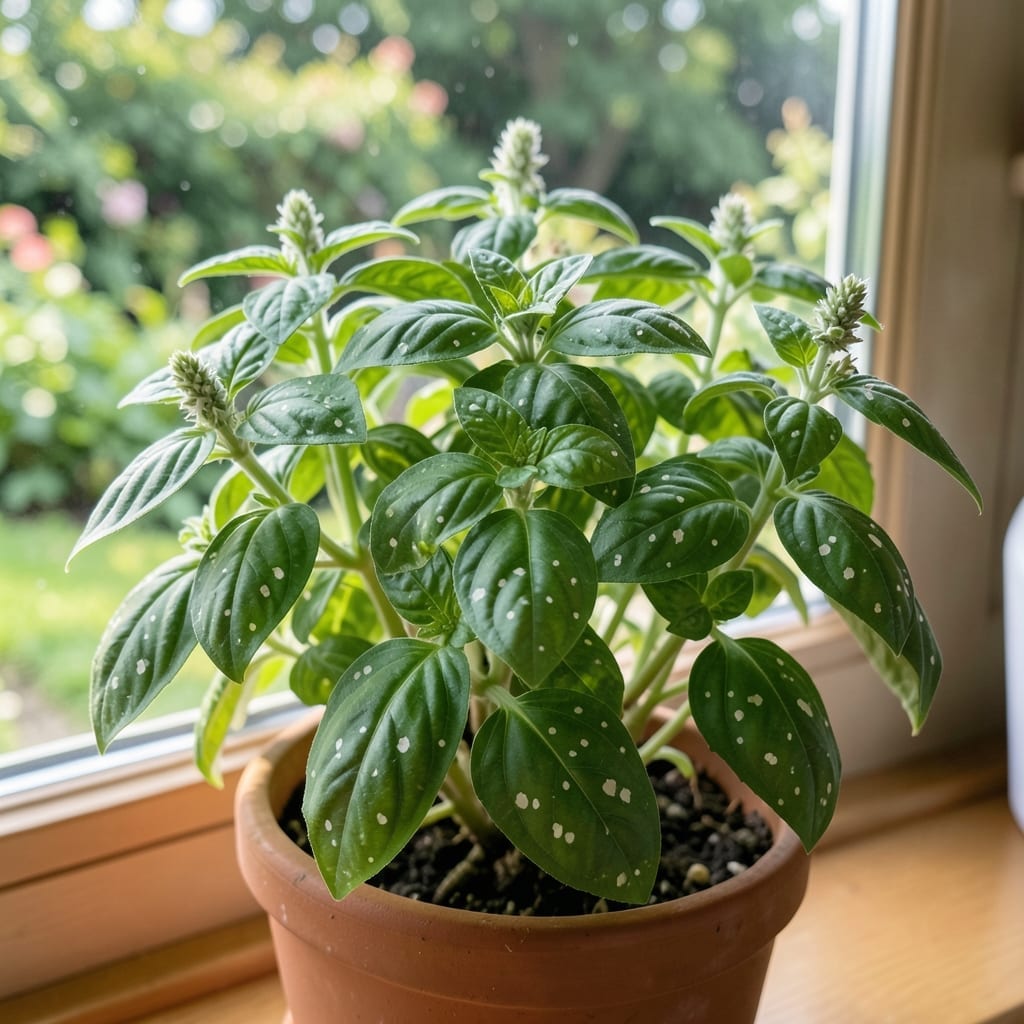
Spotted white patches on your basil leaves are a red flag. I’ve seen this ruin entire plants in 48 hours if ignored, but early action saves most cases.
The culprits usually fall into three camps: fungal infections like powdery mildew, pest infestations such as spider mites, or environmental stress from water or sunlight. Each leaves a distinct white pattern, so diagnosis is half the battle.
Once identified, treatment is straightforward—remove affected leaves, adjust care conditions, or apply organic sprays. Most plants recover fully within 1-2 weeks with the right approach.
Prevention is simpler than cure: good airflow, proper watering, and regular inspections keep basil healthy and spot-free all season.
White spots on basil leaves can stem from several issues, each with distinct triggers. Understanding the root cause helps you address the problem effectively.
Powdery mildew is a common fungal culprit, thriving in humid, poorly ventilated environments. The fungus Oidium neolycopersici forms white, powdery patches on leaf surfaces, often spreading rapidly in crowded plantings. Overhead watering and high humidity (above 70%) accelerate its growth.
Spider mites and whiteflies leave behind tiny white specks or stippling as they feed on plant sap. Spider mites, in particular, create fine webbing under leaves, while whiteflies excrete sticky honeydew that can attract sooty mold. Check the undersides of leaves for these pests, especially in dry, warm conditions.
This physiological disorder occurs when roots absorb water faster than the plant can transpire, causing cells to burst. Edema appears as small, white or tan blisters, often on lower leaves. It’s common in cool, humid greenhouses or after sudden temperature drops. Overwatering or poor drainage exacerbates the issue.
A lack of magnesium or calcium can cause interveinal chlorosis (white or yellow patches between veins). Basil grown in acidic or nutrient-poor soil is especially vulnerable. Test your soil—ideal pH for basil is 6.0–7.5.
Exposure to cold drafts or temperatures below 50°F (10°C) can shock basil, leading to white or necrotic spots. Similarly, sunscald from intense afternoon sun may bleach leaf tissue, creating pale, crispy patches.
Tackling white spots on basil leaves starts with identifying the root cause. Below are targeted solutions for each common issue, along with prevention tips to keep your basil thriving. 🌿
For all cases, sterilize tools (like pruners) with rubbing alcohol between uses to avoid spreading problems. Healthy basil starts with consistent care—monitor leaves regularly and act at the first sign of trouble!
Only if the spots are from mineral deposits or edema. Discard leaves with fungal infections or pest damage to avoid contamination. When in doubt, toss it out.
Isolate the affected plant immediately. Increase airflow, reduce humidity, and avoid overhead watering. Remove infected leaves and sterilize tools after use.
Mix 1 tsp baking soda with 1 quart water and a drop of dish soap. Spray affected leaves weekly until spots disappear. Neem oil also works well.
Not necessarily. Early treatment often saves the plant. Most basil recovers fully within 1-2 weeks with proper care. Act quickly for best results.