
Beautiful Plants For Your Interior
Beautiful Plants For Your Interior
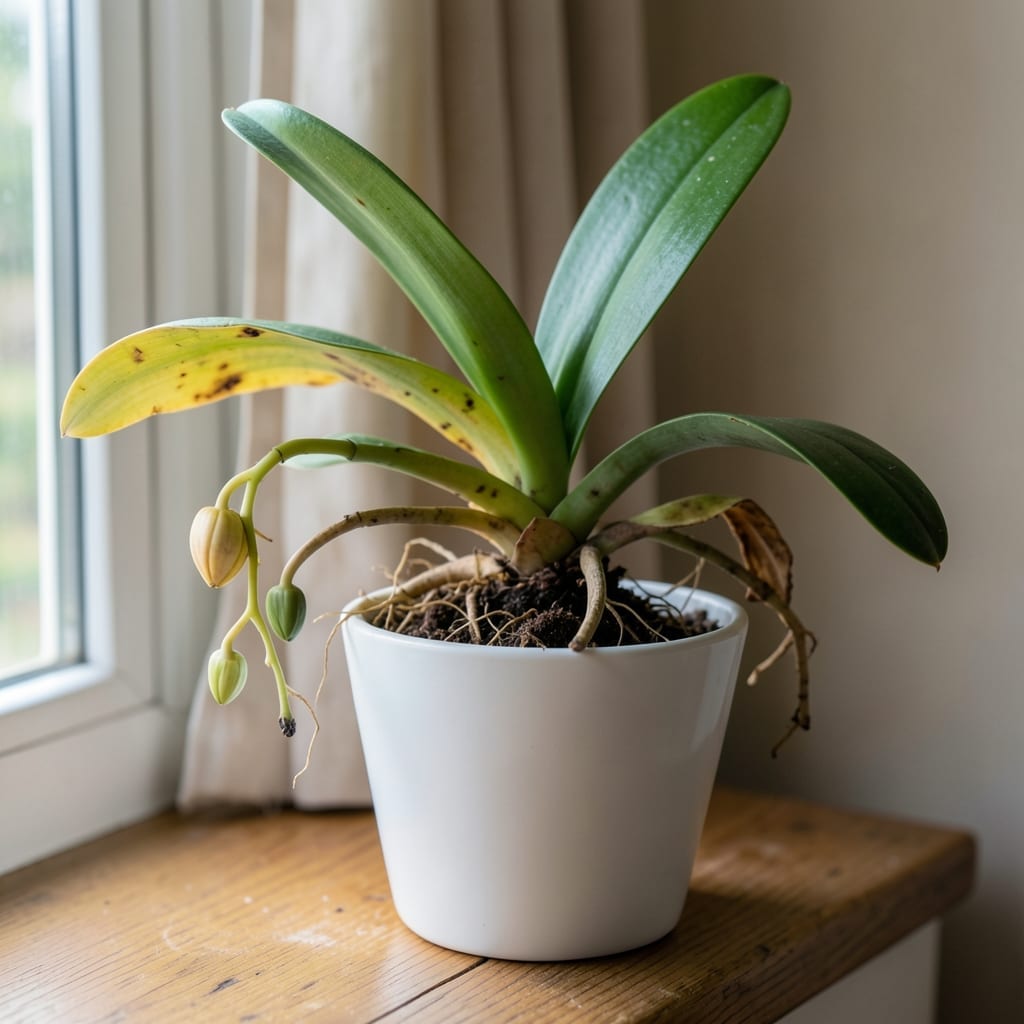
Yellow leaves and mushy roots mean trouble. I’ve saved more orchids than I’ve lost by catching overwatering early—before the damage becomes irreversible.
This isn’t about blame; it’s about recognizing the signs. Soft, black roots or leaves turning yellow from the base up are your first warnings. The solution starts with stopping the water and letting the plant breathe.
You’ll see recovery in 2-3 weeks if you act fast. The key is patience and resisting the urge to water again too soon. Orchids bounce back surprisingly well when given the right conditions.
Works for any orchid type and prevents future issues. Here’s how to spot the problem and fix it for good.
Overwatering orchids often stems from misunderstanding their natural habitat. These plants thrive in conditions that mimic their epiphytic origins—clinging to trees in tropical rainforests, where their roots are exposed to air and intermittent moisture. Here’s why overwatering happens and the science behind it:
Most orchids, like Phalaenopsis or Cattleya, require a fast-draining medium (e.g., bark chips or sphagnum moss). Standard potting soil retains too much moisture, suffocating the roots. When water fills the air pockets in the mix, anaerobic conditions develop, halting oxygen uptake and promoting root rot (Phytophthora or Pythium fungi).
Orchids need dry periods between waterings to trigger healthy root respiration. Many growers water on a fixed schedule (e.g., weekly) without checking the media’s moisture level. In cooler or humid environments, this can lead to edema—cells bursting from excess water pressure—visible as yellow, blistered leaves.
Containers without drainage holes or with saucers that trap water force roots to sit in stagnant moisture. This disrupts osmoregulation, where roots can’t balance water intake, leading to cellular damage and susceptibility to bacterial infections like Erwinia.
New growers often overwater to counteract low humidity or high temperatures. However, orchids adapt by developing velamen—a spongy root covering that absorbs moisture from the air. Overwatering strips this adaptive advantage, causing root asphyxiation and nutrient lockout.
Actionable fix: Use a moisture meter or the “finger test” (insert a finger 1 inch into the mix—water only if dry). Ensure pots have multiple drainage holes and avoid letting orchids sit in waterlogged trays.
When your orchid shows signs of overwatering, act fast to save it. Below are targeted fixes for each issue, plus prevention tips to keep your plant thriving.
If the leaves turn yellow and mushy, stop watering immediately. Remove the orchid from its pot and inspect the roots. Trim any black or mushy roots with sterilized scissors. Repot in fresh, dry orchid mix (bark-based is ideal) and wait at least a week before watering again. Prevention tip: 💡 Water only when the top inch of the mix feels dry to the touch.
For orchids with brown, slimy roots, a rescue soak in hydrogen peroxide solution (1 part 3% peroxide to 3 parts water) for 10 minutes can kill bacteria. Rinse, trim dead roots, and repot in clean media. Avoid watering for 5–7 days. Prevention tip: ✨ Use pots with drainage holes and ensure excess water can escape freely.
Overwatering can also cause leaves to wrinkle as roots suffocate. Remove the orchid from its pot and let the roots air-dry for a few hours. Place it back in its pot with fresh mix and hold off on watering. Prevention tip: 🎯 Water in the morning so excess moisture evaporates during the day.
White mold or a foul smell means excess moisture is trapped. Remove all affected media, clean the pot with a bleach solution (1 part bleach to 9 parts water), and repot with new bark mix. Prevention tip: 🌡️ Improve airflow around your orchid with a fan on low or by spacing plants apart.
With these steps, your orchid can bounce back—just be patient and adjust your care routine!
Water only when the top 1 inch of mix feels dry. This typically means every 7-10 days, but adjust based on your home’s humidity and temperature.
Yellow leaves often mean overwatering. Check the roots—if they’re mushy and brown, it’s likely root rot. Stop watering and repot in fresh, dry mix.
Yes, with quick action. Trim dead roots, repot, and withhold water for 5-7 days. Most orchids bounce back in 2-3 weeks if the damage isn’t severe.
Use pots with multiple drainage holes and avoid saucers that trap water. Clear plastic pots let you monitor root health and moisture levels.