
Beautiful Plants For Your Interior
Beautiful Plants For Your Interior
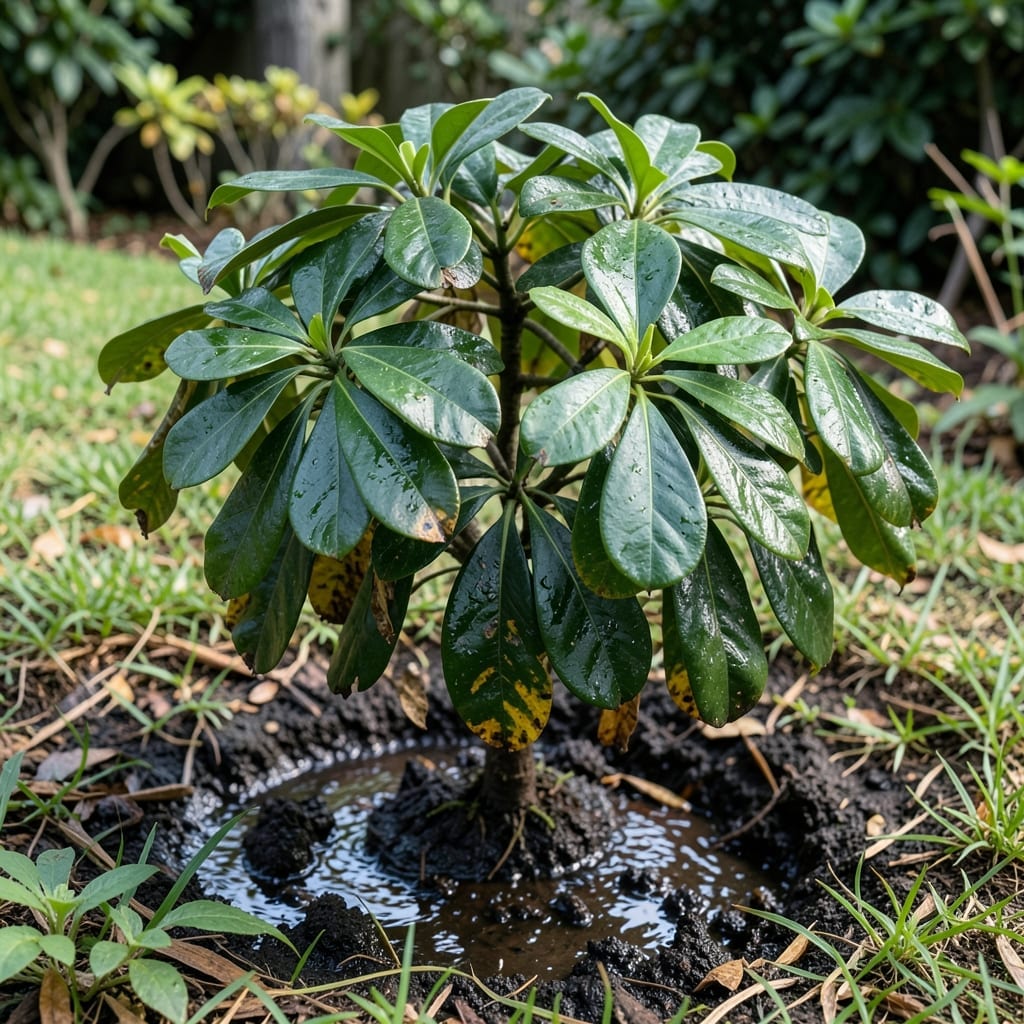
Yellow leaves on your umbrella plant usually mean one thing: too much love. I learned this the hard way after turning my schefflera into a swamp and watching the roots rot.
Overwatering suffocates the roots, cutting off oxygen and inviting rot. The fix isn’t complicated—just stop watering immediately and let the soil dry out completely between drinks.
You’ll know it’s working when new growth appears darker green and firmer. Trim any mushy roots and repot in fresh, well-draining mix to give your plant a fighting chance.
Prevention is simpler than recovery: water only when the top 2 inches of soil feel dry. Your plant will thank you with lush, perky foliage.
Overwatering your umbrella plant (Schefflera) isn’t just about giving it too much water—it’s about disrupting the delicate balance of its root environment. Here’s why it happens, broken down into the most common culprits:
When pots lack drainage holes or use compacted, non-porous soil, water pools at the bottom, suffocating the roots. Schefflera roots need oxygen to respire, and waterlogged soil cuts off their air supply. This leads to root asphyxiation and, eventually, rot. Always use pots with drainage and a well-aerating potting mix (e.g., perlite or orchid bark amendments).
Many plant owners water on a rigid schedule (e.g., “every Monday”) rather than checking soil moisture. Schefflera thrives when the top 1–2 inches of soil dry out between waterings. Frequent watering before this happens keeps the soil soggy, stressing the plant and inviting fungal pathogens like Phytophthora or Pythium.
A pot that’s too large holds excessive moisture, as the roots can’t absorb it all. The unused soil stays wet, fostering anaerobic conditions. Choose a pot only 1–2 inches wider than the root ball to ensure proper moisture balance.
In dim or cold conditions (<60°F/15°C), Schefflera grows slower, reducing its water uptake. If you don’t adjust your watering habits, the soil stays damp longer. Reduce watering frequency in winter or move the plant to brighter, warmer spot to match its needs.
Don’t panic—your umbrella plant can bounce back with the right care! Below are targeted fixes for common overwatering symptoms, plus ways to prevent future issues.
If leaves are turning yellow, your plant is likely drowning. Stop watering immediately and let the soil dry out completely before the next drink. Check moisture by sticking your finger 2 inches into the soil—if it’s damp, wait. For severe cases, repot in fresh, well-draining soil to reset the roots.
Prevention tip: 💡 Water only when the top 1-2 inches of soil are dry, and always use pots with drainage holes.
Wilting despite wet soil? The roots may be suffocating. Remove the plant from its pot and inspect the roots. Trim any mushy, dark roots with sterilized scissors, then repot in a clean container with cactus or succulent mix (add perlite for extra aeration).
Prevention tip: ✨ Elevate pots on saucers with pebbles to avoid waterlogging.
For black, foul-smelling roots, act fast: Prune all rotten roots (keep only firm, white ones), then soak the remaining roots in a 1:10 hydrogen peroxide-to-water solution for 10 minutes to disinfect. Repot in sterile soil and avoid watering for 5–7 days.
Prevention tip: 🎯 Use a moisture meter to monitor soil hydration accurately.
Overwatering + high humidity = edema. Move your plant to a spot with better airflow (a fan on low can help) and reduce watering frequency. If blisters have burst, remove damaged leaves to prevent fungal growth.
Prevention tip: 🌡️ Group plants loosely to allow air circulation between them.
Look for yellowing leaves, mushy stems, or a foul odor from the soil. The most reliable sign is soil that stays soggy days after watering.
Yes! Plants need 50% less water in cooler months. Always check the top 2 inches of soil first—if it’s dry, it’s time to water.
Often, yes. Trim all black, mushy roots and repot in fresh, dry soil. Avoid watering for 5-7 days to let roots recover.
A well-draining mix with perlite or orchid bark works best. This allows excess water to escape and air to reach the roots.