
Beautiful Plants For Your Interior
Beautiful Plants For Your Interior
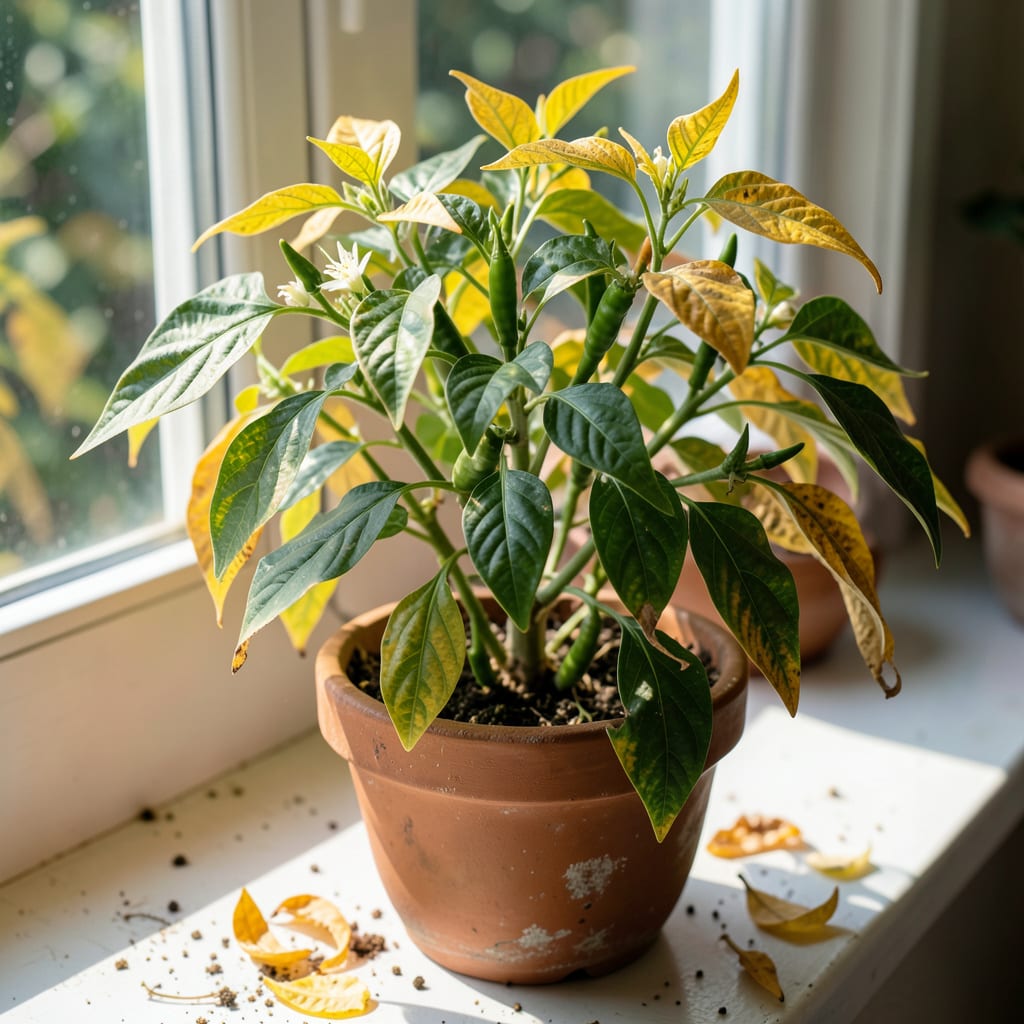
Yellow leaves dropping from your chilli plants are a cry for help. I’ve seen this happen too many times—usually from overwatering or a nutrient imbalance that’s easy to fix once you know what to look for.
Most gardeners assume it’s pests, but the real culprits are often simpler: poor drainage, nitrogen deficiency, or even inconsistent watering. The good news? Your plants can bounce back fast with the right adjustments.
I’ve saved countless chilli plants by checking soil moisture first, then moving to fertilizers and light conditions. Within 1-2 weeks, you’ll start seeing fresh green growth if you nail the diagnosis.
This works for pot-grown plants or garden beds. Let’s get your chillies thriving again.
Chilli plant leaves turning yellow and falling off is often a sign of underlying stress or disease. Below are the most common causes, explained with actionable insights.
Chilli plants thrive in warm, consistent conditions. Sudden temperature drops below 50°F (10°C) or heat spikes above 90°F (32°C) can disrupt chlorophyll production, leading to yellowing (chlorosis). Drafts, cold winds, or excessive humidity can also stress the plant, causing leaf drop. Fix: Move potted chillies indoors or to a sheltered spot and maintain stable temperatures.
Improper watering is a leading cause. Overwatering suffocates roots, preventing oxygen uptake and leading to root rot, which manifests as yellow, wilting leaves. Underwatering, on the other hand, causes dehydration, leading to crispy, yellow leaves that drop prematurely. Fix: Water only when the top 1-2 inches of soil are dry, and ensure pots have drainage holes.
Yellow leaves often signal a lack of essential nutrients. Nitrogen deficiency causes uniform yellowing (starting with older leaves), while magnesium deficiency leads to yellowing between leaf veins. Iron deficiency, common in alkaline soils, causes younger leaves to turn pale yellow. Fix: Use a balanced fertilizer (e.g., 10-10-10) or amend soil with compost for nitrogen, Epsom salts for magnesium, or chelated iron for iron deficiency.
Common pests like aphids, spider mites, and whiteflies sap nutrients from leaves, causing yellowing and premature drop. Check the undersides of leaves for tiny insects, webbing, or sticky residue (honeydew). Fix: Spray with neem oil or insecticidal soap, and isolate affected plants to prevent spread.
Diseases like leaf spot (e.g., Alternaria or Cercospora) or bacterial leaf blight can cause yellow patches, spots, or wilting. These often spread in wet, humid conditions. Fix: Remove infected leaves, improve air circulation, avoid overhead watering, and apply copper-based fungicides if needed.
If your chilli plant’s leaves are turning yellow and dropping, don’t worry—most causes are fixable with a few simple adjustments. Below are targeted solutions for the most common issues, along with prevention tips to keep your plant thriving.
Fix: Let the soil dry out slightly between waterings. Ensure your pot has drainage holes, and use a well-draining potting mix. If root rot is suspected, trim affected roots and repot in fresh soil.
Prevention: Water only when the top inch of soil feels dry. Use a pot with drainage and avoid saucers that trap excess water.
Fix: Move your chilli plant to a sunnier spot—at least 6–8 hours of direct sunlight daily. If indoors, place it near a south-facing window or use a grow light.
Prevention: Monitor light exposure and rotate the pot occasionally for even growth.
Fix: Use a balanced fertilizer (10-10-10 or 5-10-10) to replenish nutrients. For nitrogen deficiency (uniform yellowing), add compost or a nitrogen-rich feed. For magnesium (yellow between veins), use Epsom salt (1 tbsp per gallon of water).
Prevention: Feed your plant every 2–4 weeks during the growing season and use nutrient-rich soil.
Fix: Inspect leaves for aphids, spider mites, or whiteflies. Spray with neem oil or insecticidal soap, focusing on the undersides of leaves. Remove heavily infested leaves.
Prevention: Keep your plant clean, avoid overcrowding, and introduce beneficial insects like ladybugs.
Fix: Move the plant to a stable environment (70–85°F during the day, 60–70°F at night). Shield it from cold drafts or extreme heat.
Prevention: Harden off seedlings before transplanting outdoors and avoid sudden temperature changes.
💡 Pro Tip: Always check the simplest issues first—like watering habits or sunlight—before assuming a major problem!
Water when the top 1-2 inches of soil feel dry. Typically, this means every 2-3 days in hot weather or 5-7 days in cooler conditions. Always check soil moisture first.
No, once leaves turn yellow they won’t recover. Focus on fixing the underlying issue to save the rest of the plant. New green growth will appear in 1-2 weeks if conditions improve.
A balanced 10-10-10 or 5-10-10 fertilizer works well. For nitrogen deficiency, use compost or blood meal. For magnesium, try Epsom salt (1 tablespoon per gallon of water).
Yes, prune yellow leaves to redirect energy to healthy growth. Use clean scissors and remove at the stem base. This also helps prevent pest infestations.
