
Beautiful Plants For Your Interior
Beautiful Plants For Your Interior
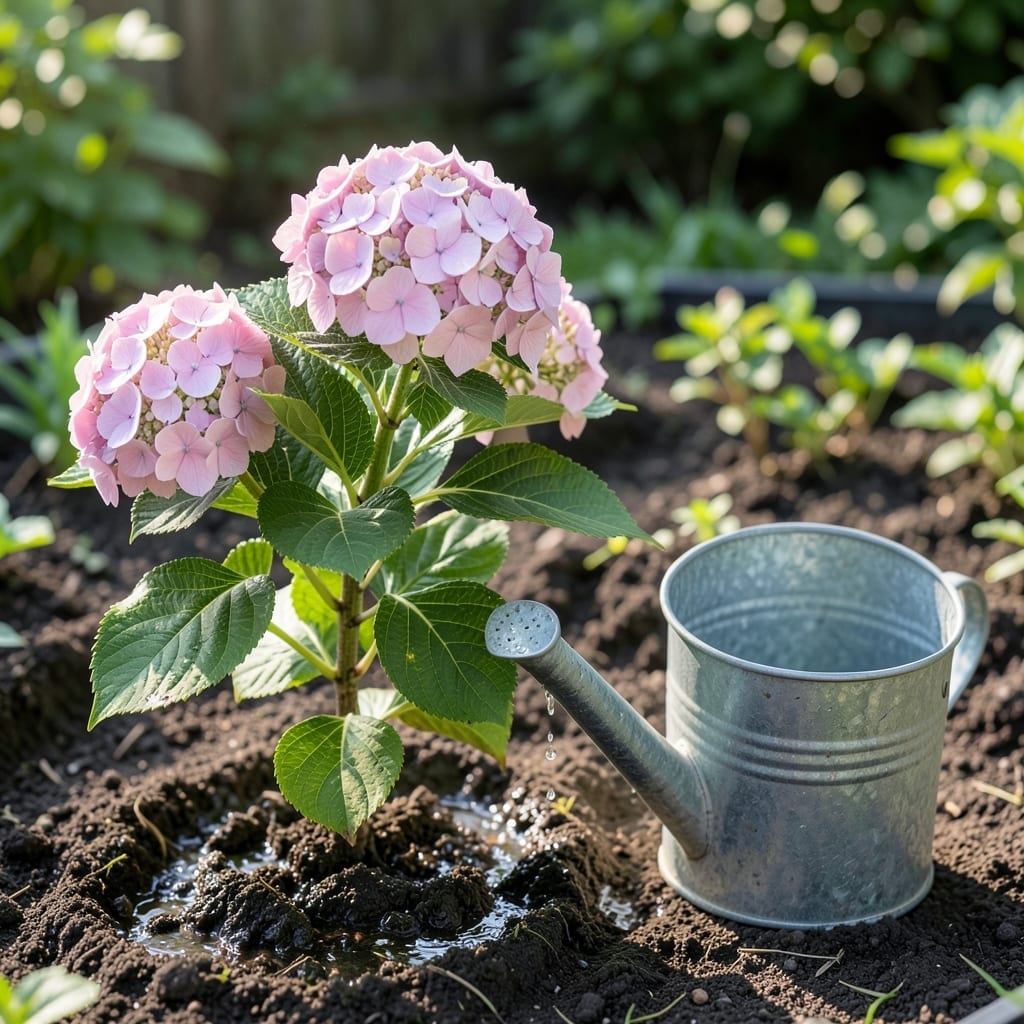
Newly planted Hydrangeas 🌸 need consistent moisture to establish strong roots, but overwatering can be just as harmful as underwatering.
Getting the balance right during those first few weeks is the key to helping your plants thrive. I’ll show you exactly how to nail this delicate balance.
Discover the perfect watering schedule and amount to give your Hydrangeas the best start in their new home.
Getting your newly planted hydrangeas off to a strong start means nailing the watering routine during those first critical weeks. These shrubs need consistent moisture to establish their root systems properly.
I always recommend watering deeply right after planting to settle the soil. Then, for the first 4-6 weeks, you’ll want to maintain a regular schedule to prevent stress.
| Stage | Frequency | Amount |
|---|---|---|
| Day 1 | Immediately | 1-2 gallons |
| Week 1-2 | Every 2-3 days | 1 gallon per plant |
| Week 3-6 | Every 3-4 days | 1-1.5 gallons |
| After 6 Weeks | Weekly | Deep soak |
The first watering should be thorough—soak the root ball completely to eliminate air pockets. This helps the roots make contact with the surrounding soil right away.
For the first two weeks, I check the soil every 2-3 days. If the top 1-2 inches feel dry, it’s time to water again. Remember, morning watering is ideal to reduce evaporation.
After the first month, you can start to space out watering slightly, but keep an eye on weather conditions. Hot, dry spells may require extra attention to prevent stress.
Always water at the base of the plant, not the leaves. This keeps the foliage dry and reduces the risk of fungal diseases. A drip irrigation system works great for this.
If you’re unsure whether to water, use the finger test. Stick your finger 2 inches into the soil. If it feels dry, water deeply. If it’s moist, wait another day.
In clay soils, water less frequently but more deeply. In sandy soils, you may need to water more often since they drain quickly. Adjust based on your specific soil type and local climate.
Finally, mulching around the base helps retain moisture. Use 2-3 inches of organic mulch like wood chips or straw to keep the soil cool and hydrated. 🌿
Knowing the warning signs of improper watering can save your new hydrangeas from stress or worse. I’ve seen many gardeners struggle with yellowing leaves or drooping blooms, not realizing it’s a hydration issue.
Overwatering often shows up as soggy soil, mushy stems, or blackened leaves. Meanwhile, underwatered plants may have crispy edges or wilted foliage that doesn’t recover after watering.
If you spot overwatering signs, stop watering immediately and check the root health. Let the soil dry out slightly before resuming a reduced schedule. For underwatered plants, give them a deep soak and increase frequency.
I recommend using a moisture meter for accuracy, especially if you’re new to growing hydrangeas. These tools take the guesswork out of knowing when to water. 🌿
Another tip: Morning wilting can be normal in heat, but if leaves stay droopy into the evening, it’s likely a watering issue. Adjust your routine based on the plant’s response.
Remember, consistency is key during the first 6 weeks. Once your hydrangeas establish, they’ll be more forgiving, but early on, they need your attention to detail.