
Beautiful Plants For Your Interior
Beautiful Plants For Your Interior
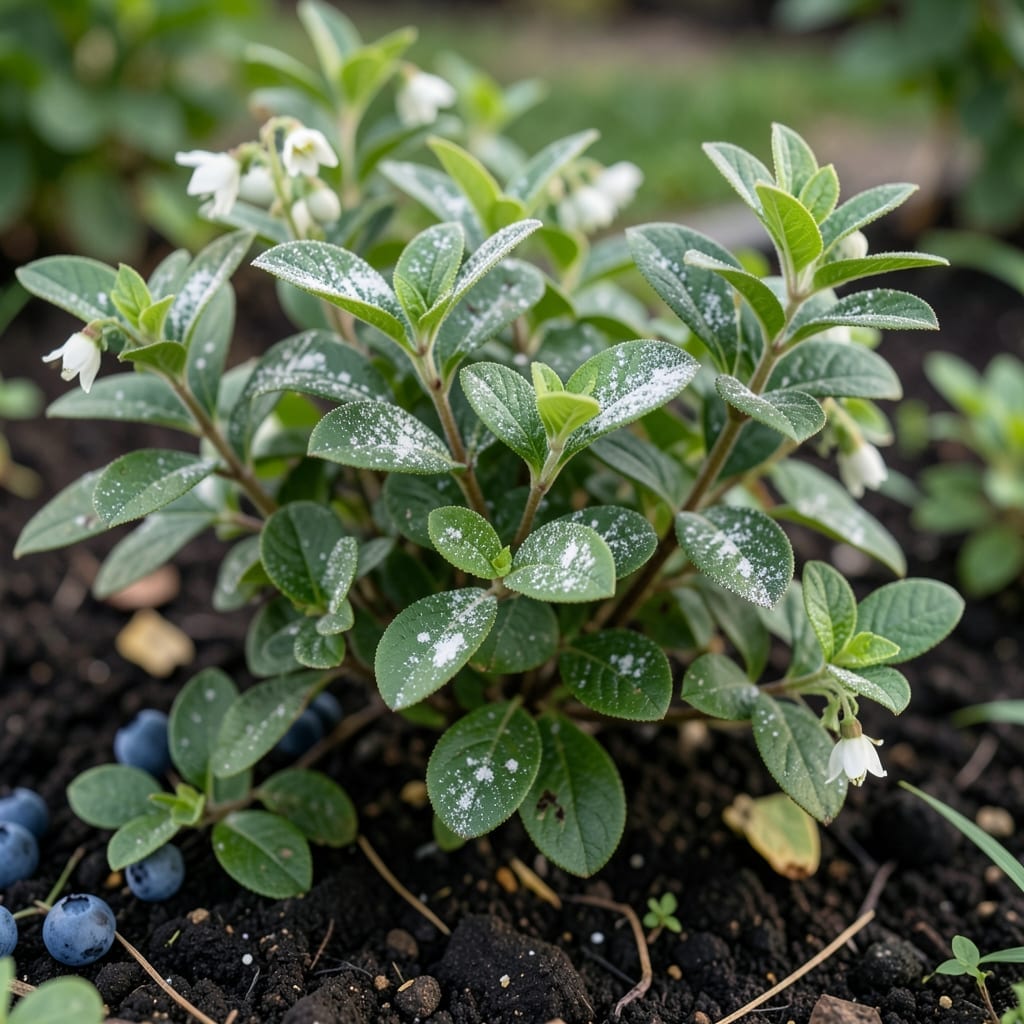
This fungal disease spreads rapidly in warm, humid conditions, covering blueberry leaves with white powdery spots. It reduces yields by weakening plants and lowering fruit quality if left untreated.
I’ve seen firsthand how this issue escalates in commercial farms when humidity spikes above 70%. The spores thrive in crowded plantings with poor air circulation, often overwintering in plant debris. 💫 Early detection is crucial—growers should look for subtle leaf discoloration before the characteristic white patches appear.
Without intervention, infected bushes can lose up to 40% of their harvest in severe cases. Regular scouting and removing affected foliage helps break the disease cycle naturally.
💡 In This Article
The infection begins when airborne spores land on blueberry leaves. These spores germinate within 6-12 hours under ideal conditions—specifically 70-80°F with 70-90% humidity. The fungus then produces specialized structures called appressoria that penetrate leaf cells directly, without needing wounds. 🔥
Once inside, the pathogen forms haustoria—root-like structures that siphon nutrients from plant cells. This is why infected leaves often show chlorotic (yellow) spots before the characteristic white powder appears. The fungus reproduces rapidly, releasing new spores every 3-7 days, which can travel up to 500 feet on air currents.
Environmental triggers accelerate this cycle. Morning dew provides the moisture needed for spore germination, while dense plant canopies create the shaded, humid microclimate powdery mildew loves. Commercial blueberry fields in the Pacific Northwest often see outbreaks during spring when these conditions align perfectly. ✨
What makes this pathogen particularly insidious is its ability to infect new growth. The fungus can overwinter in bud scales, then emerge with spring growth to infect young leaves and shoots. This is why blueberry bushes often show symptoms first on the most tender, new foliage at the tops of plants.
Research shows that certain blueberry varieties like ‘Duke’ and ‘Bluecrop’ are more susceptible than others like ‘Aurora’ or ‘Draper’. The difference lies in leaf surface chemistry and wax composition, which affects how easily spores can adhere and germinate. 💫
Warm temperatures between 70-80°F and high humidity of 70-90% create the perfect breeding ground. Morning dew and crowded plantings with poor air circulation accelerate growth.
Spores can germinate within 6-12 hours and produce new spores every 3-7 days. These can travel up to 500 feet on air currents, rapidly spreading through a field.
Varieties like ‘Aurora’ and ‘Draper’ show stronger natural resistance than ‘Duke’ or ‘Bluecrop’. Their leaf chemistry makes it harder for spores to adhere and germinate.
Yes! Space plants 4-6 feet apart, prune annually for airflow, and use 3-inch mulch layers. These cultural practices create less favorable conditions for the fungus.
Ignoring early signs like yellow leaf spots before white powder appears. By then, the fungus has already established itself, making control much harder.