
Beautiful Plants For Your Interior
Beautiful Plants For Your Interior
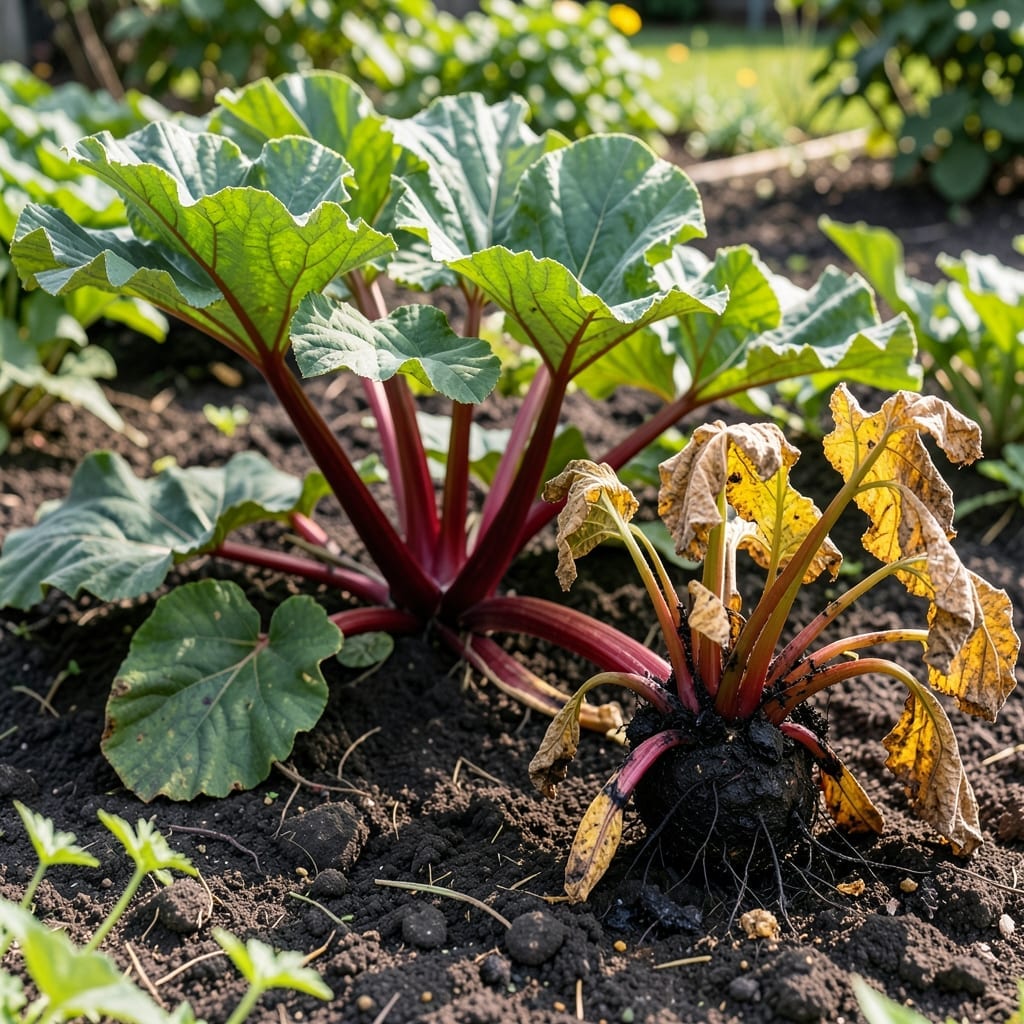
Rhubarb crown rot is a fungal disease causing wilting, yellowing leaves, and stunted growth. It thrives in wet soil and can kill plants if untreated.
I’ve seen this disease devastate entire rhubarb patches when left unchecked. The fungus Phytophthora often spreads in poorly drained areas, attacking the crown and roots first. Early signs include soft, discolored stems at the base, which many gardeners mistake for normal aging. 💫
What makes it particularly sneaky is how it can lie dormant in soil for years, activating when conditions turn wet. This is why I always recommend planting rhubarb in raised beds with sandy loam to prevent waterlogging from the start.
💡 In This Article
Early detection of this fungal infection can save your entire rhubarb patch. The disease typically starts at the crown, causing soft, mushy tissue that appears water-soaked and discolored. Unlike healthy rhubarb stems which are crisp and vibrant, infected ones turn dull yellow or brown at the base, often with a foul odor. 🔥
As the fungus spreads upward, you’ll notice wilted leaves that turn yellow and die back from the edges inward. These symptoms often appear on one side of the plant first, creating an asymmetrical pattern of decline. The progression can be rapid—within 2-3 weeks of initial infection, entire stalks may collapse. ✨
What many gardeners miss is the root system’s condition. Healthy rhubarb roots are firm and white, while crown rot causes them to turn dark brown or black with a slimy texture. This underground damage often precedes visible above-ground symptoms by several days.
Timing matters because the fungus spreads most aggressively during warm, wet periods when soil temperatures reach 60-75°F. The pathogen can move through water films in soil, infecting neighboring plants through their root systems. This is why isolated cases often become patch-wide problems. 💫
Pay special attention to older plants, as they’re more susceptible due to natural crown aging. I’ve found that divisions from infected plants often carry the pathogen, so always inspect crowns carefully when propagating. The earliest sign is often reduced vigor in spring growth.
It can move through an entire rhubarb patch within 2-3 weeks under warm, wet conditions. The fungus spreads through water in soil, so poor drainage accelerates its progress significantly.
Unfortunately, infected plants rarely recover. Remove them immediately with their roots to protect healthy plants. Never compost infected material, as the pathogen survives in soil for years.
Plant in raised beds with 12 inches of well-draining soil. Space plants 3-4 feet apart and use drip irrigation. Rotate planting locations every 5-7 years.
‘Victoria’ and ‘Canada Red’ show better resistance. However, no variety is completely immune, so cultural practices remain your best defense against this destructive disease.