
Beautiful Plants For Your Interior
Beautiful Plants For Your Interior
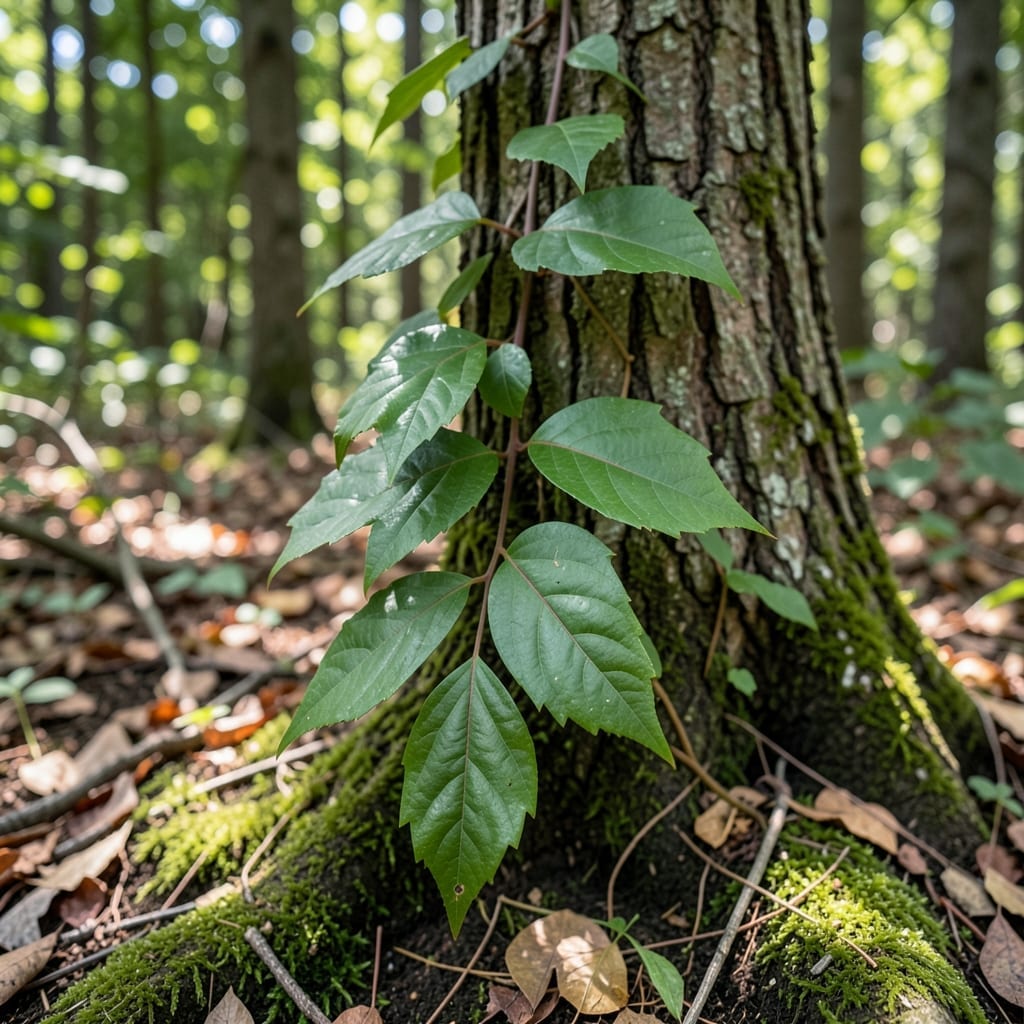
Poison ivy always has clusters of three pointed leaflets growing from a single stem, commonly remembered by the phrase ‘leaves of three, let it be.’
This distinctive pattern isn’t just a coincidence—it’s a key survival adaptation for the plant. 🔥 I’ve learned that the three-leaflet arrangement maximizes sunlight absorption while conserving water, making poison ivy incredibly resilient. What’s more, the middle leaflet often has a longer stem, creating an asymmetrical look that helps differentiate it from harmless plants like boxelder or Virginia creeper.
💡 In This Article
The three-leaflet pattern, called a trifoliate arrangement, is a botanical adaptation for efficiency. This structure allows the plant to maximize sunlight exposure while minimizing water loss through transpiration. Each leaflet can adjust its angle independently to capture light.
This growth habit also conserves energy for the plant. Instead of producing many single leaves, poison ivy grows in groups of three from a single stem node. This means the plant can grow taller and spread wider with less metabolic effort, making it highly competitive in its environment.
The middle leaflet typically has a longer stem than the two side leaflets, creating an asymmetrical appearance. This unique feature helps distinguish it from harmless plants like boxelder or Virginia creeper. The leaf edges may appear smooth or slightly toothed, but always in that telltale trio.
From a survival perspective, this pattern also aids in the plant’s defense mechanism. The more surface area exposed to potential threats, the more likely predators (or unsuspecting humans) will come into contact with urushiol—the oil that causes the infamous rash. 🔥
In terms of growth habits, poison ivy can appear as a climbing vine or a low shrub. In both cases, the three-leaflet pattern remains consistent, whether the plant is scaling a tree trunk or spreading across the forest floor. This reliability makes it one of the most dependable identification features.
The three-leaflet pattern is a botanical adaptation called a trifoliate arrangement. This allows the plant to maximize sunlight exposure while conserving energy, making it highly resilient in various environments.
No, poison ivy consistently grows in clusters of three leaflets per stem. If you see a plant with more or fewer than three, it’s likely a look-alike like Virginia creeper, which has five leaflets.
Focus on the arrangement: poison ivy’s middle leaflet often has a longer stem, creating an asymmetrical look. Compare it to boxelder, which has deeply notched edges, or Virginia creeper, which has five leaflets.
Never assume safety based on leaf count alone. Always use the rule leaflets of three, let it be and avoid touching any suspicious plant to prevent exposure to urushiol oil.