
Beautiful Plants For Your Interior
Beautiful Plants For Your Interior
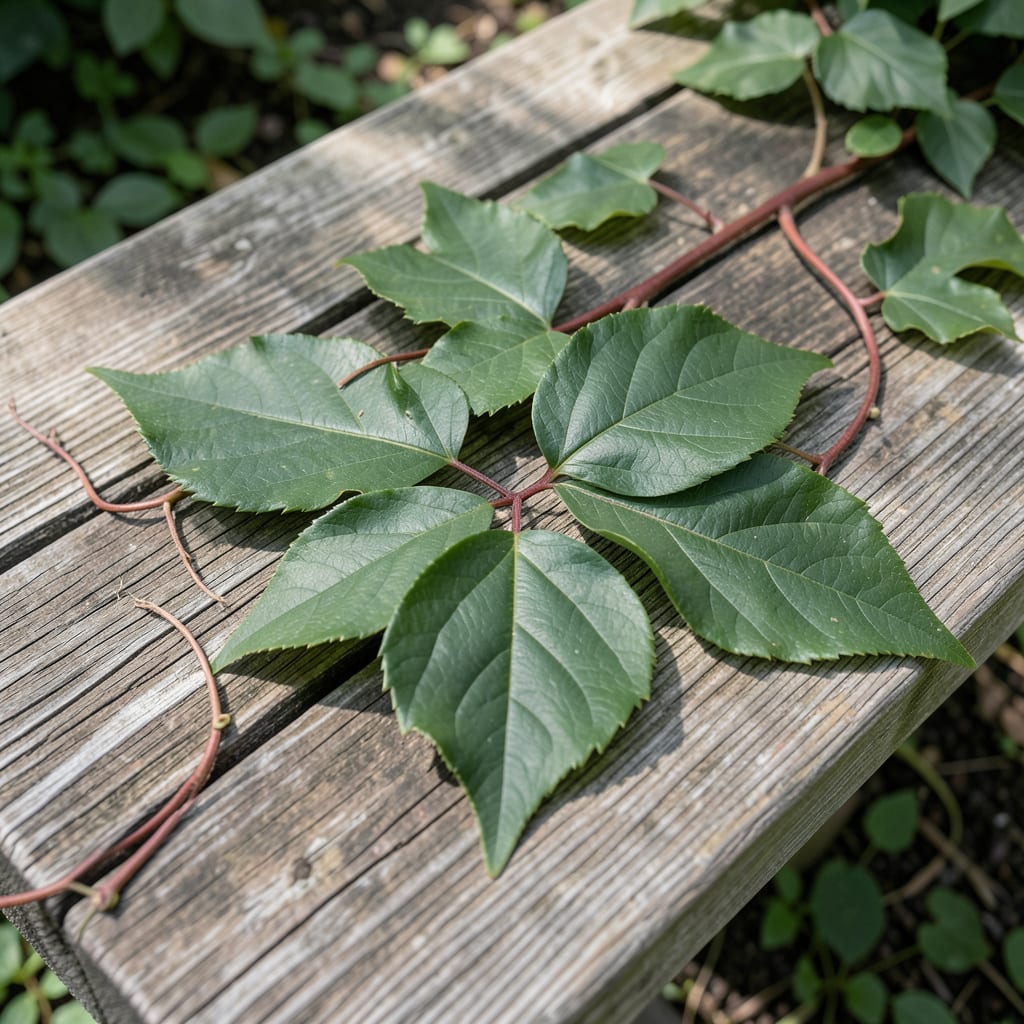
Spotting Virginia creeper with just three leaves can throw you off—most have five. But this adaptation still climbs fast and turns brilliant red in fall, making it a standout in any landscape.
This vine handles shade, poor soil, and drought like a champ. It’s hardy from zones 3 to 9, but keep an eye on its spreading habit—it can get aggressive if left unchecked.
📚 In This Guide
Here’s how I quickly spot this plant in the wild or my own garden.
Look closely at the leaf arrangement. Virginia creeper with three leaves has three distinct leaflets growing from a single stem, forming what’s called a trifoliate pattern. Each leaflet typically measures 2-6 inches long with a slightly toothed edge.
I always check the base of the middle leaflet first – it often has a slightly longer stem connecting it to the main vine. The side leaflets usually attach directly to the vine without individual stems. This pattern is consistent across the plant, making it a reliable identifier.
The vine itself provides important clues. Mature Virginia creeper develops woody stems that can grow 30-50 feet long when left unchecked. Younger vines are green and more flexible, but they still have a distinctive texture – slightly rough to the touch.
I run my fingers along the vine to feel for small, curved tendrils. These appear opposite the leaves and help the plant cling to surfaces. Even in winter when leaves drop, these tendrils remain and can help with identification.
Virginia creeper grows in a vigorous, climbing habit. In natural settings, it often scales trees or spreads across the ground. In gardens, it quickly covers fences, trellises, or walls. I’ve seen it grow 10-20 feet in a single season under ideal conditions.
The leaves emerge in early spring with a reddish tint, turn deep green in summer, then transform to brilliant red or purple in fall. This seasonal color change is another reliable identifier. Look for the three-leaf pattern at all stages of growth.
For absolute confirmation, check for small, greenish-white flowers that appear in early summer. These develop into dark blue berries by fall, each about ¼ inch in diameter. The berries grow in clusters and are highly attractive to birds.
I also examine the leaf undersides, which often have a slightly paler color than the tops. The veins on the leaves typically appear more prominent than on similar-looking plants. This combination of features makes identification straightforward.
These practical pointers will help you identify this plant with confidence in no time.
The Leaf Pattern: In Step 1, focus on the trifoliate structure—three leaflets from one stem. The middle leaflet often has that longer stem, while the side ones attach directly. I’ve found this consistency across all Virginia creeper plants, making it the most reliable feature to spot first.
Vine Clues: Don’t overlook Step 2’s details about the vine itself. Those woody stems and curved tendrils are unique. Even in winter, when leaves are gone, the tendrils remain visible. Running your fingers along the vine helps confirm the rough texture mentioned in the instructions.
Seasonal Changes: Step 3 highlights the dramatic color shifts—reddish in spring, deep green in summer, and brilliant red or purple in fall. This seasonal transformation is a dead giveaway, so check the leaves’ color based on the time of year. The growth habit, climbing or spreading, is another strong indicator.
Final Confirmation: For absolute certainty, Step 4’s berries and flowers are key. The dark blue berries, about ¼ inch in diameter, appear in fall clusters. Combined with the leaf pattern and vine characteristics, these features make identification foolproof.
No, Virginia creeper (Parthenocissus quinquefolia) is not poisonous to touch, but its berries are toxic if ingested. Always wear gloves when handling to avoid skin irritation from its sap.
Virginia creeper has 5 leaflets per leaf (though young plants may have 3), while poison ivy always has 3 leaflets. Creeper’s leaves are toothed, and its vines have disk-like tendrils for climbing.
Early spring or late fall is ideal, as the plant is dormant. Avoid summer removal—sap flows heavily, increasing irritation risk. Trim vines at the base first to weaken the plant.
Try non-invasive climbers like clematis, climbing roses, or honeysuckle. These offer color and texture without aggressive spreading. Check local guidelines for region-appropriate options!
