
Beautiful Plants For Your Interior
Beautiful Plants For Your Interior
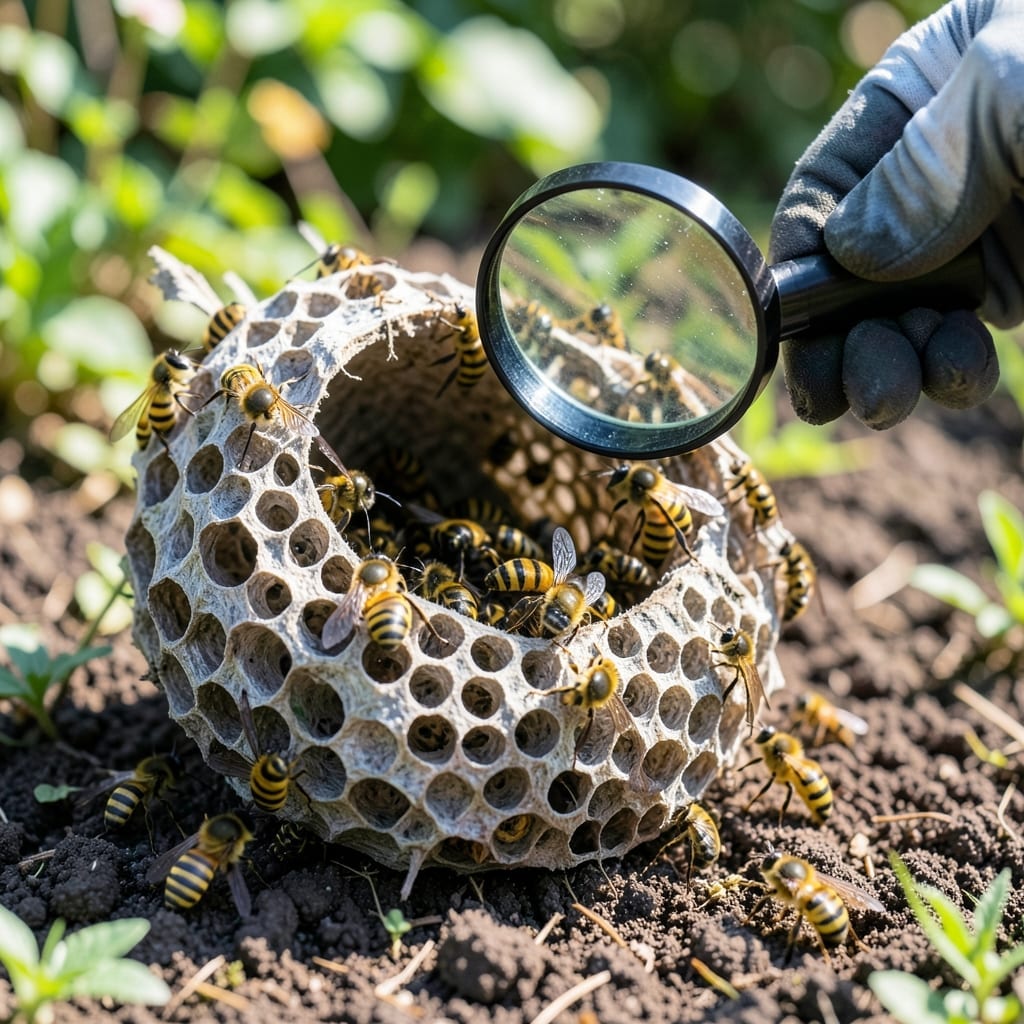
A typical yellow jacket nest has one queen during active seasons, but multiple queens may emerge in late summer to overwinter and start new colonies the following year.
What fascinates me is how this single queen can lay thousands of eggs in her lifetime while maintaining absolute dominance. 💛 In late summer, her role shifts as she produces new queens and males, which then leave to mate and establish their own colonies the next spring. This seasonal transition is crucial for the species’ survival.
💡 In This Article
The queen begins her reign in spring after overwintering alone, often in a cozy crevice or underground burrow. She emerges with a singular mission: to build a nest and lay eggs that will become the first generation of workers.
Using chewed wood fibers mixed with her saliva, she constructs the initial paper-like cells of the nest, a process that takes 2-4 weeks depending on weather conditions. 🔥
Once the first 10-20 worker larvae mature, they take over foraging and nest maintenance duties. This allows the queen to focus exclusively on egg-laying, producing up to 250 eggs per day at peak capacity. Her pheromones suppress the reproductive development of worker females, ensuring her sole dominance in the colony.
The workers, sterile due to this chemical control, dedicate their 12-22 day lifespans to colony survival.
As summer progresses, the queen begins producing new queens and male drones instead of workers. These reproductive individuals emerge in late summer, typically August through September, when nest populations peak at 1,000-4,000 insects.
The new queens mate with males from other colonies, then seek sheltered spots to hibernate through winter while the original queen and workers die off with the first hard frost. ✨
This seasonal monarchy explains why you’ll only find one queen per active nest. The original queen’s pheromonal control and the workers’ sterile status maintain this hierarchy. Only when her egg-laying shifts to reproductive production does the colony prepare for its annual succession.
This cycle ensures genetic diversity as new queens establish fresh colonies each spring, often 50-200 feet from their birthplace.
Interestingly, these new queens may cluster together during winter hibernation, creating temporary groups of dozens to hundreds in protected spaces like hollow trees or wall voids. Come spring, each will emerge to begin her own colony, continuing the species’ annual life cycle that’s perfectly adapted to temperate climates. 💫
The queen typically lives for 1 year, surviving through winter hibernation to establish a new colony in spring. Workers live only 12-22 days.
In August-September, the queen produces new queens and males to mate and overwinter. These new queens will start fresh colonies next spring.
No, the original queen’s pheromones suppress other females’ reproduction. Only after she dies do new queens emerge to establish their own nests.
They seek sheltered spots like hollow trees, wall voids, or underground burrows. Groups of dozens to hundreds may cluster together for warmth.