
Beautiful Plants For Your Interior
Beautiful Plants For Your Interior
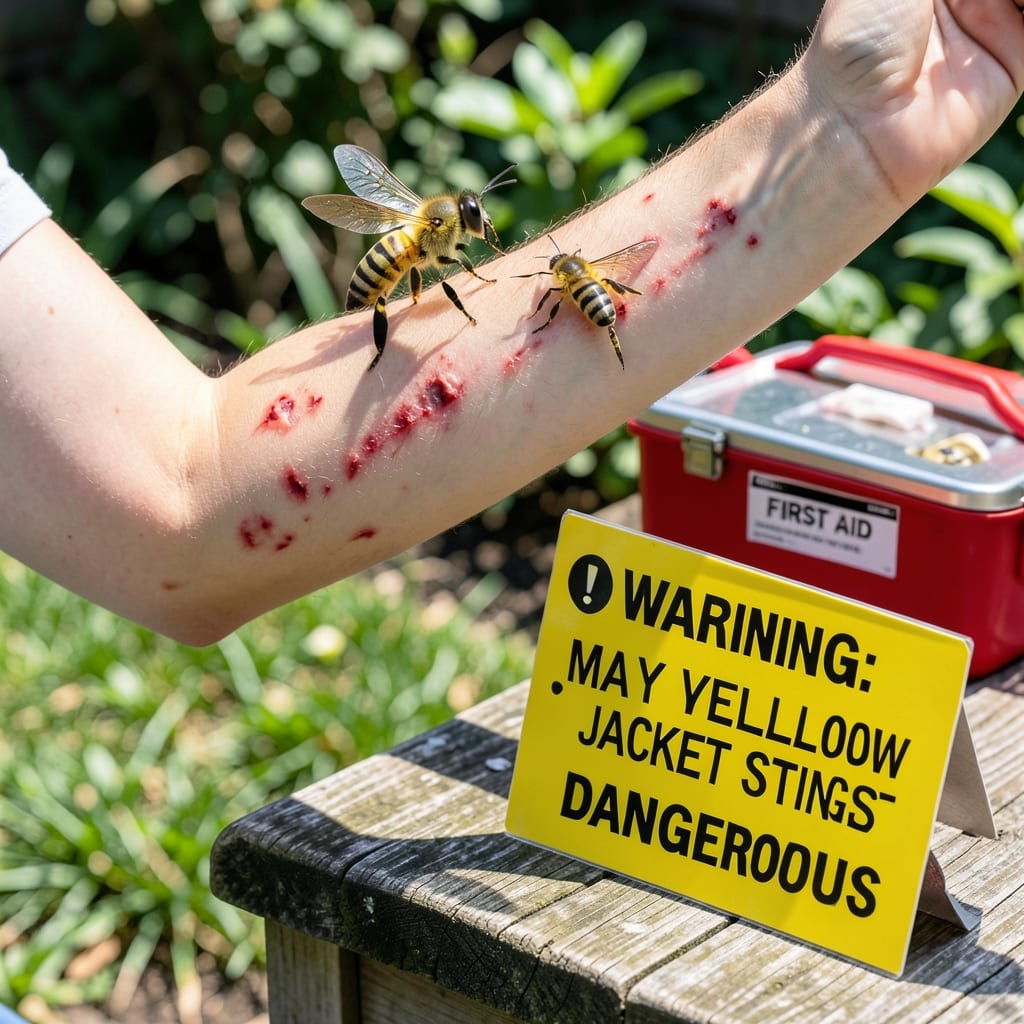
A single yellow jacket sting is painful but rarely dangerous unless you’re allergic. For non-allergic adults, 10-20 stings may trigger severe reactions, while 50-100 could be life-threatening. Children and elders are at higher risk with fewer stings.
What many don’t realize is that venom from multiple stings can overwhelm your system, causing nausea, dizziness, or even difficulty breathing. I’ve seen cases where someone with no known allergies still needed emergency care after just 15 stings. 🔥
Your body’s reaction depends on venom sensitivity and overall health.
💡 In This Article
Yellow jacket venom contains a complex mix of phospholipases, hyaluronidase, and melittin. These compounds break down cell membranes, increase blood vessel permeability, and trigger intense pain. A single sting injects about 2-3 mcg of venom, but multiple stings compound these effects exponentially. 🔥
Your immune system reacts differently to repeated envenomation. The first sting may cause localized swelling and pain. With 5-10 stings, your body releases more histamine, leading to hives or difficulty breathing. At 20+ stings, venom accumulation can cause systemic toxicity, affecting organs. 💫
Children and elderly individuals have less body mass to distribute the venom. What might cause mild symptoms in an adult could trigger severe reactions in a child with just 5-10 stings. Their immune systems also respond more aggressively to foreign substances. ⚡
The delivery method matters too. Yellow jackets can sting repeatedly without losing their stinger. A swarm attack means venom enters your system continuously. This is why 50+ stings can overwhelm even healthy adults, leading to kidney failure or cardiac arrest. 🌟
Pre-existing conditions amplify risks. People with heart conditions or respiratory issues may experience complications from fewer stings. The venom’s acetylcholine content can slow heart rate, while kinins increase blood pressure, creating dangerous fluctuations. ✨
What makes yellow jackets particularly dangerous is their aggressive nature. Unlike bees, they can sting multiple times in rapid succession. A disturbed nest might release hundreds of wasps, each capable of delivering multiple stings, quickly pushing venom levels into life-threatening territory.
Each sting injects 2-3 mcg of venom. Multiple doses compound effects, overwhelming your system and triggering stronger immune responses.
Seek help immediately for difficulty breathing, swelling of the face/throat, or dizziness. These are signs of anaphylaxis or systemic toxicity.
Smaller body mass means venom concentrates more. 5-10 stings can trigger severe reactions in kids, compared to 20+ for adults.
Yes, heart or respiratory issues may amplify risks. Venom can cause dangerous blood pressure fluctuations or slow heart rate.