
Beautiful Plants For Your Interior
Beautiful Plants For Your Interior
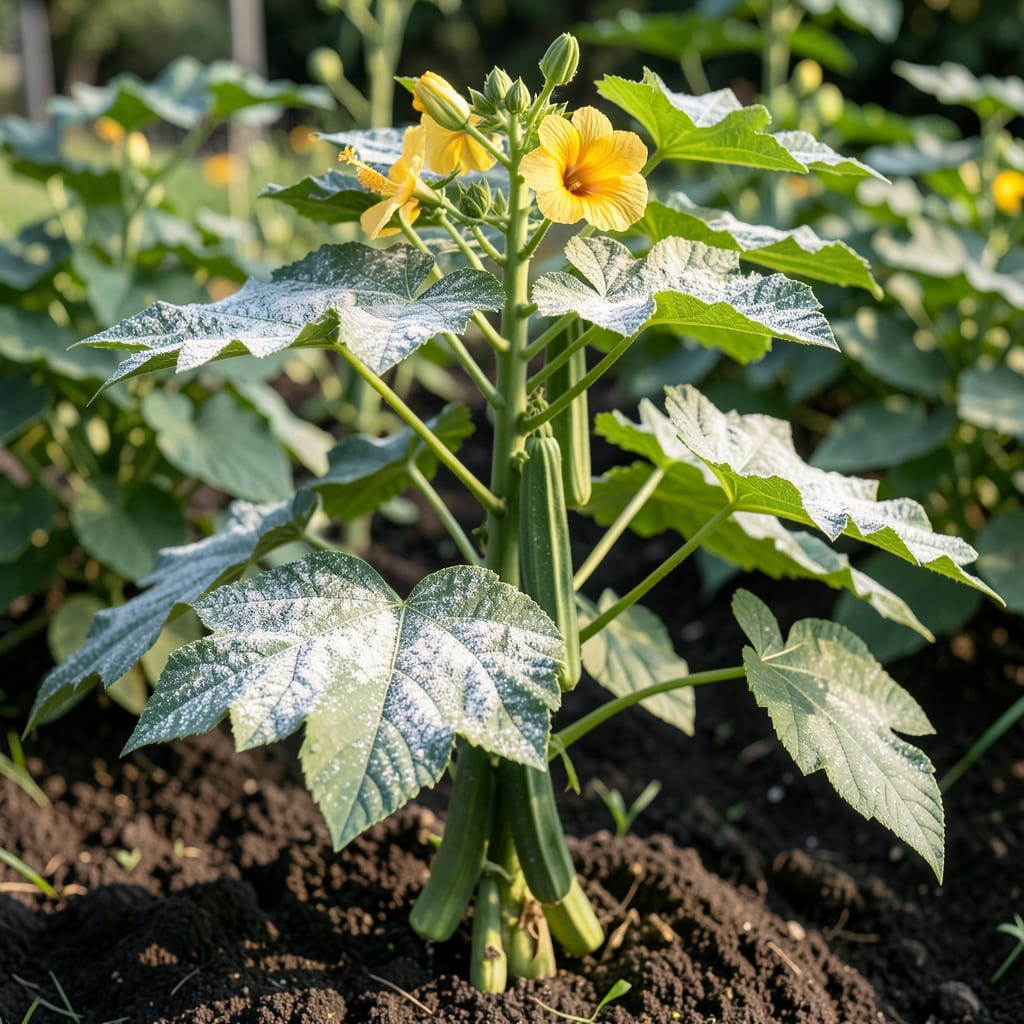
White dust on okra leaves means trouble. I first noticed powdery mildew when my plants looked like they’d been sprinkled with flour, and within days the growth stalled.
The issue spreads fast in warm, dry conditions with high humidity. I’ve learned that catching it early saves the harvest, but most gardeners miss the first subtle signs.
You’ll see yellow spots before the white powder appears. Left unchecked, it weakens plants and reduces yields. The good news is it’s treatable with simple, natural methods.
Prevention starts with airflow and spacing. Here’s how to keep your okra healthy all season.
Powdery mildew on okra thrives under specific conditions, often tied to environmental and cultural factors. Understanding these triggers helps you prevent outbreaks before they start. Below are the primary causes, broken down for clarity and action.
This fungal disease flourishes in humid environments (70-90% relative humidity) with stagnant air. When okra leaves remain damp for extended periods—especially in crowded plantings or shaded areas—spores germinate rapidly. Podosphaera xanthii, the most common pathogen, spreads quickly in these conditions, coating leaves in a white, powdery film.
Powdery mildew favors moderate temperatures (60-80°F), but it’s the daily temperature swings that accelerate its growth. Warm days promote spore production, while cooler nights (with dew formation) provide the moisture spores need to infect tissue. Okra grown in regions with these fluctuations is especially vulnerable.
Watering from above wets the foliage, creating a perfect habitat for spores to cling and germinate. Unlike other fungal diseases, powdery mildew doesn’t require free water to infect—high humidity alone suffices—but wet leaves speed up the process. Drip irrigation or soaker hoses at the soil level are safer alternatives.
Some okra cultivars lack genetic resistance to powdery mildew. If you’ve repeatedly battled outbreaks, your variety may be inherently prone. Check seed catalogs for resistant types like ‘Clemson Spineless’ or ‘Emerald,’ which show better tolerance under pressure.
Excess nitrogen promotes lush, tender foliage—exactly what powdery mildew loves. Soft growth is more susceptible to infection. Balance your fertilizer with potassium and phosphorus to strengthen cell walls and reduce vulnerability.
Dealing with powdery mildew on your okra plants? Here’s how to tackle it effectively, depending on the underlying cause.
Thinning out dense foliage is key. Prune infected leaves and stems to boost airflow. Space plants at least 18 inches apart. For greenhouse setups, use fans to keep air moving. Prevention tip: Avoid overhead watering to reduce humidity around leaves.
Water plants at the base in the early morning so foliage dries quickly. Use drip irrigation to keep leaves dry. If humidity is stubborn, consider a dehumidifier for indoor setups. Prevention tip: Mulch with straw to prevent soil moisture from evaporating onto leaves.
If your okra variety is prone to mildew, opt for resistant types like ‘Clemson Spineless’ or ‘Emerald’. Rotate crops yearly to break the disease cycle. Prevention tip: Avoid planting okra in the same spot every season.
For active infections, spray leaves with a mix of 1 tablespoon baking soda + 1 quart water + a drop of dish soap. Neem oil or sulfur-based sprays also work well—apply weekly until symptoms fade. Prevention tip: Remove fallen leaves to eliminate fungal spores.
Pro tip 💡: Regularly inspect plants for early signs (white powdery spots) and act fast to prevent spread!
Early signs include small yellow spots on upper leaves. These develop into white, powdery patches that spread quickly across foliage.
Yes, severe infections can reach pods, but they rarely show the white coating. The bigger issue is reduced pod production from stressed plants.
Yes, the pods remain safe to eat. Wash them thoroughly first. Only severely damaged leaves need removal to stop the spread.
Spores survive in soil and plant debris. Rotate crops yearly and remove all fallen leaves to break the cycle.