
Beautiful Plants For Your Interior
Beautiful Plants For Your Interior
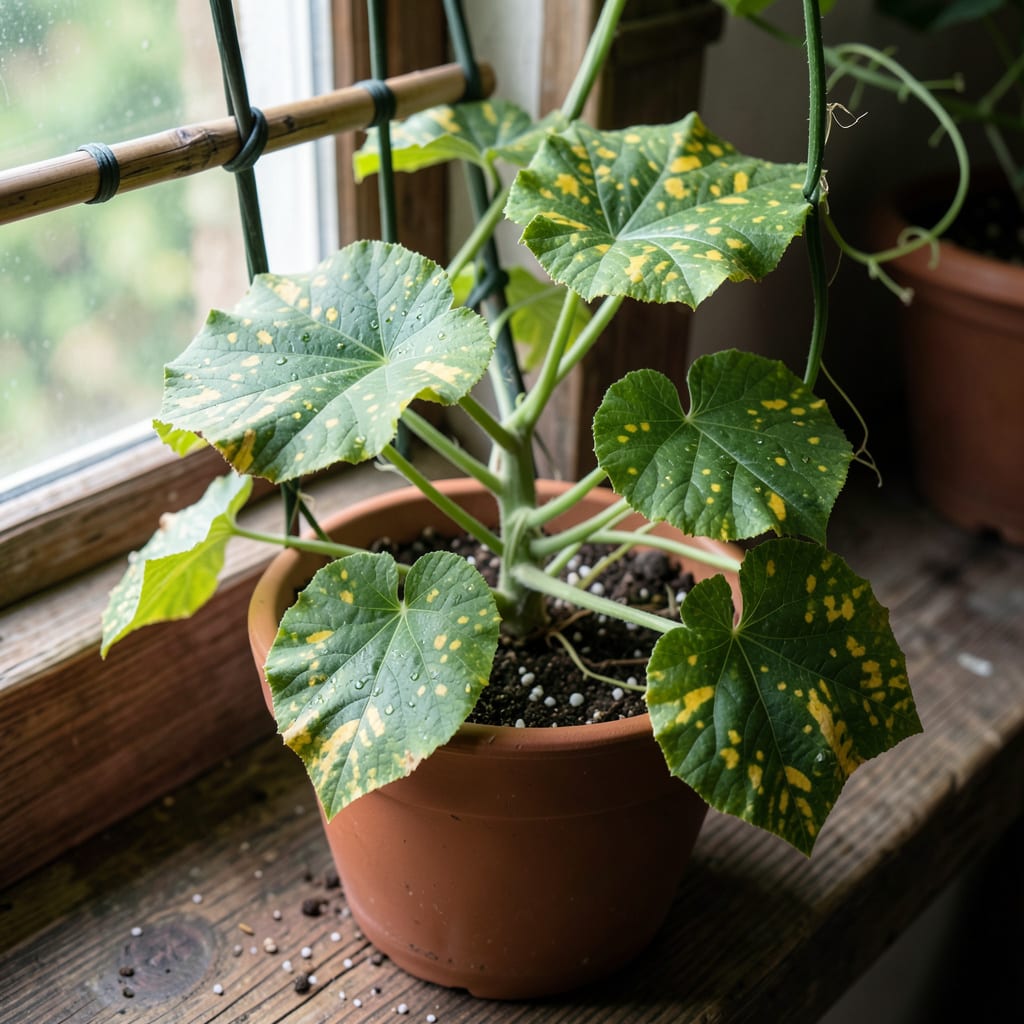
Yellow spots on cucumber leaves always make my stomach drop. 🌱 I’ve learned these unsightly blemishes usually signal one of three problems: nutrient deficiency, fungal infection, or pest damage. Each leaves a distinct pattern that tells you exactly what’s wrong.
The good news? Most cases are fixable with quick action. I’ve saved countless plants by identifying the issue early and treating it properly. The key is knowing what to look for and acting before the problem spreads to healthy foliage.
You’ll often notice these spots first on older leaves before they spread upward. The pattern and color can reveal whether you’re dealing with a lack of nutrients, a fungal invader, or hungry pests making a meal of your plants.
With the right approach, your cucumbers can bounce back stronger. I’ll show you how to diagnose the issue and implement the most effective treatment to restore your plants to full health.
Yellow spots on cucumber leaves often signal underlying issues that disrupt the plant’s health. Below are the most common causes, explained with actionable insights.
Lack of essential nutrients like magnesium or nitrogen can lead to chlorosis (yellowing). Magnesium deficiency often appears as interveinal yellowing, while nitrogen scarcity causes uniform yellowing starting from older leaves. A soil test can confirm deficiencies, and targeted fertilizers (e.g., Epsom salt for magnesium) can restore balance.
Pathogens like Powdery Mildew or Downy Mildew thrive in humid conditions, creating yellow spots or patches. Powdery mildew forms a white, powdery coating, while downy mildew causes yellow angular lesions. Improve air circulation and apply copper-based fungicides or neem oil to curb spread.
Pests such as spider mites or aphids suck sap from leaves, leading to stippling or yellowing. Check leaf undersides for webbing (mites) or sticky residue (aphids). Use insecticidal soap or introduce beneficial insects like ladybugs for control.
Overwatering, poor drainage, or extreme temperatures can stress cucumbers, causing yellow spots. Ensure consistent moisture (1–2 inches of water weekly) and mulch to retain soil temperature. Avoid wetting foliage to prevent fungal growth.
Identifying the root cause early allows for precise remedies, keeping your cucumber plants vibrant and productive.
Tackling yellow spots on your cucumber leaves starts with identifying the root cause. Below are targeted fixes for common issues, along with prevention tips to keep your plants thriving.
Fix: Test your soil with a kit to pinpoint missing nutrients. For nitrogen deficiency, apply a balanced fertilizer (10-10-10) or organic options like compost or fish emulsion. If it’s magnesium, use Epsom salt (1 tablespoon per gallon of water) as a foliar spray. For potassium, add wood ash or a potassium-rich fertilizer.
Prevention: 💡 Feed plants with a slow-release fertilizer at planting and mid-season. Rotate crops annually to avoid soil depletion.
Fix: Remove and destroy infected leaves to stop the spread. Apply a copper-based fungicide or a homemade mix of baking soda (1 tsp), liquid soap (1 tsp), and water (1 gallon). Spray every 7–10 days until symptoms disappear.
Prevention: 🌧️ Water at the base of the plant to keep leaves dry. Space plants properly for airflow, and avoid overhead watering in the evening.
Fix: Inspect leaves for pests like aphids or spider mites. Blast them off with water or use insecticidal soap. For severe infestations, introduce beneficial insects like ladybugs.
Prevention: ✨ Regularly check the undersides of leaves. Plant companion herbs like basil or marigolds to deter pests naturally.
Fix: Let the soil dry slightly between waterings. If roots are waterlogged, improve drainage by amending soil with compost or sand. Trim any black, mushy roots to prevent rot.
Prevention: 🎯 Use well-draining soil and containers with drainage holes. Water deeply but less frequently—about 1–2 inches per week.
Yes, overwatering often leads to yellow spots due to root stress and poor oxygen circulation. Ensure soil drains well and water only when the top 1-2 inches are dry.
Fungal infections often create yellow patches with fuzzy growth or dark edges. Check for white powder or damp, moldy spots on leaf undersides.
Not always. Minor spots from environmental stress may resolve on their own. But spreading or darkening spots need immediate attention to prevent plant decline.
Remove pests with a strong water spray or apply insecticidal soap. For severe cases, introduce ladybugs or use neem oil every 3-5 days.
