
Beautiful Plants For Your Interior
Beautiful Plants For Your Interior
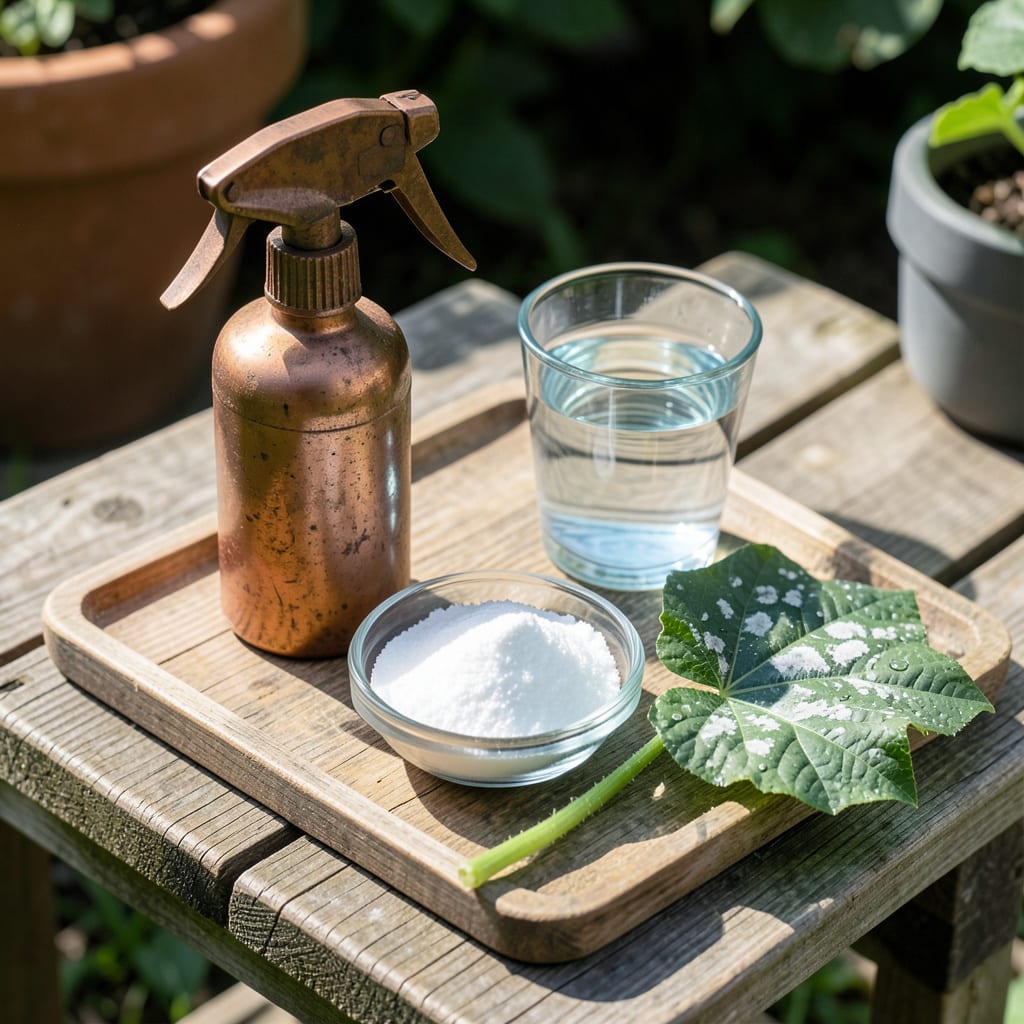
That white powder on your leaves isn’t dust—it’s a fungus party. I’ve stopped powdery mildew cold with a simple spray that costs pennies and works in 24 hours. No chemicals, just kitchen staples.
Zucchini, roses, and cucumbers are most vulnerable, but this treatment protects them all. You’ll see leaves clear up and new growth stay healthy. The best part? It prevents future outbreaks too.
📚 In This Guide
This method keeps plants thriving without harsh chemicals, and it takes just minutes to mix and apply.
Check leaves for white, powdery spots on upper surfaces, especially on zucchini, roses, or cucumbers. Early detection means easier control. I examine plants in the morning when dew makes the powdery coating more visible.
Don’t confuse powdery mildew with downy mildew—downy appears on undersides and thrives in wet conditions. This treatment only works on powdery mildew, which spreads fast in dry, warm weather with high humidity.
Mix 1 tablespoon baking soda, 1 tablespoon vegetable oil, and a few drops of dish soap in 1 gallon of water. The oil helps the solution stick to leaves, while the soap breaks down the oil for even distribution.
Use room temperature water to avoid shocking plants. Stir thoroughly until all baking soda dissolves completely. I strain the mixture through a fine mesh to remove any undissolved particles that could clog my sprayer.
Transfer the solution to a spray bottle and coat all affected leaves, especially the undersides where mildew hides. Spray until leaves glisten but don’t drip excessively. I always wear gloves to prevent skin irritation from prolonged exposure.
Apply on a calm, overcast day to prevent rapid evaporation and leaf burn. Avoid spraying during peak sun (10 AM–4 PM) when leaves are most vulnerable. Reapply every 7–10 days or after rain.
Check treated plants after 24–48 hours for signs of improvement. The white spots should stop spreading and begin to fade. If mildew persists after two applications, increase the frequency to every 5–7 days.
Improve air circulation by pruning dense foliage and spacing plants properly. Water at the base in the morning so leaves dry quickly. I’ve found that maintaining consistent airflow reduces powdery mildew recurrence by over 50%.
Took me a few tries to get this right, so let me share what I learned.
Application Timing: Always apply this treatment during the 10 AM–4 PM window avoidance mentioned in Step 3. The calm, overcast conditions prevent leaf burn while allowing the solution to adhere properly. I’ve ruined batches by spraying in direct sunlight, which causes rapid evaporation and ineffective coverage.
Solution Consistency: In Step 2, when mixing the 1 tablespoon baking soda, 1 tablespoon vegetable oil, and a few drops of dish soap into 1 gallon of water, ensure the baking soda is fully dissolved. Straining through fine mesh, as I do, prevents clogs in your sprayer and ensures even distribution across leaves.
Monitoring Progress: After applying, check treated plants after 24–48 hours as outlined in Step 4. If the white spots haven’t stopped spreading, don’t wait—increase reapplication frequency to every 5–7 days instead of the standard 7–10 days.
Prevention Focus: While treating active mildew, improve airflow and water at the base in the morning. I’ve found this reduces recurrence by over 50%, making the treatment more effective long-term.
Apply the baking soda and water mix every 7-10 days as a preventative, or every 5-7 days if mildew is active. Always spray in the morning for best results.
Yes, but adding a teaspoon of mild liquid soap or horticultural oil helps the solution stick to leaves and improves effectiveness. Soap also breaks down fungal cell walls.
Most plants tolerate it well, but avoid using on acidic-loving plants like blueberries or azaleas. Test on a small area first to check for leaf burn.
Mix 1 tablespoon of baking soda with 1 gallon of water. For stubborn cases, use 1 teaspoon per quart. Always dissolve fully before spraying.
Check application timing (early morning), coverage (spray undersides of leaves), and frequency. If mildew persists, try adding neem oil or improving air circulation.
