
Beautiful Plants For Your Interior
Beautiful Plants For Your Interior
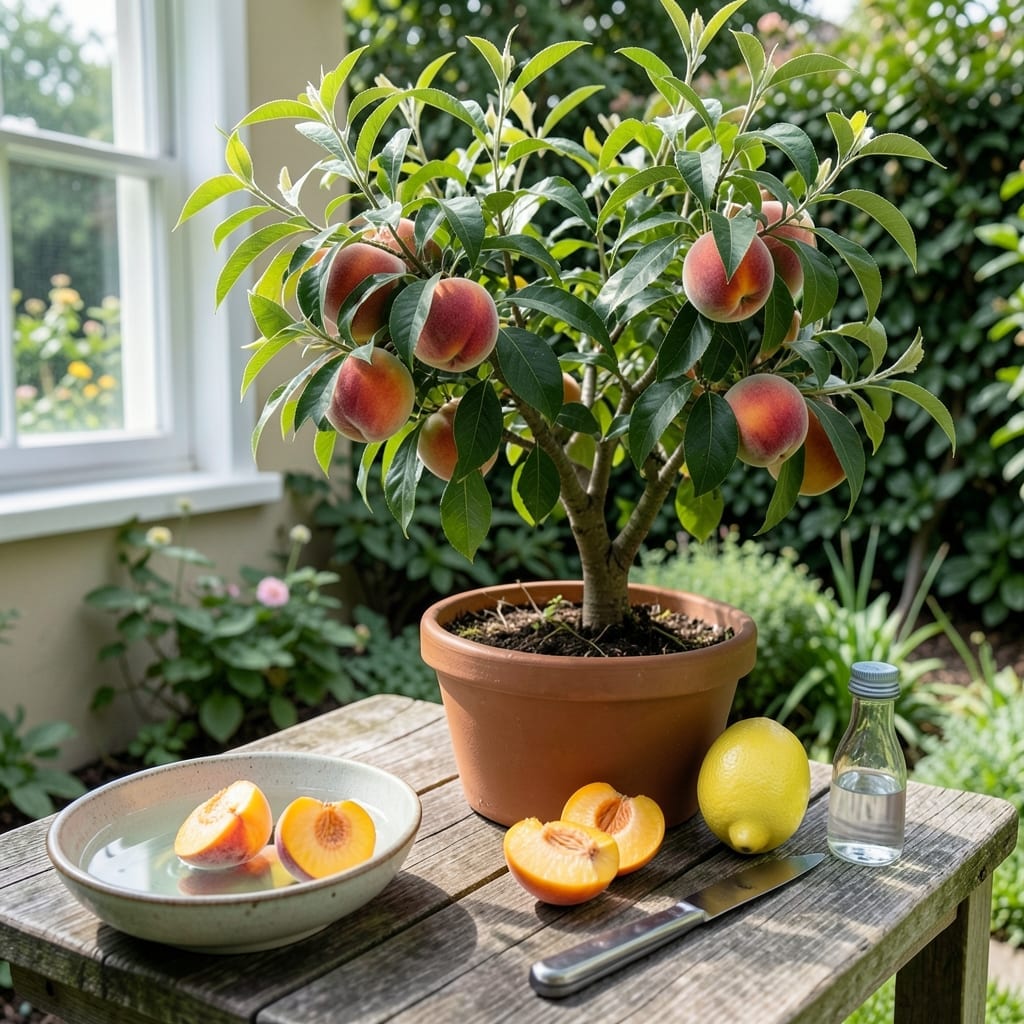
Toss cut peaches in lemon juice, vinegar, or honey water to block enzymes that cause browning. Store in an airtight container in the fridge for up to three days.
I’ve tested several approaches, and the acidity in citrus or vinegar creates a protective barrier against oxygen exposure. 🔥 This method works because polyphenol oxidase, the enzyme behind browning, slows down dramatically in acidic environments. For best results, use 1 tablespoon of acid per cup of water and submerge slices completely before refrigerating.
💡 In This Article
When you slice a peach, its cells release polyphenol oxidase, an enzyme that reacts with oxygen in the air. This chemical reaction, called enzymatic browning, creates melanins—the same pigments that give coffee and tea their dark colors.
The process starts within minutes, turning the flesh from vibrant orange to unappetizing brown as oxygen molecules bind to phenolic compounds in the fruit.
The speed of browning depends on temperature and surface area. At room temperature 70°F, peaches can discolor in 30-60 minutes, while refrigeration at 40°F slows this to hours. More cut surfaces mean faster browning, as greater exposure to air accelerates the enzyme’s work. 🔥
Acids like citric or acetic disrupt this process by lowering the pH. At pH levels below 4.5, polyphenol oxidase becomes inactive, effectively stopping the browning reaction. This is why lemon juice (pH 2-3) works so well—it creates an environment where the enzyme can’t function properly.
What most people don’t realize is that water also plays a role. Submerging peach slices in acidulated water not only provides acid but also creates a physical barrier between the fruit’s surface and oxygen in the air.
The water molecules displace air from the fruit’s surface, giving the acid more time to penetrate and inhibit the enzyme.
This same enzymatic browning affects other fruits like apples, bananas, and pears. The difference in how quickly they brown comes from varying levels of polyphenol oxidase and phenolic compounds. Peaches have moderate levels of both, which is why they brown faster than oranges but slower than bananas. ✨
Yes, salt water works by slowing enzyme activity through cold temperatures. Use 1 tablespoon of salt per quart of ice water for a 5-minute soak. It’s less acidic than lemon juice but still effective for short-term preservation.
White or apple cider vinegar works well. Mix 1 tablespoon with 1 cup water and soak slices for 3-5 minutes. The acetic acid inhibits browning just like citrus, with a milder flavor.
Properly treated slices keep their color for 2-3 days in an airtight container. For longer storage, vacuum seal and refrigerate for up to 5 days or freeze for 6 months.
A light honey soak (1 tablespoon per 2 cups water) adds subtle sweetness while preventing browning. It’s perfect for fruit salads where extra flavor is welcome.