
Beautiful Plants For Your Interior
Beautiful Plants For Your Interior
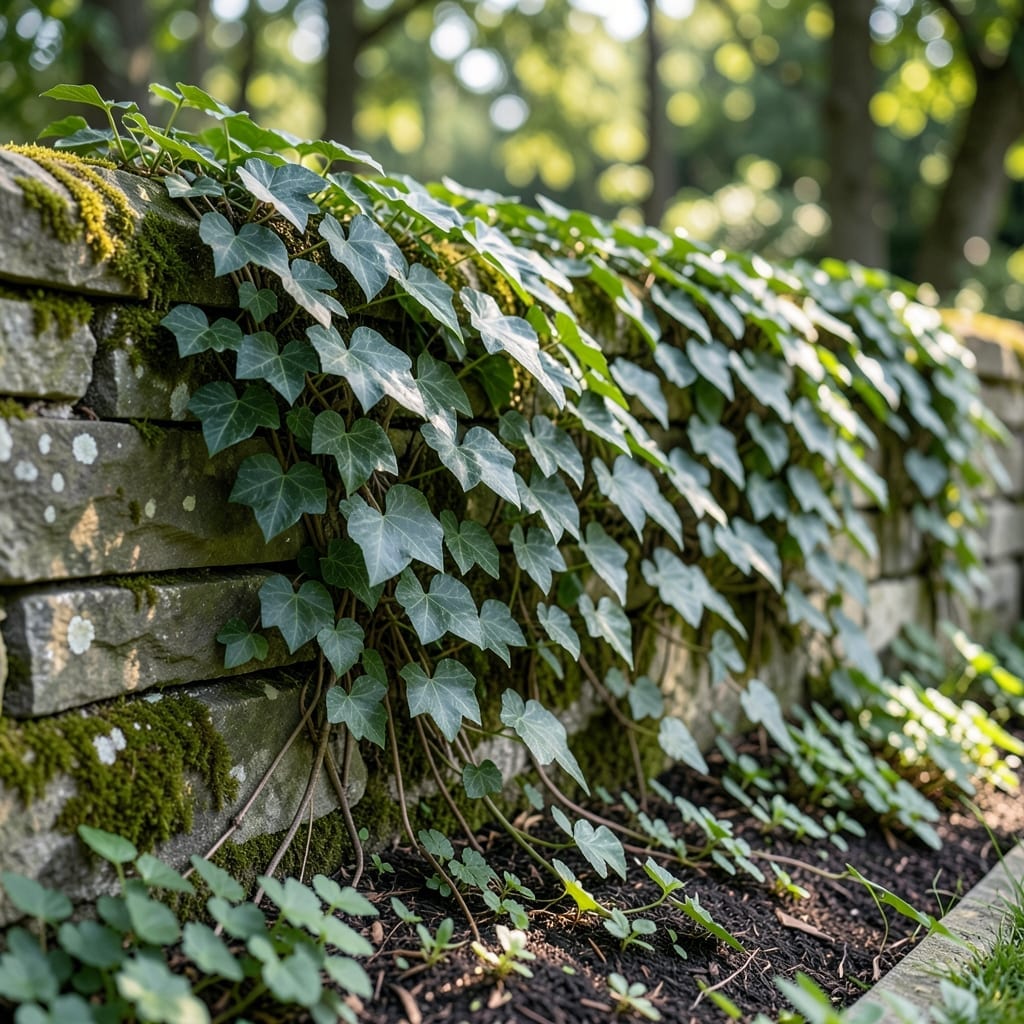
Three leaves on a vine don’t always mean ivy. I’ve misidentified more climbing plants than I care to admit, but the real giveaway lies in the subtle details most guides overlook.
The shape, edge, and vein pattern of each leaf tells the story. English ivy has 3-5 lobes with pale veins, while Boston ivy turns fiery red in fall. Then there’s the way they cling—some use aerial roots, others twist around supports.
You’ll start noticing differences in new growth versus mature leaves, the color variations between species, and how light changes their appearance. What looks like one plant often reveals itself as something entirely different under closer inspection.
This changes how you care for them, where you plant them, and whether that vine climbing your fence is friend or foe. Let’s decode the patterns.
Ivy plants are often misidentified due to their diverse appearances and overlapping traits. Understanding the root causes helps prevent confusion and ensures accurate identification. Below are the primary reasons why misidentification happens, broken down by cause.
Many ivy species, such as Hedera helix (English ivy) and Hedera canariensis (Algerian ivy), share comparable leaf shapes, particularly in their juvenile stages. The lobed, palmate, or heart-shaped leaves can look nearly identical to the untrained eye. This similarity is a result of evolutionary adaptations for climbing and light absorption, making visual differentiation challenging without closer inspection of leaf margins, vein patterns, or mature growth habits.
Ivy plants exhibit phenotypic plasticity, meaning their leaves and growth patterns can change based on environmental conditions. For example, ivy grown in shade may produce larger, thinner leaves to maximize light capture, while the same species in sunlight might develop smaller, thicker leaves. These adaptations can obscure species-specific traits, leading to misclassification if the observer doesn’t account for habitat influences.
Cross-breeding between ivy species, whether naturally or through cultivation, creates hybrids with mixed traits. Cultivars like Hedera helix ‘Arborescens’ or ‘Goldheart’ may display unique leaf variegation or growth habits that don’t fit the typical descriptions of their parent species. Without genetic testing or expert knowledge, these variations can easily be mistaken for entirely different species.
Misidentification often occurs when observers focus on leaf shape alone and ignore other critical features. For instance, the number of lobes, leaf arrangement (alternate vs. whorled), stem texture (smooth vs. hairy), and flower or berry characteristics are vital for accurate classification. Skipping these details can lead to errors, especially between look-alike species like Hedera and Parthenocissus (Virginia creeper).
Misidentifying ivy plants can lead to improper care or even unintended spread of invasive species. Here’s how to solve common identification issues and ensure accuracy every time.
Many ivy varieties share leaf shapes, making them hard to distinguish. Fix: Examine the leaf edges—English ivy has lobes with pointed tips, while Boston ivy features smooth, rounded edges. Use a magnifying glass to spot tiny details like vein patterns or leaf texture.
Prevention: Keep a reference guide or app (like PlantNet) handy for side-by-side comparisons. 💡 Pro tip: Snap close-up photos of leaves, stems, and growth habits for later analysis.
Ground-cover ivy (e.g., Creeping Charlie) can mimic climbing ivy. Fix: Check the plant’s natural behavior—true climbing ivies (like Hedera helix) cling via aerial roots, while ground ivies spread horizontally. Look for tendrils or adhesive pads on stems.
Prevention: Observe the plant over time. Climbing ivies will reach upward, while ground varieties stay low. ✨ Bonus: Note the environment: Climbing ivies thrive on walls or trees, while ground ivies prefer open soil.
Variegated or seasonal color changes can complicate ID. Fix: Focus on consistent traits like leaf arrangement (alternate vs. opposite) or berry color. For example, Irish ivy often has darker green leaves than English ivy, but both produce black berries.
Prevention: Compare multiple leaves from the same plant—some species (like Algerian ivy) have color shifts in sunlight. 🌡️ Pro tip: Use a color-calibrated app to match hues accurately.
With these targeted fixes, you’ll master ivy plant identification in no time—just pair patience with sharp observation!
English ivy has 3-5 lobes with pointed tips and pale veins, while Boston ivy features smooth, rounded edges. Check the clinging method too—English uses aerial roots, Boston uses tendrils.
Poison ivy follows the “leaves of three, let it be” rule with glossy leaves. True ivies have more lobes and never grow in sets of three. Always look for the middle leaflet’s longer stem.
No, leaf patterns vary. English ivy has alternate leaves, while Algerian ivy often shows whorled arrangements. Examine several nodes along the stem for consistency.
Juvenile leaves often differ from mature ones on the same plant. English ivy’s young leaves are more deeply lobed, while adult leaves become broader. This change helps the plant adapt as it climbs.