
Beautiful Plants For Your Interior
Beautiful Plants For Your Interior
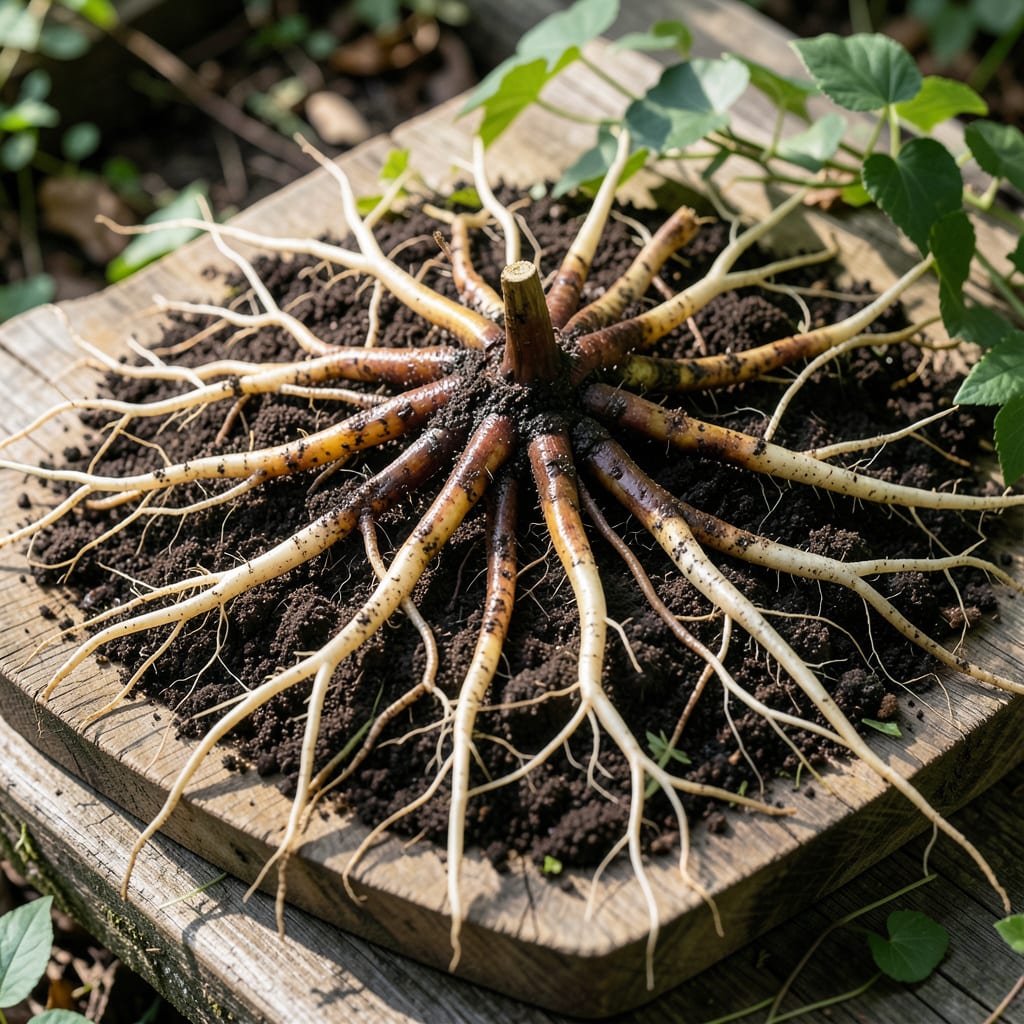
I learned the hard way that Virginia creeper roots mean business. Those fibrous networks spread 20+ feet in a single season, anchoring the vine with surprising strength while sending up new shoots everywhere.
Understanding this growth pattern helps you plant strategically—giving it room to climb or containing it before it takes over. The key is working with its nature, not against it.
📚 In This Guide
Here’s how to observe and manage this vine’s spreading habits in your landscape.
The root crown is where the vine meets the soil. This is your starting point for understanding how the plant spreads. I always begin by clearing away mulch or leaf debris to expose the base of the vine.
You’ll find a woody, knobby structure at soil level—this is the crown. From here, the plant sends out both aerial vines and underground runners. The crown itself rarely grows deeper than 6-12 inches into the soil.
Virginia creeper spreads aggressively through rhizomatous roots that travel horizontally just beneath the surface. Dig carefully 2-3 inches deep in a radius around the crown to expose these runners without damaging them.
These runners can extend 10-15 feet in a single season, sending up new shoots at intervals. I’ve found they’re most active in spring and early summer when soil temperatures reach 60-65°F.
Look for white, rope-like roots—these are the active spreading rhizomes. The darker, woody roots are older growth that primarily anchors the plant.
While the underground system spreads horizontally, the vine also climbs using aerial rootlets. These form along the stems and can attach to any rough surface, including tree bark, brick, or wood.
I check for these by running my fingers along the vine’s stems. You’ll feel tiny, hair-like structures—these are the aerial roots. They’re not as aggressive as English ivy but can still damage paint and mortar over time.
Note how these roots don’t penetrate deeply—they simply hold the vine against surfaces. This is why Virginia creeper can be pulled off walls relatively easily when young.
In early spring, focus on the root crown area where new shoots emerge. By midsummer, the vine’s energy shifts to extending both above and below ground.
I mark the furthest points of spread with garden flags in June, then check again in September. You’ll often see 3-5 feet of new horizontal growth in that time.
The roots grow most actively when soil moisture is consistent. During dry spells, growth slows noticeably—this is one way to naturally control its spread.
To control the root system’s expansion, I prune the above-ground vines that extend beyond desired boundaries. Cut these back to the main plant in late winter before new growth starts.
For underground runners, I use a sharp spade to sever them 12-18 inches beyond where I want the plant to stop. This encourages the vine to focus energy on the remaining root system.
Remember that every piece of root left in the soil can potentially sprout. That’s why I always remove all cut root sections rather than leaving them in place.
Understanding how to track and manage this vine starts with these practical insights.
The Depth Factor: When locating the root crown in Step 1, remember it stays shallow—never deeper than 6-12 inches. Digging too deep risks missing the crown entirely or damaging the horizontal runners you’ll need to trace in Step 2.
Seasonal Timing: The most active growth happens in spring and early summer when soil hits 60-65°F, as mentioned in Step 2. Mark your calendar for June and September (Step 4) to track the 3-5 feet of new spread—this is when you’ll see the biggest changes.
Pruning Precision: In Step 5, cutting underground runners 12-18 inches beyond your desired boundary prevents regrowth. Any root fragments left behind can sprout, so remove them completely. Late winter pruning, before new growth starts, gives you the cleanest control.
Moisture Control: Consistent soil moisture speeds up root spread, as noted in Step 4. During dry spells, the vine’s growth slows naturally—use this to your advantage if you’re trying to limit its expansion without pruning.
Virginia creeper roots are shallow, typically growing 2–6 inches deep. They spread horizontally via rhizomes, forming dense mats just beneath the soil surface. This makes them easy to pull but prone to regrowth if rhizomes remain.
No, its roots aren’t strong enough to crack foundations. However, its aerial vine tendrils can cling to walls, potentially causing damage to siding or paint over time. Keep it trimmed away from structures.
Regularly prune vines and dig up rhizomes to limit growth. For stubborn patches, smother with mulch or use a targeted herbicide. Consistency is key—recheck areas yearly for new shoots.
Yes! Containers with drainage holes can restrict root spread. Choose a large pot (18+ inches deep) and prune roots annually to prevent them from becoming root-bound or escaping through drainage holes.
