
Beautiful Plants For Your Interior
Beautiful Plants For Your Interior
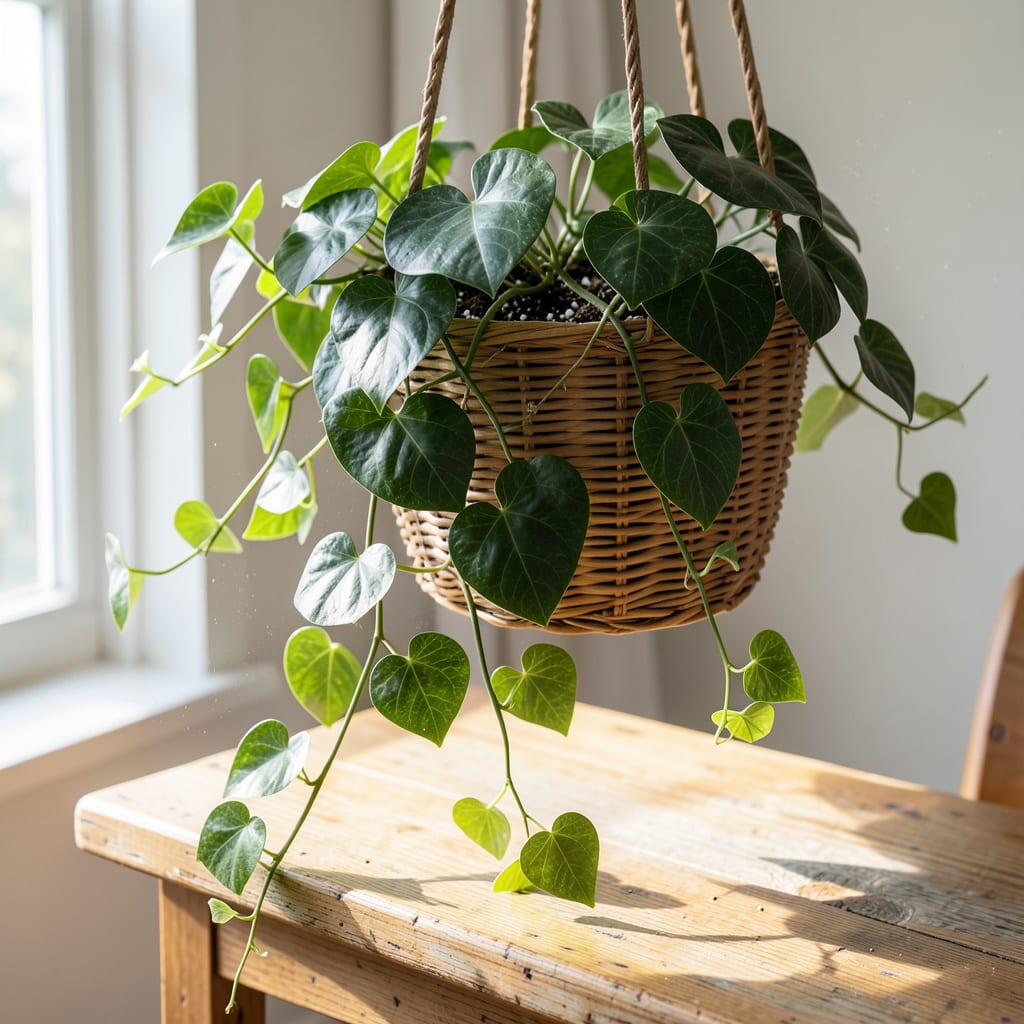
Trailing green vines with heart-shaped leaves bring life to any room. I’ve grown both philodendron and pothos for years, and their low-maintenance nature makes them perfect for beginners or busy plant parents.
These plants thrive in bright, indirect light and can tolerate occasional neglect. With proper care, you’ll enjoy lush growth and the satisfaction of watching your vines cascade beautifully over shelves or hangers.
📚 In This Guide
Here’s the method I rely on to keep these trailing plants thriving with lush, heart-shaped foliage.
Place your vine in bright, indirect light—an east-facing window is ideal. Direct sunlight scorches the delicate leaves, while too little light causes sparse growth and small foliage. I’ve found that a sheer curtain filters harsh afternoon rays perfectly.
Rotating the pot a quarter turn weekly ensures even growth. You’ll notice the stems naturally turn toward the light source, so this simple adjustment keeps the plant balanced and full.
Water only when the top 1-2 inches of soil feel dry to the touch. Overwatering is the most common mistake with these plants—soggy soil leads to root rot, which is often fatal. I use the finger test: push a finger into the soil, and if it comes out clean, it’s time to water.
When watering, soak the soil thoroughly until water drains from the bottom, then empty the saucer after 15-20 minutes. This prevents the roots from sitting in stagnant water, which suffocates them over time.
These tropical vines thrive in 60-80% humidity. If your home is dry, especially in winter, mist the leaves lightly every 2-3 days or use a humidity tray. Brown leaf tips often signal low humidity, so adjust accordingly.
Keep the temperature between 65-85°F. Avoid drafts from windows, doors, or vents—sudden temperature drops cause leaf yellowing and stress. I’ve lost a few plants to cold drafts before learning this the hard way.
Feed your vine with a balanced liquid fertilizer (10-10-10 or 20-20-20) diluted to half strength every 4-6 weeks during spring and summer. Over-fertilizing leads to salt buildup in the soil, which burns the roots and causes leaf drop.
In fall and winter, reduce fertilizing to once every 8-10 weeks, as the plant’s growth slows. You’ll see the difference in growth rate—faster in warm months, slower in cooler ones.
Trim leggy stems or yellowing leaves with clean, sharp scissors to encourage bushier growth. Cut just above a leaf node, where new growth will emerge. I always save the healthy cuttings for propagation—they root easily in water or soil.
If the plant becomes top-heavy, prune back up to one-third of its length to maintain shape. This also rejuvenates older plants, promoting fresh, vibrant growth. Real talk: it’s hard to over-prune these resilient vines.
Small adjustments that prevent big problems with these resilient vines.
The Light Factor: That quarter turn weekly in Step 1 isn’t just for aesthetics—it prevents the plant from growing lopsided as it stretches toward the light. I learned this after watching one side of my philodendron become noticeably fuller than the other. An east-facing window truly is ideal, but a north-facing one works too if you supplement with a grow light during shorter days.
Watering Wisdom: The 15-20 minutes mentioned in Step 2 after watering is non-negotiable. I once left water in the saucer overnight and woke up to drooping leaves the next morning. Always empty it completely to prevent root suffocation. Also, that finger test for the top 1-2 inches of soil? Push your finger in up to the second knuckle—that’s about right.
Humidity Hack: For the 60-80% humidity these plants love, group several houseplants together. They create their own microclimate through transpiration. I’ve maintained healthy pothos in 50% humidity using this trick alone, though misting every 2-3 days still helps during dry winters.
Temperature Caution: The 65-85°F range in Step 3 means avoiding more than just cold drafts. Keep your vine away from heating vents too—consistent blasts of hot, dry air can be just as damaging as cold. I lost a beautiful heartleaf philodendron to a space heater before realizing this hard lesson.
Philodendron hederaceum (Heartleaf Philodendron) is the best choice! It’s low-maintenance, thrives in low light, and tolerates occasional neglect. Pothos is another great option, but its leaves are slightly less heart-shaped.
Water when the top 1-2 inches of soil feel dry—usually every 1-2 weeks. Overwatering leads to yellow leaves, so ensure good drainage!
Yellow leaves often signal overwatering or poor drainage. Check the soil moisture and adjust your watering schedule. If the soil is soggy, repot with fresh, well-draining mix.
Absolutely! Both Philodendron and Pothos trail beautifully in hanging baskets. Just ensure it gets bright, indirect light and regular watering.
Yes! Try the Peperomia prostrata (String of Turtles) or Ceropegia woodii (String of Hearts). Both are non-toxic and have charming, heart-like foliage.
