
Beautiful Plants For Your Interior
Beautiful Plants For Your Interior
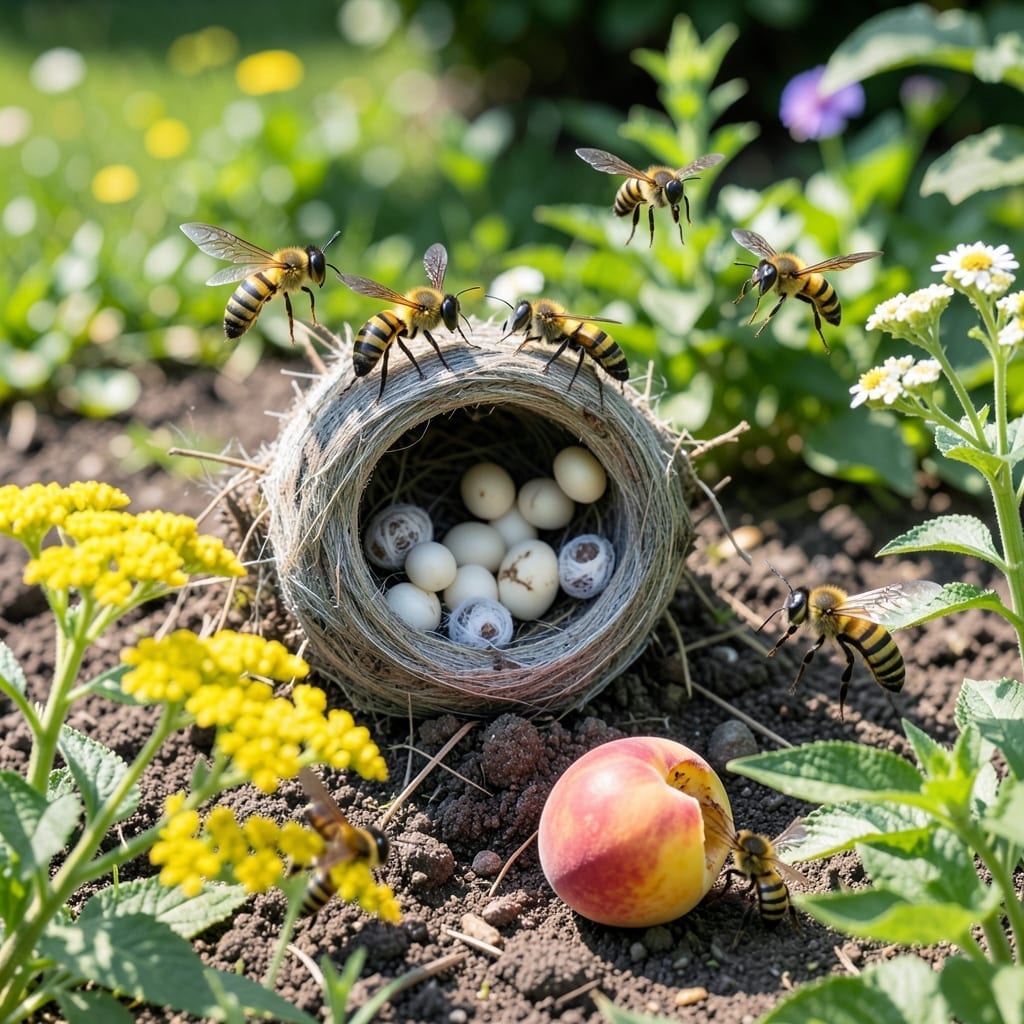
Yellow jackets undergo complete metamorphosis with four stages: egg, larva, pupa, and adult. Queens lay eggs in spring, larvae hatch within a week, pupate after 18-24 days, and emerge as adults in 30-60 days.
This transformation is fascinating because it mirrors other social wasps, yet their aggressive nature sets them apart. I notice the queen’s role is pivotal—she’s the sole founder of new colonies each season. 🔥 The timeline can vary slightly based on temperature and food availability, which affects how quickly the colony grows and becomes a nuisance.
💡 In This Article
The queen begins her colony in early spring by laying 10-20 eggs in paper-like cells made from chewed wood fibers mixed with saliva. These eggs are tiny, white, and elongated, measuring about 1-2mm in length. She carefully places each egg in its own cell, then seals it with a silk-like cap.
The eggs hatch in 5-8 days, depending on ambient temperature. 🔥
Once hatched, the larvae resemble small, legless grubs with a voracious appetite. Worker wasps feed them a protein-rich diet of chewed insects, spiders, and carrion up to 300 times daily. This high-protein diet fuels their rapid growth, as they must reach full size before pupation. The larval stage lasts 14-18 days under optimal conditions. ✨
The pupal stage is when the magic of metamorphosis occurs. The larvae spin silken cocoons and enter a resting phase where their bodies reorganize entirely. This transformation takes 12-15 days for workers and slightly longer for queens.
During this time, the developing wasps are particularly vulnerable to temperature fluctuations—a drop below 50°F can halt development entirely. 💫
Emerging adults chew through their cocoons to escape, with workers appearing first to take over colony duties. Queens develop later in the season, typically from late summer to early fall, and are noticeably larger with more robust bodies.
The entire process from egg to adult spans 30-60 days, creating a rapid turnover that allows colonies to grow exponentially during warm months. ⚡
Environmental factors play a crucial role in this lifecycle. Ideal temperatures range from 70-85°F, while humidity levels above 60% support optimal development. Food scarcity can extend the larval stage, while abundant protein sources accelerate growth. This is why yellow jacket populations often explode during warm, wet summers when both temperature and food are plentiful. 🌟
Eggs hatch in 5-8 days, larvae develop for 14-18 days, and pupation takes 12-15 days. The full cycle from egg to adult spans 30-60 days depending on conditions.
Queens develop later in the season, typically from late summer to early fall. They’re larger than workers and emerge to mate before overwintering to start new colonies.
Temperatures below 50°F can halt pupal development entirely. Food scarcity may also extend the larval stage significantly.
Queens are noticeably larger with more robust bodies. Workers appear first in the colony and are smaller, focusing on nest duties and foraging.