
Beautiful Plants For Your Interior
Beautiful Plants For Your Interior
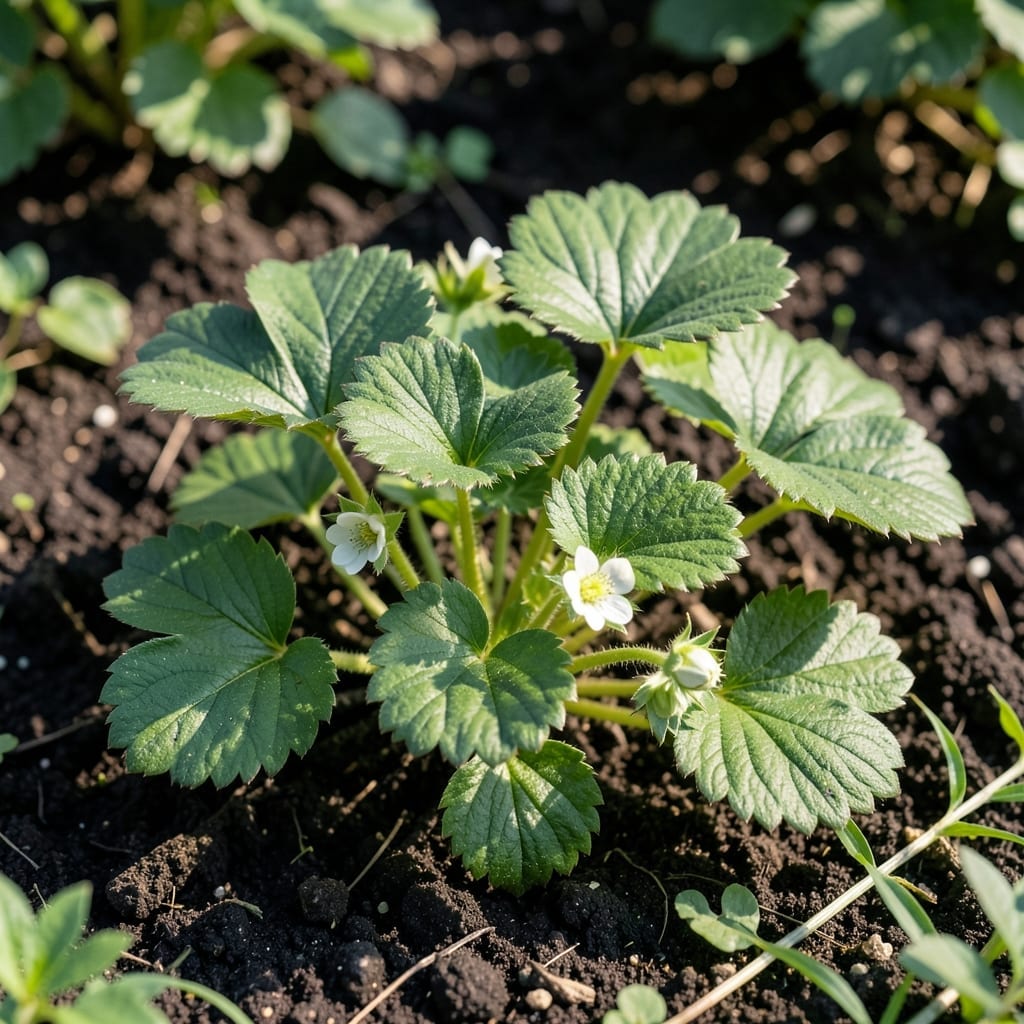
Strawberry plants should be your most productive garden citizens. I’ve seen them thrive in full sun with minimal fuss, yet they’ll protest immediately when something’s off.
Often the culprit is hiding in plain sight: not enough light, the wrong soil, or water that’s either drowning roots or leaving them parched. Each of these silently strangles growth before you notice.
Fix the basics first—6-8 hours of sunlight, well-draining soil, and consistent moisture—and watch them rebound faster than you’d expect.
Even small adjustments can turn sad, stunted plants into a patch bursting with fruit by midseason.
Strawberries may fail to thrive for several scientific and environmental reasons. Here’s a breakdown of the most common causes:
Strawberries require well-draining, slightly acidic soil (pH 5.5–6.8). Compacted or clay-heavy soil restricts root growth, while alkaline soil locks out essential nutrients like iron and phosphorus. A lack of organic matter (e.g., compost) can also starve plants of nitrogen, leading to stunted growth.
These plants need 6–10 hours of direct sunlight daily to photosynthesize effectively. Shade from trees, fences, or buildings reduces sugar production in the fruit, slowing development. Even partial shade can delay flowering and fruiting.
Overwatering causes root rot (e.g., Phytophthora fungi), while underwatering leads to shallow roots and poor nutrient uptake. Strawberries need consistent moisture—about 1–1.5 inches of water per week—especially during fruiting. Drip irrigation is ideal to avoid wetting foliage, which invites disease.
Common culprits include spider mites, aphids, and slugs, which damage leaves and fruit. Fungal diseases like gray mold (Botrytis) or powdery mildew thrive in humid conditions, weakening plants. Infestations or infections divert energy from growth to survival.
Strawberries grow best in 60–80°F (15–27°C). Frost can kill blossoms, while heat above 90°F (32°C) stresses plants, reducing fruit set. Sudden temperature swings (e.g., late spring frosts) may also disrupt pollination.
A lack of potassium (for fruit development) or calcium (to prevent blossom-end rot) can halt growth. Yellow leaves often signal nitrogen deficiency, while purple edges indicate phosphorus shortage. Over-fertilizing with nitrogen, however, promotes leafy growth at the expense of fruit.
Strawberries need the right care to thrive, and small changes can make a big difference. Below are targeted fixes for the most common growth issues, along with tips to keep your plants healthy long-term.
If your soil is too dense or lacks nutrients, strawberries struggle to grow. Fix it: Mix in compost or well-rotted manure to improve fertility. For drainage, plant in raised beds or add perlite to the soil. Prevention tip: 💡 Test soil pH—strawberries prefer slightly acidic (5.5–6.5).
Strawberries need 6–8 hours of sunlight daily. Fix it: Relocate pots or thin out nearby plants blocking light. If space is limited, use reflective mulch to maximize exposure. Prevention tip: 🎯 Choose sunny spots from the start.
Too much water causes root rot; too little leads to stunted growth. Fix it: Water deeply 1–2 times per week (more in heatwaves). Use drip irrigation to keep foliage dry. Prevention tip: ✨ Mulch with straw to retain moisture evenly.
Slugs, aphids, or fungal infections (like powdery mildew) can halt growth. Fix it: Handpick pests or use organic sprays (neem oil for fungi, insecticidal soap for bugs). Remove infected leaves promptly. Prevention tip: 🌡️ Space plants for airflow and avoid overhead watering.
Too many runners compete for resources. Fix it: Thin out excess runners, leaving 6–8 inches between plants. Redirect runners to new pots if you want more plants. Prevention tip: 🔥 Prune runners early to focus energy on fruit production.
Start with sunlight exposure. Strawberries need 6-8 hours of direct light daily. If shaded, relocate or trim obstructions immediately.
Yes! Compacted or alkaline soil blocks nutrient uptake. Test pH and amend with compost to reach 5.5–6.8. This often fixes stunted plants within weeks.
Wilting in heat or yellowing leaves signals underwatering, while mushy stems indicate overwatering. Aim for 1-1.5 inches weekly, using drip irrigation.
Trim excess runners, leaving 6–8 inches between plants. This redirects energy to fruit. Save a few runners only if you want new plants.