
Beautiful Plants For Your Interior
Beautiful Plants For Your Interior
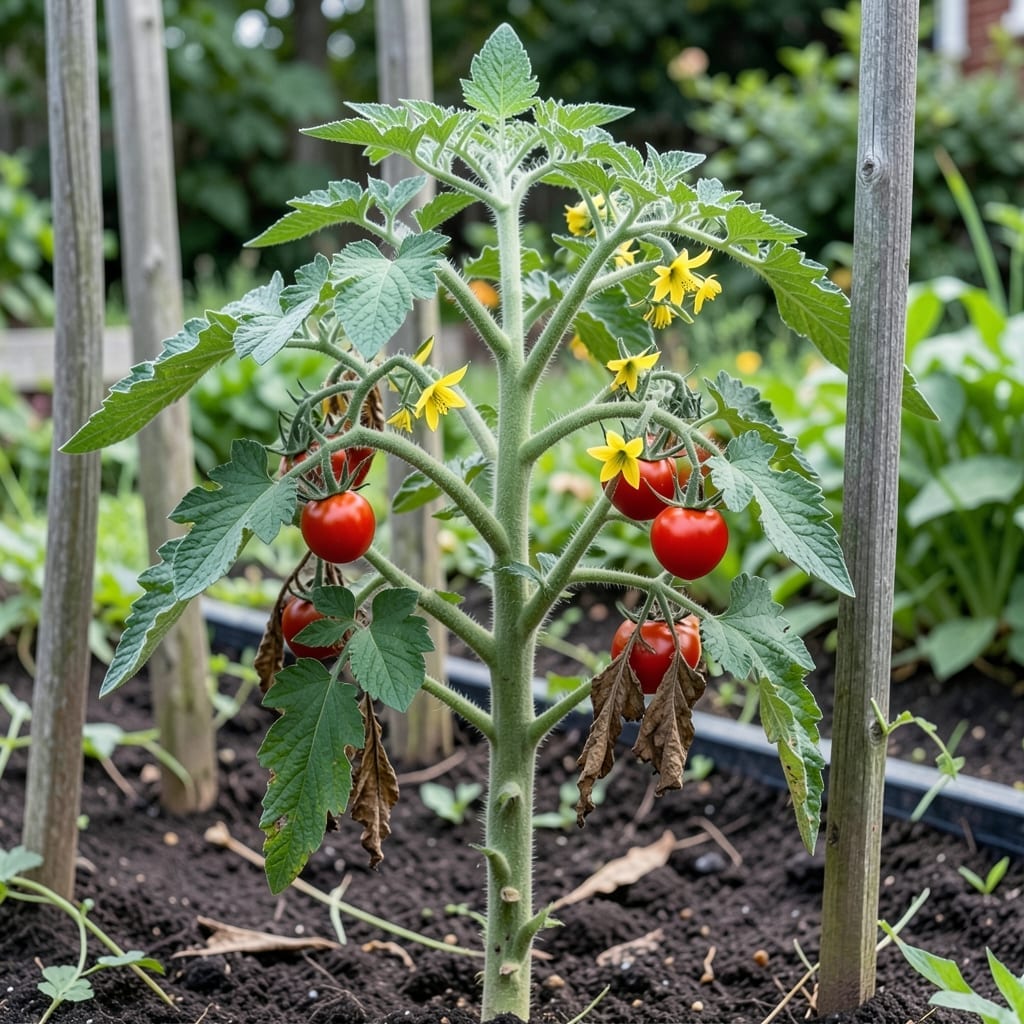
Bottom leaves turning brown first? I’ve seen this exact pattern ruin entire tomato crops if ignored. It’s not random—it’s your plant’s distress signal, and the cause usually boils down to one of three culprits.
The lower leaves take the hit first because they’re the oldest, weakest part of the plant. Early blight starts with dark spots, while fusarium wilt shows yellowing that turns crispy. Overwatering or poor airflow creates the perfect storm for both.
Catch it early and you can still save the upper growth. The fix often involves removing affected leaves, adjusting water, or improving air circulation. I’ve rescued plants at the brink with these steps.
Don’t wait until the brown spreads upward. A few targeted changes now can keep your tomatoes productive for weeks longer.
Browning starting from the bottom of tomato plants is often a distress signal. Here are the most common causes, explained simply so you can act fast.
Tomatoes are heavy feeders. When nitrogen is lacking, lower leaves turn yellow then brown as the plant reallocates nutrients upward. Similarly, a magnesium deficiency (common in sandy or acidic soils) causes interveinal chlorosis—brown patches between leaf veins—starting at the base. A soil test confirms the issue; amend with compost or a balanced fertilizer (e.g., 10-10-10) for nitrogen, or Epsom salts (magnesium sulfate) for quick magnesium correction.
Too much water suffocates roots, preventing oxygen uptake. This leads to root rot, which manifests as wilting, yellowing, and eventual browning of lower leaves. Check soil moisture 2 inches down—if it’s soggy, ease up on watering. Ensure pots have drainage holes or amend garden beds with perlite or coarse sand to improve aeration.
These pathogens thrive in wet, humid conditions. Early blight (Alternaria solani) starts as brown concentric rings on lower leaves, while Septoria (Septoria lycopersici) creates small, circular spots with gray centers. Remove infected leaves immediately, avoid overhead watering, and apply copper-based fungicides preventatively. Crop rotation and spacing plants for airflow also reduce risk.
Extreme temperatures disrupt nutrient uptake. Heat stress (above 90°F) can scorch leaves, while cold snaps (below 50°F) slow metabolism, causing lower leaves to yellow and brown. Use shade cloth during heatwaves or row covers for unexpected frost. Mulching helps regulate soil temperature.
Sap-sucking pests like aphids and whiteflies weaken plants, leading to stunted growth and browning foliage. They often cluster on undersides of lower leaves. Blast them off with water or apply insecticidal soap. Introducing beneficial insects like ladybugs can provide long-term control.
Here’s how to tackle each cause and nurse your tomato plants back to health, with prevention tips to keep them thriving.
Fix: Check soil moisture 2 inches deep—if bone dry, water deeply. If soggy, hold off and let it dry. Aim for consistent moisture, like a wrung-out sponge. Use drip irrigation for even watering.
Prevent: Mulch with straw to retain moisture and prevent soil splashing. Water early in the day to reduce evaporation.
Fix: Prune affected leaves immediately and dispose of them in the trash (not compost). Apply a copper-based fungicide or a DIY mix of 1 tsp baking soda + 1 quart water + a drop of dish soap. Spray weekly.
Prevent: Space plants 2–3 feet apart for airflow. Avoid overhead watering—use a soaker hose. Rotate crops yearly to break disease cycles.
Fix: Blast pests off with a strong water spray. For stubborn infestations, apply neem oil or insecticidal soap, focusing on leaf undersides. Introduce ladybugs for natural control.
Prevent: Inspect plants weekly, especially new growth. Plant companion herbs like basil or marigolds to deter pests. Keep the garden free of debris.
Fix: For yellowing lower leaves (nitrogen deficiency), side-dress with compost or a balanced fertilizer. For brown edges (magnesium), add Epsom salt (1 tbsp per gallon of water). For blossom-end rot (calcium), apply crushed eggshells or a calcium spray.
Prevent: Test soil annually and amend as needed. Use a slow-release organic fertilizer at planting and mid-season.
Fix: Shield plants from extreme heat with shade cloth. Cover with row covers if cold snaps are forecast. If herbicide drift is suspected, rinse leaves with water and monitor for recovery.
Prevent: Plant tomatoes after the last frost date. Avoid spraying herbicides near the garden on windy days.
💡 Pro Tip: Always sterilize pruning tools with rubbing alcohol between cuts to avoid spreading disease!
Yes, prune affected leaves right away to prevent disease spread. Use clean shears and dispose of leaves in the trash, not compost. This improves airflow and redirects energy to healthy growth.
Fungal diseases show circular spots with rings, while nutrient deficiencies cause uniform yellowing or browning. Check soil moisture first—overwatering often mimics both problems.
Often yes, if you act quickly. Focus on correcting the root cause (water, nutrients, or disease). New growth should return to normal within 1-2 weeks if conditions improve.
A baking soda spray (1 tsp per quart of water) helps with fungal issues. Epsom salt (1 tbsp per gallon) corrects magnesium deficiency. Always test on one leaf first.