
Beautiful Plants For Your Interior
Beautiful Plants For Your Interior
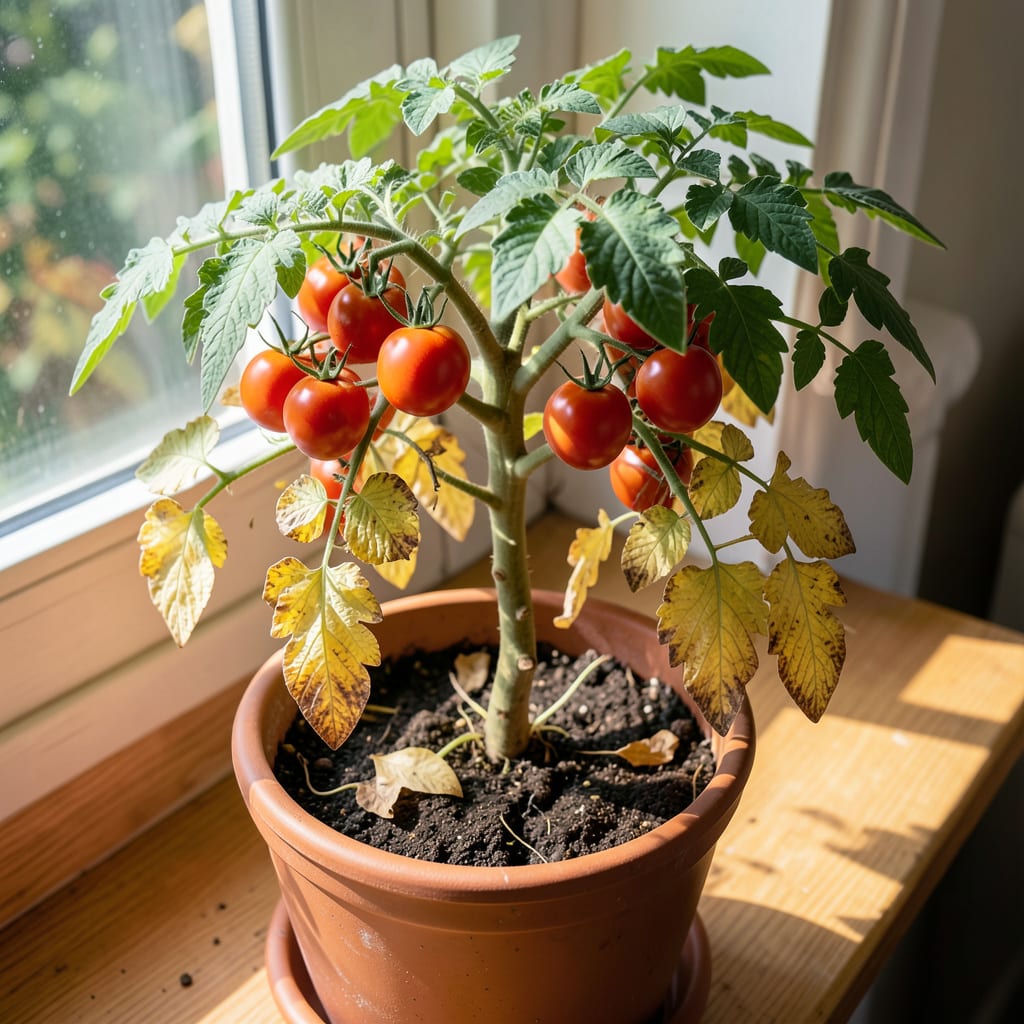
Yellow lower leaves on tomato plants always make my stomach drop. I’ve seen this happen mid-season when everything else looks fine, and it’s usually a sign of overwatering or nitrogen deficiency.
Catching it early means you can fix it in a week with simple adjustments. The good news? Most causes are reversible, and your upper leaves often stay green while you troubleshoot.
📚 In This Guide
Here’s how I diagnose and fix yellowing lower leaves on tomato plants in just a few days.
Check your soil moisture by pushing a finger 1-2 inches deep into the base of the plant. Bone-dry soil means you’re underwatering, while soggy, cold soil signals overwatering—both trigger yellowing. I’ve found that tomatoes prefer the soil to dry slightly between waterings but never completely.
Adjust your schedule immediately. For container plants, water when the top 1 inch feels dry to touch. In-ground tomatoes may need deep watering 2-3 times weekly in hot weather. The key is consistency—fluctuating moisture levels stress the plant and cause lower leaves to yellow first.
Real talk: If your soil stays wet for days after watering, you’re likely drowning the roots. Cut back and let it breathe.
Nitrogen deficiency shows as uniform yellowing starting from the bottom leaves, while magnesium deficiency causes yellowing between leaf veins. I always keep a balanced fertilizer on hand for quick correction. Apply a water-soluble 10-10-10 at half strength to avoid shocking the plant.
For magnesium issues, dissolve 1 tablespoon of Epsom salt in a gallon of water and spray on leaves at dusk. You’ll see improvement in 3-5 days if this is the culprit. Remember that over-fertilizing can burn roots and worsen the problem—more isn’t better.
Here’s the thing—yellowing from nutrient issues often starts with older leaves first because the plant sacrifices them to feed new growth.
Examine the undersides of yellow leaves for tiny pests or webbing, which indicates spider mites. For fungal issues like early blight, look for brown spots with yellow halos on lower leaves. I immediately remove any severely affected foliage and destroy it—don’t compost diseased material.
Improve air circulation by pruning some lower branches if the plant is dense. Apply a copper-based fungicide at the first sign of fungal disease, following label rates precisely. For pests, a strong blast of water can dislodge many mites, followed by insecticidal soap if needed.
This is the moment that matters: catching problems early prevents them from spreading upward through the plant.
Tomatoes hate cold drafts or temperatures below 50°F at night. If your plants are in containers near a frequently opened door or window, move them to a more stable location. I’ve seen lower leaves yellow overnight from a single cold snap.
Check for root damage from recent cultivation or transplanting. Gently tug the base of the plant—if it pops out easily, the roots may be damaged. In this case, provide shade cloth for 2-3 days to reduce stress while roots recover.
Don’t skip this (I learned the hard way): environmental stress often mimics disease symptoms but requires completely different solutions.
Small adjustments in your care routine can prevent yellowing and restore your plant’s health quickly.
Soil Moisture Insight: When checking soil moisture in Step 1, remember that tomatoes prefer the 1-2 inches deep test to be slightly dry, not bone-dry or soggy. Container plants especially need this precision—water when the top 1 inch feels dry to touch, and don’t let the soil stay wet for days after watering. Fluctuating moisture stresses the plant, and lower leaves always show it first.
Nutrient Application Tip: For Step 2, stick to the half-strength water-soluble 10-10-10 application to avoid root burn. If treating magnesium deficiency with Epsom salt, use exactly 1 tablespoon per gallon of water and spray at dusk. Improvement should appear within 3-5 days if the issue is correctly identified.
Early Intervention Strategy: In Step 3, act immediately when you spot pests or disease. Remove affected foliage and destroy it—don’t compost it. For fungal issues, a copper-based fungicide applied precisely can stop early blight in its tracks. Prune dense areas to improve air circulation, which prevents many problems before they start.
Environmental Stress Check: Step 4’s temperature threshold of 50°F at night is critical. If your tomatoes are exposed to colder drafts, move them to a more stable spot. For root damage, the 2-3 days of shade cloth recovery time can make all the difference while the plant regains strength.
Yellowing lower leaves often signal nutrient deficiencies (like nitrogen), overwatering, or poor drainage. Check soil moisture and fertility first!
Unfortunately, once leaves turn yellow, they won’t revert to green. Focus on fixing the root cause (e.g., adjusting water or adding fertilizer) to prevent further damage.
Yes! Prune yellow leaves to redirect energy to healthy growth and reduce disease risk. Use clean scissors to avoid spreading pathogens.
Water deeply 1–2 times per week (more in heat), ensuring soil is moist but not soggy. Consistency is key—avoid letting soil dry out completely.
Sometimes! Fungal infections (like early blight) or pests (e.g., aphids) can cause yellowing. Inspect leaves for spots or bugs and treat accordingly.
