
Beautiful Plants For Your Interior
Beautiful Plants For Your Interior
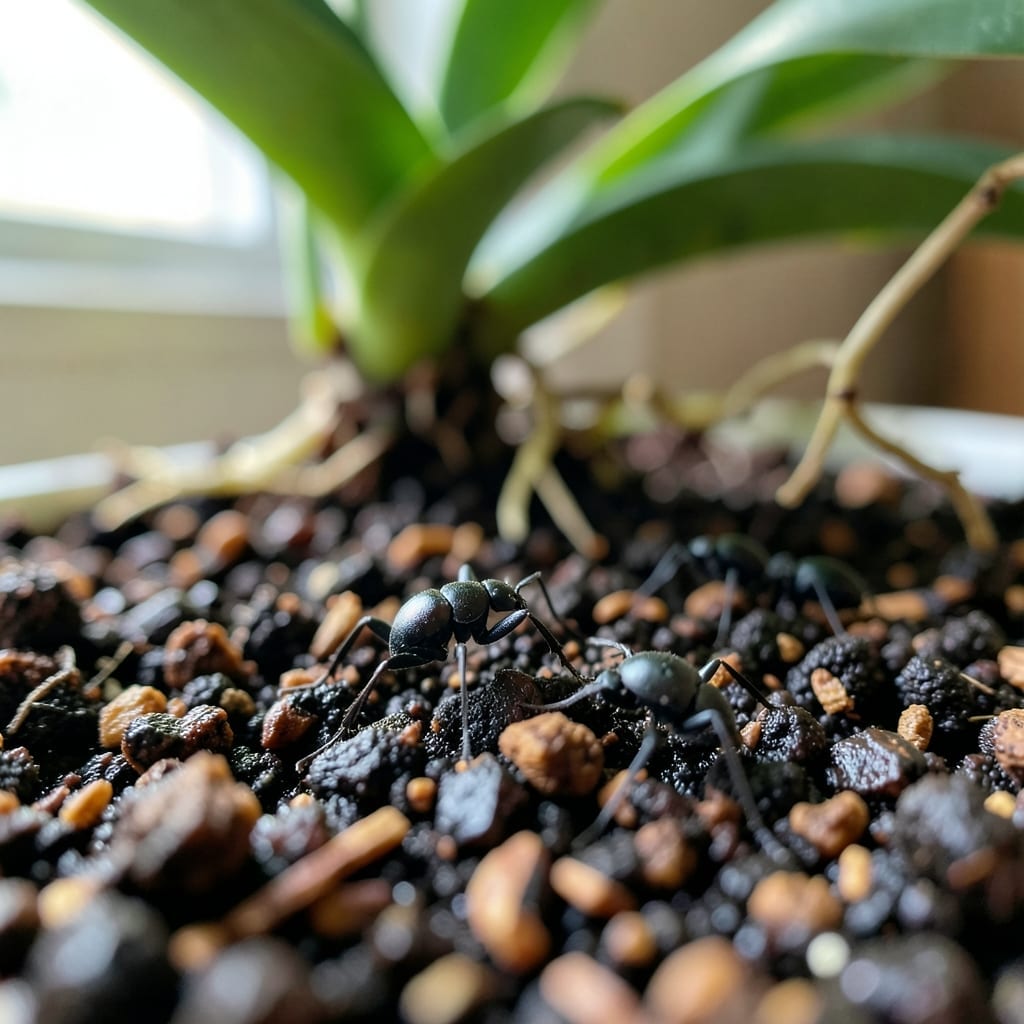
I noticed those tiny black bugs in my orchid soil last spring. They’re likely fungus gnats, tiny pests that thrive in moist conditions, laying eggs that turn into larvae feeding on roots and organic matter.
Your orchids suffer when these bugs multiply, as the larvae damage roots, stunting growth. The adults are mostly annoying, but the real harm happens underground where you can’t see it.
Removing them doesn’t require harsh chemicals. A few simple changes to your watering routine and soil mix can break their life cycle and restore your orchid’s health.
Preventing future infestations means adjusting how you care for your plants. It’s easier than you think, and your orchids will thank you with stronger roots and vibrant blooms.
The presence of tiny black bugs in orchid soil typically stems from environmental or cultural conditions that favor their growth. Below are the most common causes, explained with actionable insights.
Excess moisture in orchid soil creates an ideal breeding ground for fungus gnats and other small black pests. Orchids thrive in well-draining media, but soggy conditions encourage organic matter decomposition, which attracts these insects. Ensure your orchid’s pot has drainage holes and use a chunky, airy mix (e.g., bark, perlite, or sphagnum moss) to prevent waterlogging.
Orchid potting mixes rich in decomposing materials (like fine bark or leaf mold) provide food for tiny black bugs, such as springtails or thrips larvae. These pests feed on fungi and decaying plant debris. To minimize this, refresh the potting medium every 1–2 years and remove any dead roots or leaves promptly.
Sometimes, the bugs hitch a ride in pre-packaged soil or repurposed potting mixes. Low-quality or unsterilized media may contain eggs or larvae. Always sterilize homemade mixes by baking them at 200°F (93°C) for 30 minutes or use commercial orchid-specific blends from trusted suppliers.
Orchids love humidity, but so do tiny black bugs. Fungus gnats and shore flies thrive in warm, moist environments. If your orchid sits in a humid space (like a greenhouse or bathroom), improve air circulation with a fan and avoid misting the soil surface excessively.
Dealing with tiny black bugs in your orchid soil can be frustrating, but don’t worry—there are simple, effective ways to evict them and keep them from coming back. Below are targeted solutions for each common cause, plus prevention tips to protect your plants long-term.
If soggy soil is the culprit, stop watering immediately and let the potting mix dry out completely. Repot your orchid in fresh, well-draining bark-based mix, and ensure the pot has drainage holes. Water only when the top inch of soil feels dry to the touch.
Old or decomposed potting material attracts bugs. Remove your orchid, gently rinse its roots, and repot it in sterilized orchid mix. Discard the infested soil—don’t reuse it. This breaks the bug life cycle and refreshes your plant’s environment.
For fungus gnats, place yellow sticky traps near the pot to catch adults. For a long-term fix, introduce beneficial nematodes or Bacillus thuringiensis var. israelensis (Bti) to the soil—these target larvae without harming your orchid. Neem oil (diluted) can also deter springtails when applied to the soil surface.
Adult bugs are mostly a nuisance, but their larvae can damage roots. Fungus gnat larvae feed on root hairs and organic matter, potentially stunting growth if left unchecked.
Fungus gnats look like tiny mosquitoes and hover near soil. Springtails are wingless, jump when disturbed, and prefer very damp conditions. Both thrive in moist orchid mixes.
Repotting in fresh, sterilized orchid mix removes most pests, but combine it with drying out the soil and using traps for best results. Always discard old soil—never reuse it.
A 3% hydrogen peroxide solution (1 part peroxide to 4 parts water) can kill larvae on contact. Water your orchid with this mix once, then let the soil dry out completely.