
Beautiful Plants For Your Interior
Beautiful Plants For Your Interior
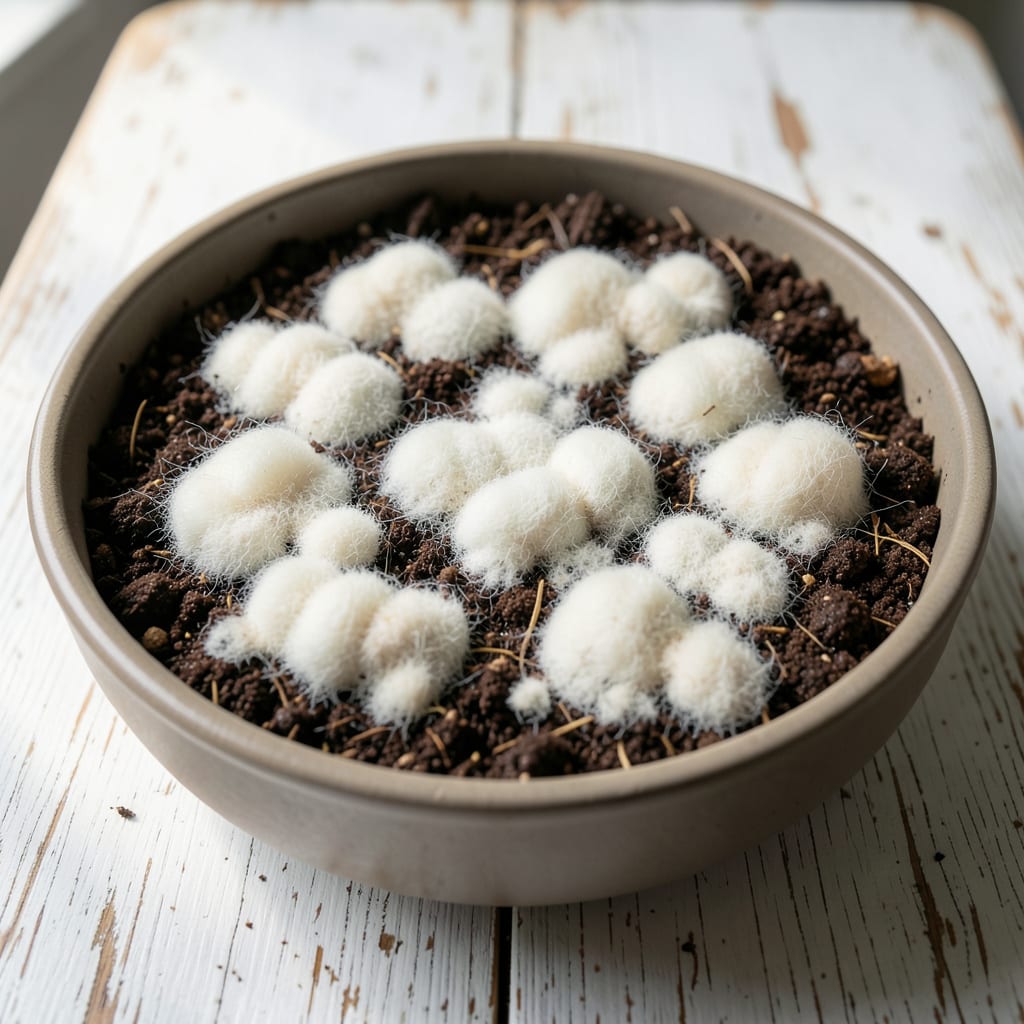
That white fuzz on your soil isn’t a lost cause. I’ve saved dozens of plants by catching it early and acting fast.
Mold appears when soil stays too wet or air can’t circulate. The fix starts with simple changes: better drainage, less water, more airflow. Most cases clear up within a week of these adjustments.
Natural solutions like cinnamon or hydrogen peroxide work surprisingly well. They’re gentle on plants but tough on mold, and you likely already have them at home.
Prevention is even easier than treatment. Once you know the signs and the habits to avoid, you’ll spot trouble before it starts.
White mold in potting soil often stems from environmental and cultural conditions that encourage fungal growth. Below are the most frequent causes, explained with actionable insights.
Overwatering is the leading cause of white mold. Fungi like Sclerotinia thrive in damp, poorly drained soil. When waterlogged, soil lacks oxygen, creating an anaerobic environment where mold spores multiply. Fix: Water only when the top inch of soil is dry, and ensure pots have drainage holes.
Stagnant air traps humidity around the soil, fostering mold development. This is common in crowded plant setups or enclosed spaces. Fix: Space plants apart, use a small fan for airflow, and avoid overcrowding shelves.
Decaying leaves, bark, or unfinished compost in potting mix provide food for mold. As organic matter breaks down, it releases nutrients that feed fungal growth. Fix: Remove dead foliage promptly and use sterilized potting soil.
Reusing old soil or unsterilized tools can introduce mold spores. Even new potting mixes may harbor dormant fungi. Fix: Bake soil at 200°F (93°C) for 30 minutes to kill spores, or disinfect tools with rubbing alcohol.
Relative humidity above 60% encourages mold. Greenhouses, terrariums, or humid climates are high-risk zones. Fix: Use a dehumidifier or move plants to a drier area. Grouping moisture-loving plants together can also help localize humidity.
White mold in your potting soil can be frustrating, but these targeted solutions will help you restore a healthy growing environment.
If excess moisture is the culprit, let the soil dry out between waterings. Stick your finger an inch into the soil—if it feels damp, wait. Use pots with drainage holes and empty saucers after watering to prevent standing water. Prevention tip: 💡 Water in the morning so excess moisture evaporates during the day.
Stagnant air encourages mold growth. Move plants to a breezy spot or use a small fan to circulate air gently. Avoid overcrowding plants, and prune dense foliage to allow airflow. Prevention tip: ✨ Space pots at least a few inches apart for better circulation.
If the soil is heavily infested, remove the plant, discard the old soil, and repot with a sterile potting mix. Add a handful of perlite or coarse sand to improve drainage. Prevention tip: 🎯 Use a high-quality, well-draining potting mix from the start to avoid contamination.
Decaying leaves or plant debris can feed mold. Remove dead foliage and fallen leaves from the soil surface regularly. Top-dress with a thin layer of cinnamon (a natural antifungal) to deter regrowth. Prevention tip: 🌡️ Keep your growing area tidy to minimize organic buildup.
For mild cases, spray the soil with a mix of 1 part hydrogen peroxide (3%) to 4 parts water to kill mold spores. Alternatively, use a baking soda solution (1 tsp per quart of water) weekly. Prevention tip: 🔥 Treat new soil with a fungicide before planting to prevent recurrence.
White mold won’t immediately kill plants but can compete for nutrients. Severe infestations may stunt growth or cause root rot. Act quickly to prevent long-term damage.
Only after treatment. Bake soil at 200°F for 30 minutes to kill spores. Alternatively, mix with fresh soil at a 1:3 ratio.
Inspect soil weekly, especially in humid conditions. Look for fuzzy growth or musty smells—early signs are easiest to treat.
A 1:4 vinegar-water spray can help, but use sparingly. Too much may harm plant roots or acidify soil. Test on a small area first.
