
Beautiful Plants For Your Interior
Beautiful Plants For Your Interior
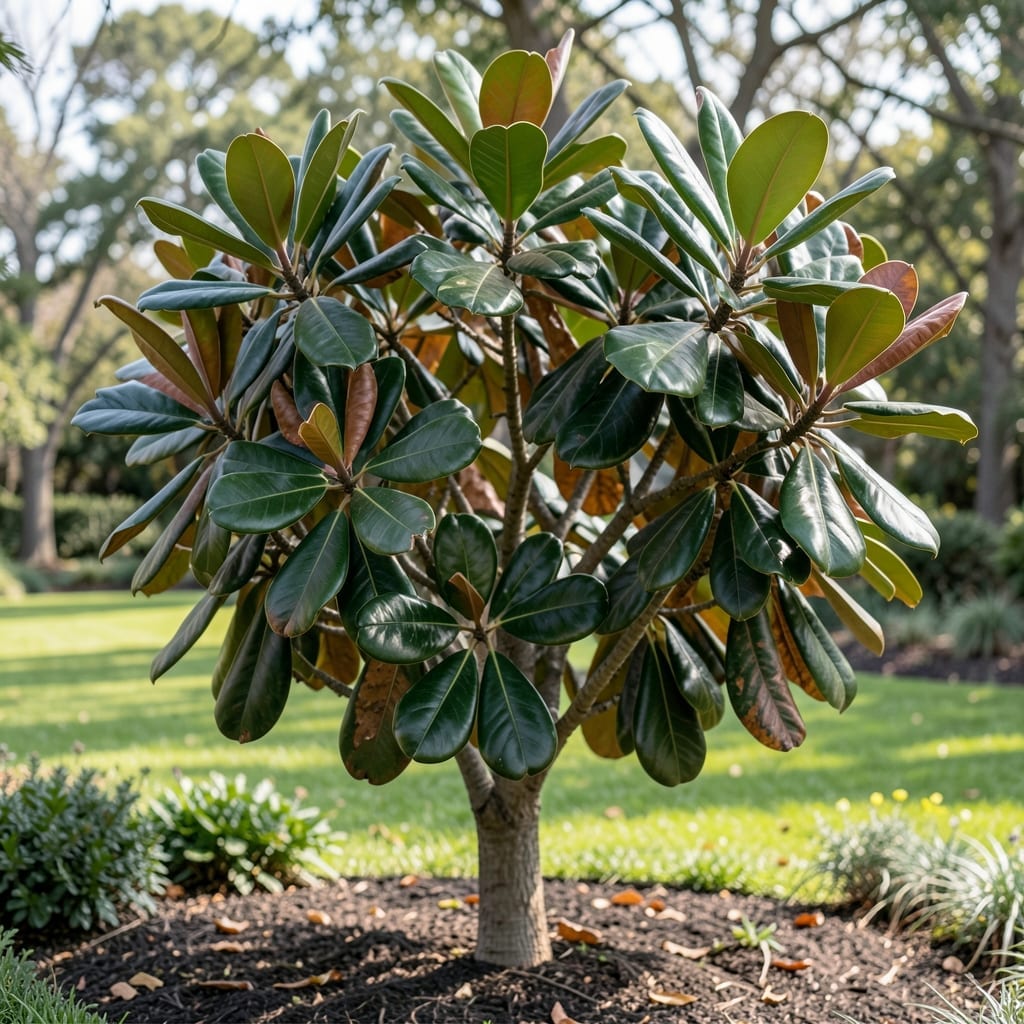
Southern magnolia leaves experiencing disease often show yellowing, brown spots, or blackened edges. Common issues include fungal infections, nutrient deficiencies, or pest damage requiring targeted organic solutions.
I’ve noticed these trees often struggle with leaf spot fungi when humidity spikes, especially in poorly ventilated gardens. The discoloration starts as small lesions before spreading, and without intervention, entire sections can defoliate. 🌟
What’s fascinating is how soil pH imbalances or iron deficiencies manifest similarly to pest damage, making diagnosis tricky. That’s why I always recommend testing soil before applying treatments.
💡 In This Article
Fungal pathogens like Cercospora and Anthracnose thrive in warm, wet conditions, causing those telltale brown spots with yellow halos. These spores land on leaves, germinate within 12-24 hours, and penetrate the leaf surface through natural openings or wounds. The infection disrupts the leaf’s ability to photosynthesize, leading to the characteristic discoloration and eventual tissue death.
🔥
Environmental stressors play a huge role too. Southern magnolias in waterlogged soil often develop root rot, which manifests as yellowing leaves starting from the bottom up. Meanwhile, drought stress causes marginal leaf scorch—those crispy brown edges you might mistake for disease.
The tree’s native habitat in the southeastern US means it prefers acidic, well-drained soil with a pH between 5.0-6.5. ✨
Nutrient deficiencies create their own patterns. Iron chlorosis, common in alkaline soils, turns new growth pale yellow while veins stay green. Magnesium deficiency shows as interveinal chlorosis on older leaves, often starting at the leaf margins. These patterns differ from pest damage, where you’d typically see chewed edges or stippling from sap-sucking insects. 💫
Visual diagnosis requires close inspection. Fungal spots often have defined borders and may contain tiny black fruiting bodies. Pest damage usually appears more irregular, with visible insect presence or webbing. Nutrient issues tend to affect the entire tree uniformly rather than creating isolated spots. Always check the undersides of leaves, where many problems first appear.
⚡
Early detection is key. I’ve found that using a 10x hand lens reveals details invisible to the naked eye, like fungal spores or mite eggs. Comparing affected leaves to healthy ones on the same tree helps identify whether the problem is localized or systemic. This approach saves time and prevents unnecessary treatments. 🌟
This classic pattern signals iron chlorosis, common in alkaline soils. The tree can’t absorb iron, causing new growth to yellow while veins stay green. A soil test confirms the issue, and chelated iron applications often resolve it within 2-3 weeks.
Use a 2 tablespoons per 1 gallon mix every 7-10 days until spots disappear. Apply in early morning to avoid leaf burn. Neem works best as prevention, so continue monthly during wet seasons.
Yes, waterlogged soil leads to root rot, which manifests as marginal scorch. Check soil 2 inches down—if it’s soggy, reduce watering immediately. Improve drainage with organic matter to prevent recurrence.
Elemental sulfur works quickest—apply 1 pound per 100 sq ft and water in. Retest pH after 4-6 weeks. For immediate needs, drench with a sulfuric acid solution, but wear protective gear.