
Beautiful Plants For Your Interior
Beautiful Plants For Your Interior
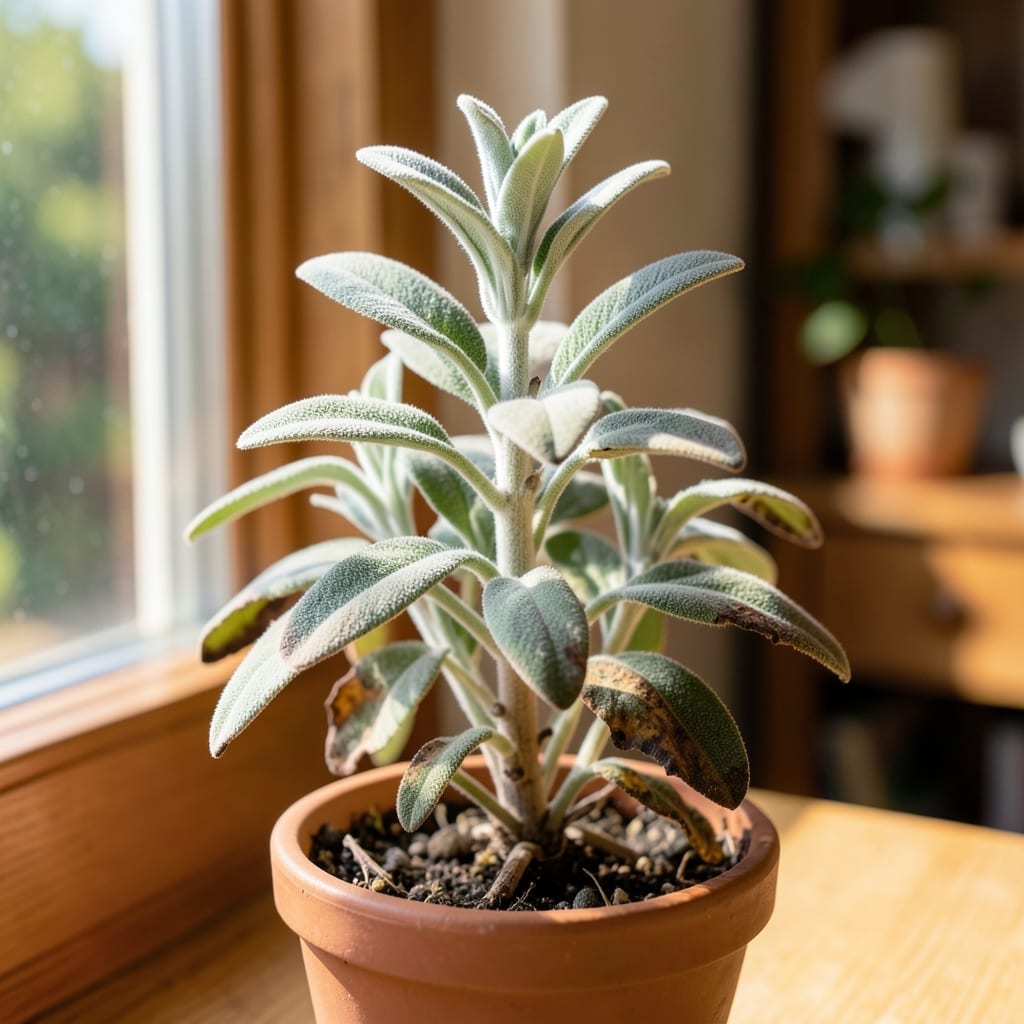
Black leaves on your sage mean something’s wrong, but it’s fixable. I’ve seen this happen with both young plants and old favorites, and the causes are usually simpler than you’d think.
Most often, it’s too much water sitting at the roots or a fungus taking hold. Sometimes it’s just the plant reacting to cold snaps or poor air flow around the leaves. The good news? Sage is tough and bounces back fast with the right care.
You’ll notice the blackening starts at the edges or tips first. Catching it early means you can trim away the damage and adjust your routine before it spreads.
With a few small changes, your sage will be back to its healthy, fragrant self in no time. Here’s how to diagnose and fix it for good.
Sage leaves turning black often signal underlying stress or disease. Below are the most common causes, explained scientifically for quick diagnosis and action.
Root rot (Phytophthora spp.) and leaf spot (Alternaria or Cercospora) thrive in soggy conditions. Overwatering or poor drainage creates anaerobic soil, where fungi attack roots and block nutrient uptake. Blackened leaves often appear water-soaked or mushy. Action: Improve drainage and reduce watering frequency.
Extreme cold (< 20°F/-7°C) or frost damage ruptures plant cells, causing blackened, wilted foliage. Sage is drought-tolerant but not frost-hardy in prolonged freezes. Action: Cover plants with frost cloth or move potted sage indoors during cold snaps.
Excess nitrogen (from over-fertilizing) leads to lush but weak growth prone to tip burn—black edges on leaves. Conversely, calcium or potassium deficiencies disrupt cell wall integrity, causing necrosis. Action: Test soil and adjust fertilizer; use a balanced 10-10-10 formula sparingly.
Sap-sucking pests like spider mites or aphids weaken sage, leaving leaves vulnerable to secondary infections. Their piercing mouthparts create entry points for fungi. Action: Spray with neem oil and prune heavily infested areas.
If your sage leaves are turning black, don’t panic—there are simple, organic fixes to revive your plant. Below are targeted solutions for each common cause, plus prevention tips to keep your sage thriving.
Fix: Stop watering immediately and let the soil dry out. If the roots are soggy, repot the sage in fresh, well-draining soil and a container with drainage holes. Trim any black, mushy roots to prevent rot from spreading.
Prevention: Water only when the top 1-2 inches of soil are dry. Use a pot with drainage and a gritty, sandy soil mix to avoid waterlogging. 💡 Pro tip: Sage is drought-tolerant—it’s better to underwater than overwater!
Fix: Remove all affected leaves and stems to stop the spread. Apply a natural fungicide like neem oil or a baking soda solution (1 tsp baking soda + 1 quart water + a few drops of dish soap). Spray evenly on the plant, focusing on undersides of leaves.
Prevention: Improve airflow around the plant by spacing it properly and pruning dense growth. Avoid overhead watering to keep leaves dry. ✨ Bonus: Copper-based fungicides can also help prevent future outbreaks.
Fix: If frost has blackened the leaves, prune the damaged parts to encourage new growth. Move potted sage indoors or to a sheltered spot if cold snaps are forecasted.
Prevention: Plant sage in a sunny, warm location. In colder climates, mulch around the base in late fall for insulation, or grow it in containers you can bring inside during winter.
Fix: Inspect the plant for pests like aphids or spider mites. Blast them off with a strong stream of water, then treat with insecticidal soap or a mix of water and dish soap. For severe cases, use horticultural oil.
Prevention: Keep your garden clean and free of debris where pests hide. Introduce beneficial insects like ladybugs to naturally control pest populations.
Discard blackened leaves as they may harbor mold or bacteria. Healthy green leaves remain safe if the issue is isolated. Always wash remaining foliage before use.
Water only when the top 1-2 inches of soil are dry. Sage thrives on neglect—overwatering is the most common cause of black leaves.
If stems are black and mushy, the plant likely has root rot. Trim healthy cuttings to propagate, but discard the infected base. Prevention is key.
Potted sage is vulnerable to frost damage below 20°F/-7°C. Move containers indoors or to a sheltered area before cold snaps.