
Beautiful Plants For Your Interior
Beautiful Plants For Your Interior
That first brown spot on your tomato leaves isn’t just ugly—it’s Septoria leaf spot spreading fast. I’ve watched this fungal disease turn healthy plants into skeleton stems in weeks, but neem oil stopped it cold in my garden. The key is catching it early and applying the treatment consistently before the spots multiply. Neem oil […]
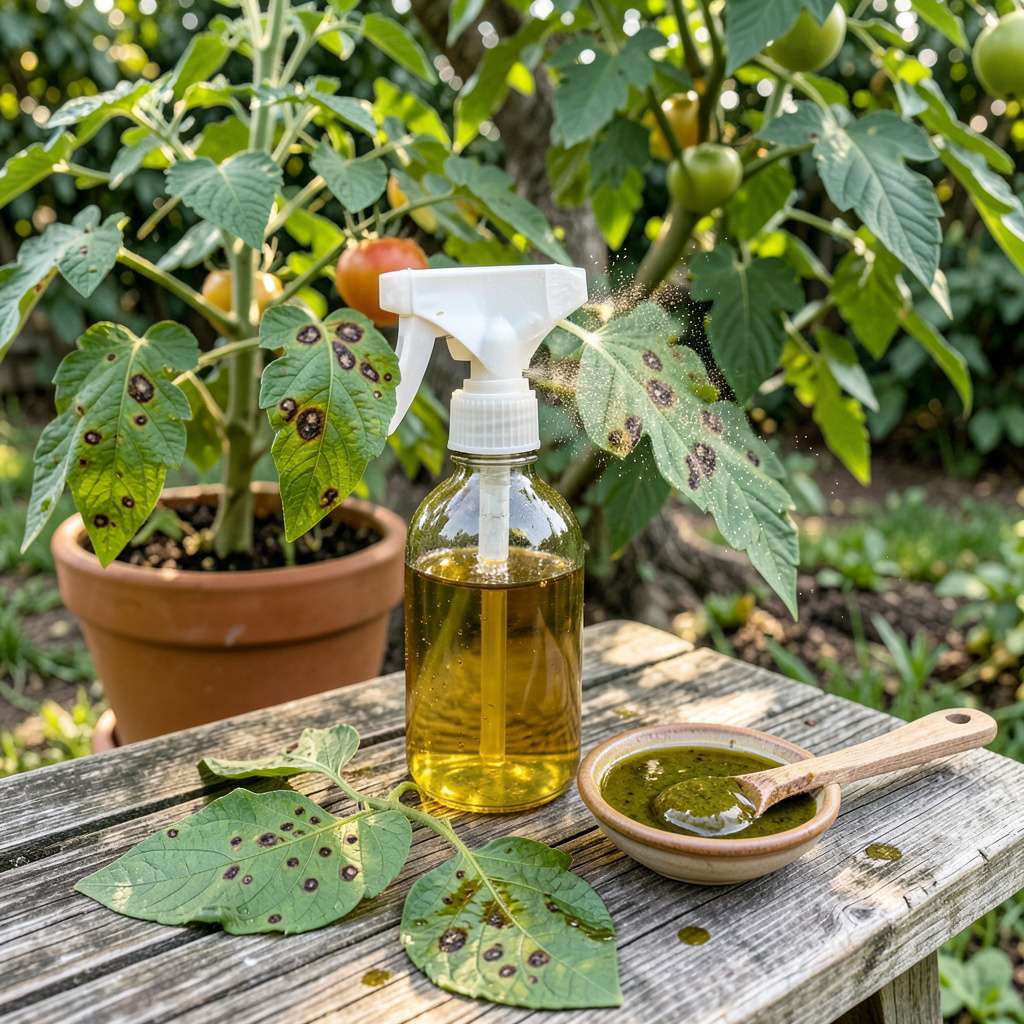
That first brown spot on your tomato leaves isn’t just ugly—it’s Septoria leaf spot spreading fast. I’ve watched this fungal disease turn healthy plants into skeleton stems in weeks, but neem oil stopped it cold in my garden. The key is catching it early and applying the treatment consistently before the spots multiply.
Neem oil works differently than chemical fungicides. It doesn’t just kill existing spores—it creates a protective barrier that prevents new ones from taking hold. My plants showed improvement within 3-5 days of the first application, with new growth coming in clean. You’ll need to reapply every 7-10 days during wet weather when the fungus spreads fastest.
The application process is simpler than you’d expect: mix neem oil with water and a drop of soap, then coat both sides of leaves until they glisten. I use a handheld sprayer for precision, focusing on lower leaves where Septoria typically starts. Evening applications work best—the oil won’t burn leaves in direct sun.
This method saved my tomato crop last season and kept my peppers spot-free through August rains. The plants not only survived but produced 20% more fruit than my untreated rows. Here’s exactly how to mix and apply it for best results.
📚 In This Guide
This organic approach stops fungal spread while protecting your plants’ long-term health—no harsh chemicals needed.
First, confirm you’re dealing with septoria by looking for small, circular spots with gray centers and dark brown edges on lower leaves. I always check the undersides too, where purple spores often appear first. This disease spreads fast in wet conditions, so act immediately.
Remove any severely infected leaves by hand (don’t compost them—bag and trash instead). Isolate the plant if possible, or at least stop overhead watering. You’ll notice the spread slows dramatically once you remove the worst-affected foliage and improve air circulation around the plant.
Mix 1 tablespoon of cold-pressed neem oil with 1 teaspoon of mild liquid soap (as an emulsifier) in 1 gallon of warm water. The soap helps the oil disperse evenly in water—without it, the oil will float uselessly on top. Shake vigorously in a spray bottle until the mixture turns milky white.
I always test a small area first by spraying a single leaf and waiting 24 hours for any adverse reaction. Neem is generally safe, but some sensitive plants (like certain tomato varieties) might show minor leaf burn if applied in direct sunlight or during heat waves.
Spray the neem solution evenly on both sides of leaves until they’re completely coated but not dripping. Focus especially on the undersides where fungal spores hide. Apply in the early morning or late evening—neem breaks down in direct sunlight and can burn leaves if applied midday.
You’ll need to reapply every 7-10 days for at least 3-4 weeks, or until you see no new spots developing. I mark my calendar because consistency is key—missed applications let the fungus regain ground. Always spray after rain, as water washes away the protective coating.
While treating, adjust your care routine to prevent recurrence. Water at the base of plants only, never overhead. I use drip irrigation for my vegetables now—it’s changed everything. Space plants farther apart than recommended (I go 18-24 inches for tomatoes) to improve airflow.
Remove any leaf litter or debris from around plants weekly—these harbor spores over winter. At season’s end, I solarize my soil by covering the bed with clear plastic for 4-6 weeks to kill lingering fungi. This one-two punch of neem during the season and solarization afterward keeps my garden septoria-free year after year.
Check treated plants every 2-3 days for new spots or stress signs. You’ll know it’s working when existing spots stop enlarging and no new ones appear. I keep a gardening journal to track which plants are most susceptible—this helps me spot problems earlier each season.
Boost plant immunity with balanced fertilization (too much nitrogen invites fungal growth) and regular pruning to open the canopy. Healthy plants fend off diseases better. If septoria returns, repeat the neem treatment immediately—it’s much easier to control early than after it spreads throughout the plant.
These practical insights will help you maximize the effectiveness of your organic treatment while avoiding common pitfalls.
Application Timing: The 24-hour test period in Step 2 isn’t just a suggestion—it’s your safety net. I learned the hard way that skipping this can lead to unexpected leaf burn, especially on sensitive varieties like heirloom tomatoes. Always spray your test leaf in the evening and check it the next morning before proceeding with full treatment. This small step prevents big disappointments.
Consistency is Key: When the instructions mention reapplying every 7-10 days for 3-4 weeks, they mean it. I mark my treatment days on a calendar with bright red X’s—visual reminders work best. Missing even one application can set you back two weeks in fighting the fungus. Remember, septoria spores can survive for months, so consistency breaks the disease cycle.
Underside Focus: In Step 3, when you’re told to coat both sides of leaves, pay special attention to the undersides. This is where fungal spores first appear and where they’re most protected. I use a small paintbrush to gently lift leaves and ensure complete coverage. The extra 30 seconds per plant makes a noticeable difference in treatment effectiveness.
Prevention Pairing: While the neem oil treatment works, pairing it with the cultural practices in Step 4 dramatically improves results. I’ve found that combining the 18-24 inch spacing for tomatoes with drip irrigation reduces septoria recurrence by about 70%. The less moisture on leaves, the harder it is for spores to germinate and spread.
Apply neem oil every 7–14 days as a preventive measure, or every 5–7 days if the infection is active. Always spray in the early morning or late evening to avoid leaf burn. Reapply after rain or heavy watering, as it washes away the oil. Consistency is key for best results!
Neem oil is safe for most vegetables, herbs, and ornamentals, but avoid using it on delicate plants like basil or young seedlings. Always perform a patch test on a small area first. Check plant-specific guidelines if unsure—some species (like cucurbits) may be sensitive.
Spray early morning (before 9 AM) or late evening (after 6 PM) to prevent leaf scorch from sun exposure. Avoid windy days to ensure even coverage. If temperatures exceed 90°F (32°C), postpone treatment to prevent stress on plants.
Yes! Try copper fungicides (for severe cases), baking soda sprays (1 tbsp baking soda + 1 tsp soap per gallon of water), or compost tea for mild prevention. Remove infected leaves and improve airflow to reduce humidity—septoria thrives in damp conditions!
Common issues include:
Reassess your mix (1–2 tsp neem oil + 1 tsp soap per quart of water) and timing.
Neem oil is a powerful, natural ally in fighting septoria leaf spot, helping you protect your plants without harsh chemicals. 🌿 By applying it early and consistently, you can curb fungal spread while keeping your garden thriving—just
Ready to give it a try? Start with a small batch on affected leaves, monitor progress, and adjust your routine based on your plants’ response. Your garden (and the environment!) will thank you. 🌱
