
Beautiful Plants For Your Interior
Beautiful Plants For Your Interior
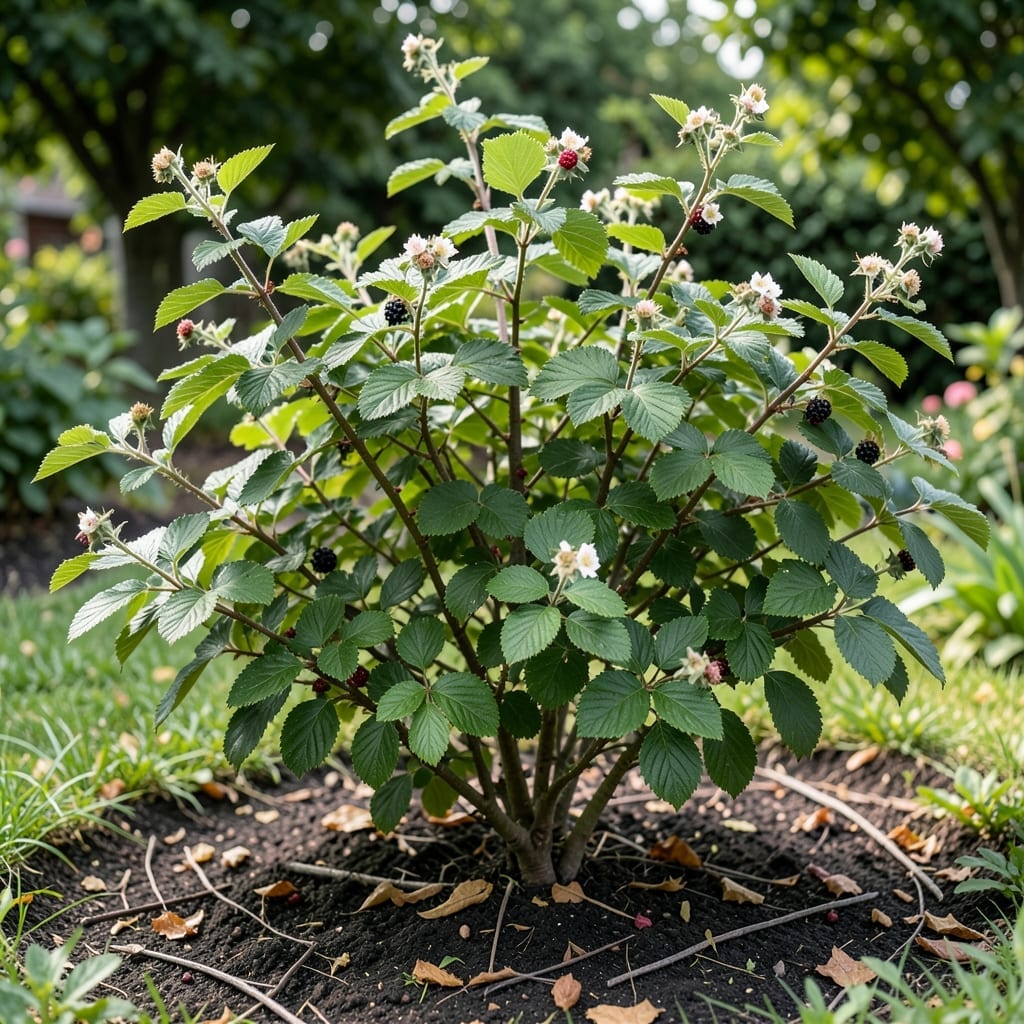
Those blackberry leaves can tell you everything that’s wrong with your plants. I learned the hard way that yellowing, spotted, or curled foliage isn’t just ugly—it’s a distress signal you can’t ignore.
Organic solutions work best for Rubus fruticosus issues. From neem oil to proper pruning, I’m sharing the exact methods that saved my patch last season and kept my harvest disease-free all summer long.
📚 In This Guide
Here’s the method I use to diagnose and treat blackberry leaf problems organically and effectively.
Start by inspecting both sides of the leaves for discoloration, spots, or unusual patterns. I look for yellowing between veins, which often signals iron deficiency in blackberry plants. Purple or red undertones may indicate phosphorus deficiency, while brown edges suggest potassium shortage.
Check for small, dark spots with yellow halos—these are classic signs of anthracnose fungus. White powdery coatings point to powdery mildew, which thrives in humid conditions. Note the location: lower leaves often show problems first because nutrients travel upward last.
Evaluate your growing conditions carefully. Blackberry leaves develop issues when plants receive less than 6 hours of sun daily or when soil stays soggy. I check the drainage by digging a 6-inch deep test hole—if water hasn’t drained within 1 hour, the soil needs amendment.
Consider recent weather patterns. Prolonged wetness from rain or overhead irrigation creates perfect conditions for fungal diseases. I’ve found that plants spaced 3-4 feet apart have better air circulation, which reduces leaf moisture and disease pressure significantly.
For nutrient deficiencies, I apply a balanced organic fertilizer or compost tea at the base of the plant. For fungal issues, a copper-based fungicide or neem oil solution works well when applied in the early morning. Always follow label rates—more isn’t better with organic treatments.
Remove and destroy any severely affected leaves immediately to prevent spread. I use clean pruners and sterilize them with rubbing alcohol between cuts. For powdery mildew, improving air circulation by thinning canes often resolves the issue without chemical intervention.
Prevention begins with proper site selection. I plant blackberries in well-draining soil with a pH between 5.5 and 6.5, which is ideal for nutrient uptake. Mulching with 2-3 inches of organic material helps maintain consistent soil moisture while preventing soil-borne spores from splashing onto leaves.
Water at the base of the plant rather than overhead, and do it in the morning so leaves dry quickly. I’ve found that drip irrigation systems reduce leaf wetness issues entirely. Regularly remove fallen leaves and debris from around the plants to eliminate potential disease reservoirs.
Check your plants weekly during the growing season, paying special attention to new growth. I keep a garden journal to track symptoms, treatments, and weather conditions—this helps identify patterns over time. Early intervention often means the difference between a minor issue and a plant-killing problem.
Adjust your care based on observations. If leaves show consistent nutrient deficiencies, test your soil and amend accordingly. For recurring fungal issues, consider planting more disease-resistant blackberry varieties next season. The key is staying vigilant and responding quickly to changes in leaf appearance.
These insights will help you master the organic approach to blackberry leaf health.
Diagnostic Precision: In Step 1, when examining leaves, use a magnifying glass to spot early signs of powdery mildew or anthracnose. The yellow halos around dark spots are your first warning for anthracnose, while powdery mildew appears as a faint white dusting that’s easy to miss in early stages.
Drainage Test Refinement: For the 6-inch deep test hole in Step 2, dig it near the plant’s drip line rather than at the base. If water hasn’t drained within the specified 1 hour, amend with compost or sand. This test works best when performed after a rain or thorough watering.
Application Timing: In Step 3, applying copper-based fungicide or neem oil solution in the early morning is crucial because it allows the treatment to dry before evening dew forms. I’ve found that applications made after 10 AM are less effective due to rapid evaporation in midday heat.
Preventative Mulching: The 2-3 inches of organic mulch mentioned in Step 4 should be applied in a doughnut shape around the plant, keeping it 2-3 inches away from the stem to prevent rot. Straw or wood chips work best, as they break down slowly and improve soil structure over time.
Look for yellowing, brown spots, or curled edges on blackberry leaves. White powdery mildew or dark lesions often signal fungal infections like anthracnose or rust. Early detection helps prevent spread!
Treat at the first sign of symptoms, ideally in early spring or late fall. Avoid spraying during rainy weather, as moisture can wash away treatments and worsen fungal growth.
Yes! Try neem oil, baking soda sprays, or copper-based fungicides. Removing infected leaves and improving airflow also helps. These methods are eco-friendly and safe for beneficial insects.
Prune regularly to improve airflow, water at the base to keep leaves dry, and remove fallen debris. Plant disease-resistant varieties and avoid overhead irrigation to reduce fungal risks.