
Beautiful Plants For Your Interior
Beautiful Plants For Your Interior
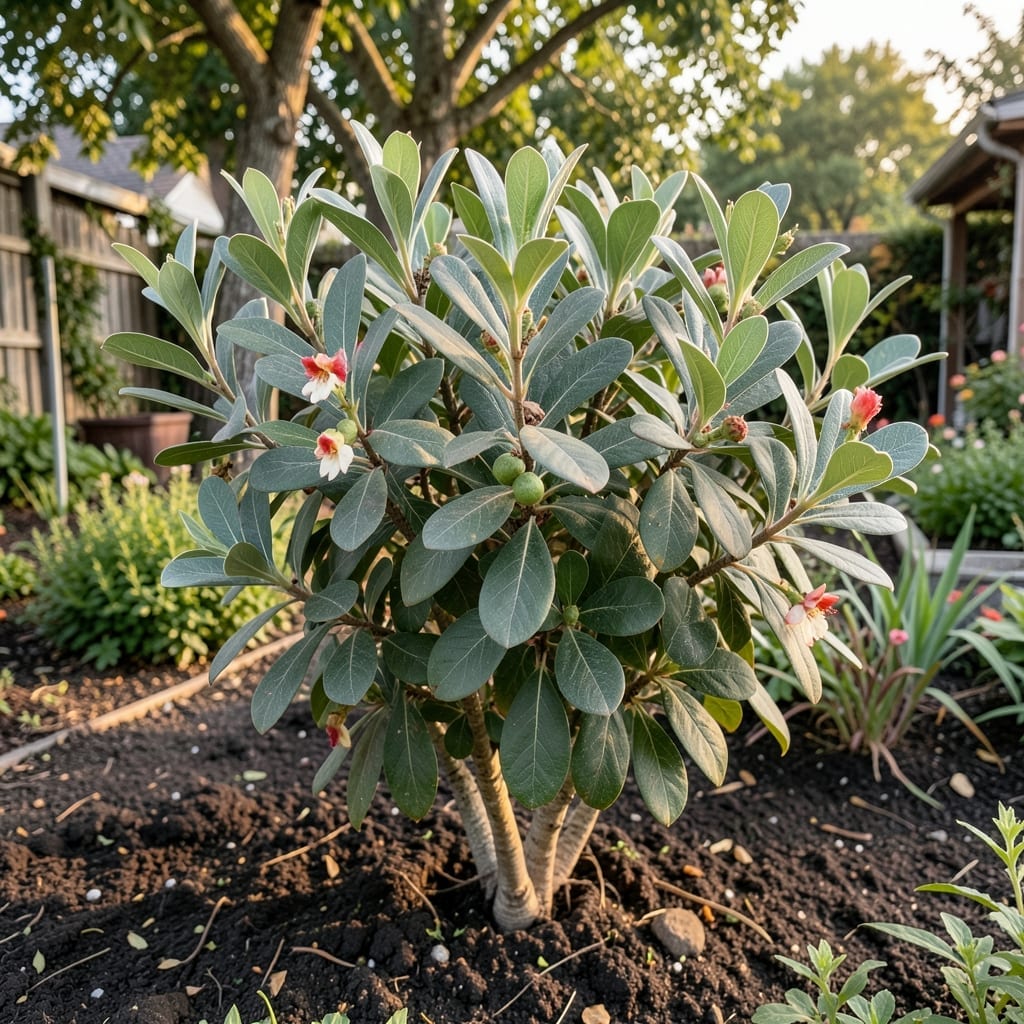
Pineapple guava leaves tell you everything about your plant’s health. I check mine weekly for color changes, spots, or curling edges—early signs that something’s off.
These glossy, dark green leaves thrive with well-draining soil and full sun, but they’ll tolerate partial shade too. The right care keeps them vibrant and the plant productive year after year.
📚 In This Guide
Here’s the method I use to maintain vibrant pineapple guava plants with lush, healthy foliage.
Regularly inspect the leaves for any discoloration, spots, or unusual patterns. Pineapple guava leaves should be a deep, glossy green when healthy. Yellowing often indicates overwatering or nutrient deficiency, while brown edges suggest underwatering or excessive sun exposure.
I check the undersides of the leaves weekly for pests like spider mites or scale, which love to hide there. A simple wipe with a damp cloth can remove dust and early infestations. Act immediately if you spot webbing or sticky residue—these are telltale signs of pest activity.
Prune your pineapple guava in late winter or early spring before new growth starts. Use clean, sharp pruners to remove any dead, damaged, or crossing branches. This improves airflow, which is critical for preventing fungal issues that can harm the leaves.
Thin out crowded areas to allow light to penetrate the canopy. I aim to open up the center of the plant so sunlight reaches all the leaves evenly. Avoid heavy pruning—never remove more than 20% of the plant at once, as this can stress the plant and reduce foliage density.
Pineapple guava prefers moderate moisture but is drought-tolerant once established. Water deeply when the top 1-2 inches of soil feels dry, then let it dry out slightly between waterings. Overwatering leads to root rot, which manifests as wilting leaves that turn yellow or black.
I use a moisture meter to check soil depth accuracy, especially in containers. During hot summer months, you may need to water 2-3 times per week, but always adjust based on rainfall and humidity. Mulch around the base to retain moisture and keep roots cool.
Apply a balanced, slow-release fertilizer in early spring and again in mid-summer to support leaf production. I prefer a formula with equal parts nitrogen, phosphorus, and potassium (e.g., 10-10-10) to promote overall plant health.
Avoid high-nitrogen fertilizers, as they can cause excessive leafy growth at the expense of flowers and fruit. Always water the plant thoroughly after fertilizing to prevent root burn. If leaves appear pale or undersized, a foliar feed with micronutrients like iron or magnesium can provide a quick boost.
Pineapple guava thrives in full sun to partial shade, but intense afternoon sun in hot climates can scorch the leaves. If you notice bleached or crispy edges, provide afternoon shade or move container-grown plants to a more sheltered spot.
In cold climates, protect the plant from frost, which can damage leaves and new growth. I use frost cloth or move potted plants indoors when temperatures drop below 25°F. Wind can also stress the plant, so consider a windbreak if your area is particularly exposed.
These practical insights will help you avoid common pitfalls when caring for pineapple guava.
Monitoring Technique: In Step 1, check the undersides of leaves weekly for pests, as spider mites and scale often hide there. Use a magnifying glass if needed—early detection prevents infestations from spreading. Act immediately if you notice webbing or sticky residue.
Pruning Precision: For Step 2, never remove more than 20% of the plant at once, as heavy pruning stresses the plant and reduces foliage density. Focus on dead, damaged, or crossing branches first, then thin crowded areas to improve airflow and light penetration.
Watering Wisdom: In Step 3, use a moisture meter to check the top 1-2 inches of soil before watering. During hot summer months, you may need to water 2-3 times per week, but always adjust based on rainfall and humidity. Overwatering is a common mistake that leads to root rot.
Environmental Protection: For Step 5, when temperatures drop below 25°F, use frost cloth or move potted plants indoors to prevent frost damage. In hot climates, provide afternoon shade to avoid leaf scorch from intense sun exposure.
Yes! Pineapple guava leaves are often dried and steeped to make herbal tea, known for their mild, fruity flavor and potential health benefits. Ensure they’re clean and free from pesticides before use.
Harvest leaves in the morning for peak freshness. Opt for mature, healthy leaves, typically during the plant’s active growing season (spring to early summer) for the best flavor and potency.
If unavailable, consider using guava leaves (from common guava) or other herbal teas like chamomile or peppermint. However, flavors and benefits may differ.
Spray leaves with a neem oil solution or insecticidal soap to combat pests like aphids or scale. Regularly inspect plants and remove affected leaves to prevent infestations.