
Beautiful Plants For Your Interior
Beautiful Plants For Your Interior
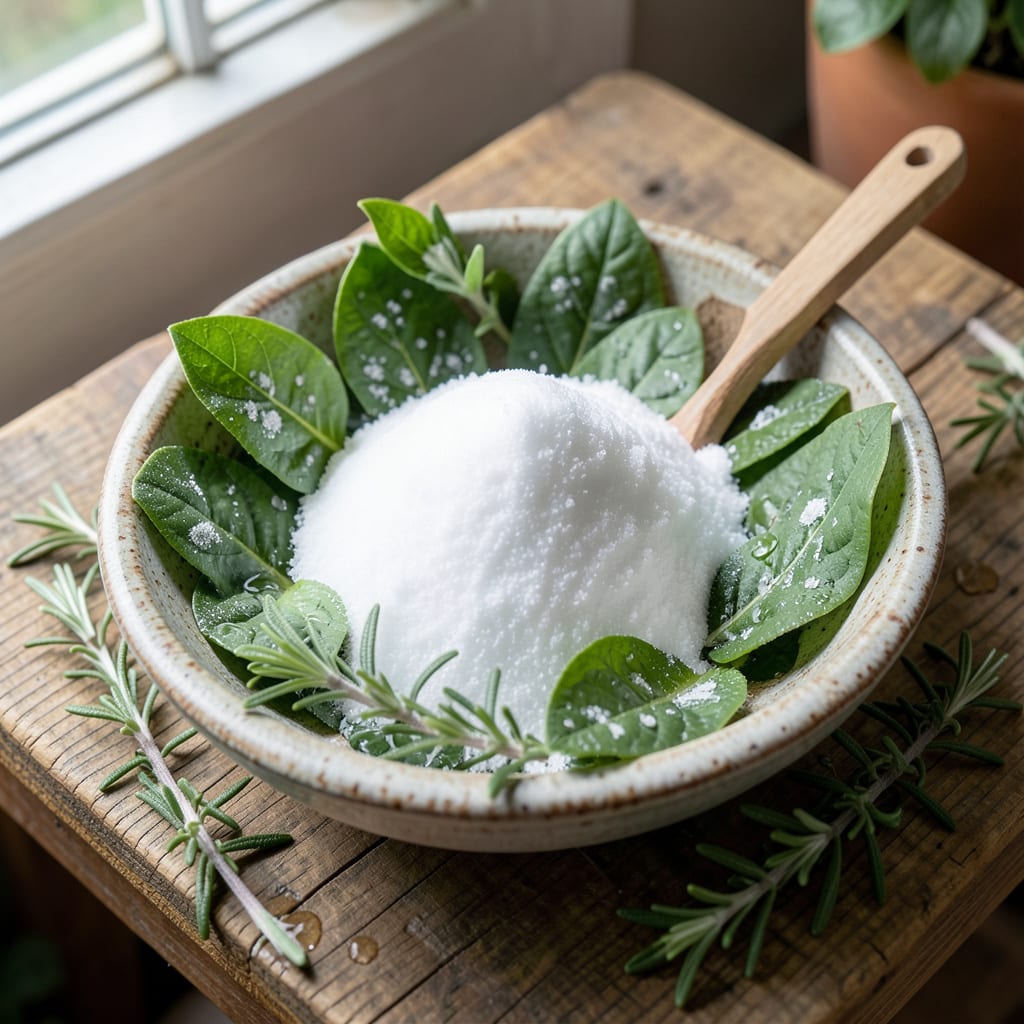
White fungus spreading across your plants is alarming, but there’s a simple solution in your pantry. I’ve successfully treated mildew outbreaks with baking soda more times than I can count.
This method works because baking soda disrupts the fungal cells without harming the plant. It’s particularly effective on powdery mildew, that white, powdery coating that appears on leaves and stems.
You’ll see improvement within 2-3 applications, with the fungus receding and new growth emerging clean. The treatment is gentle enough for most ornamentals and edibles alike.
Prevention is key—proper spacing, airflow, and morning watering reduce the risk of future outbreaks. Here’s how to mix and apply the treatment effectively.
White fungus on plants, often called powdery mildew, thrives under specific conditions. Understanding these causes helps prevent outbreaks and keeps your garden healthy.
White fungus spores germinate in environments with high humidity. When moisture levels exceed 60%, spores absorb water and begin growing on plant surfaces. Poor air circulation in crowded gardens traps humidity, creating ideal breeding grounds.
Temperatures between 60°F and 80°F (15°C–27°C) accelerate fungal growth. Unlike other fungi, powdery mildew doesn’t require free water to spread—just warm, humid air. Greenhouses or shaded outdoor areas often see rapid infections for this reason.
Watering plants from above leaves foliage damp, providing the moisture white fungus needs. Evening watering is especially risky, as cooler nighttime temperatures slow evaporation, prolonging leaf wetness.
Overcrowded plants restrict airflow, allowing humidity to build up. Dense canopies also reduce sunlight penetration, and shaded leaves stay damp longer—perfect conditions for fungal spores to take hold.
Some plants, like roses, cucumbers, and squash, are naturally more vulnerable to white fungus. Their leaf structures or genetic traits make them easier targets, especially when grown in less-than-ideal conditions.
White fungus on plants can be stubborn, but baking soda offers a simple, natural fix. Here’s how to tackle it based on the root cause:
Fix: Mix 1 teaspoon of baking soda with 1 quart of water and add a few drops of mild liquid soap. Spray this solution directly onto the affected leaves and stems, focusing on the undersides where fungus often hides. Repeat every 5–7 days until the fungus clears.
Prevention: Water plants only when the top inch of soil is dry, and ensure pots have drainage holes to avoid soggy conditions.
Fix: Improve airflow by pruning dense foliage and spacing plants apart. Use the baking soda spray (same recipe as above) weekly to prevent spores from settling. For severe cases, add 1 tablespoon of neem oil to the mix for extra antifungal power.
Prevention: Use a dehumidifier in greenhouses or group plants with good air circulation. Avoid misting leaves in humid weather.
Fix: Remove heavily infested soil and replace it with fresh, sterile potting mix. Drench the remaining soil with a baking soda solution (2 tablespoons per gallon of water) to kill lingering spores.
Prevention: Sterilize pots and tools with a 10% bleach solution before reuse, and rotate crops to disrupt fungus cycles.
💡 Pro Tip: Always apply baking soda spray in the early morning or late evening to prevent leaf burn from the sun. Test on a small area first to check for sensitivity.
Apply every 5-7 days until the fungus disappears. For prevention, use it every 2 weeks during humid conditions. Consistency is key to keeping spores at bay.
No, baking powder contains additional ingredients that may harm plants. Stick to pure baking soda for safe, effective treatment. Always check the label.
No, when mixed correctly (1 teaspoon per quart of water), it’s gentle. Test on a small leaf first. Avoid using in direct sunlight to prevent burning.
Increase airflow, reduce humidity, and reapply the spray. For stubborn cases, add 1 tablespoon of neem oil to the mix. Persistence pays off.
