
Beautiful Plants For Your Interior
Beautiful Plants For Your Interior
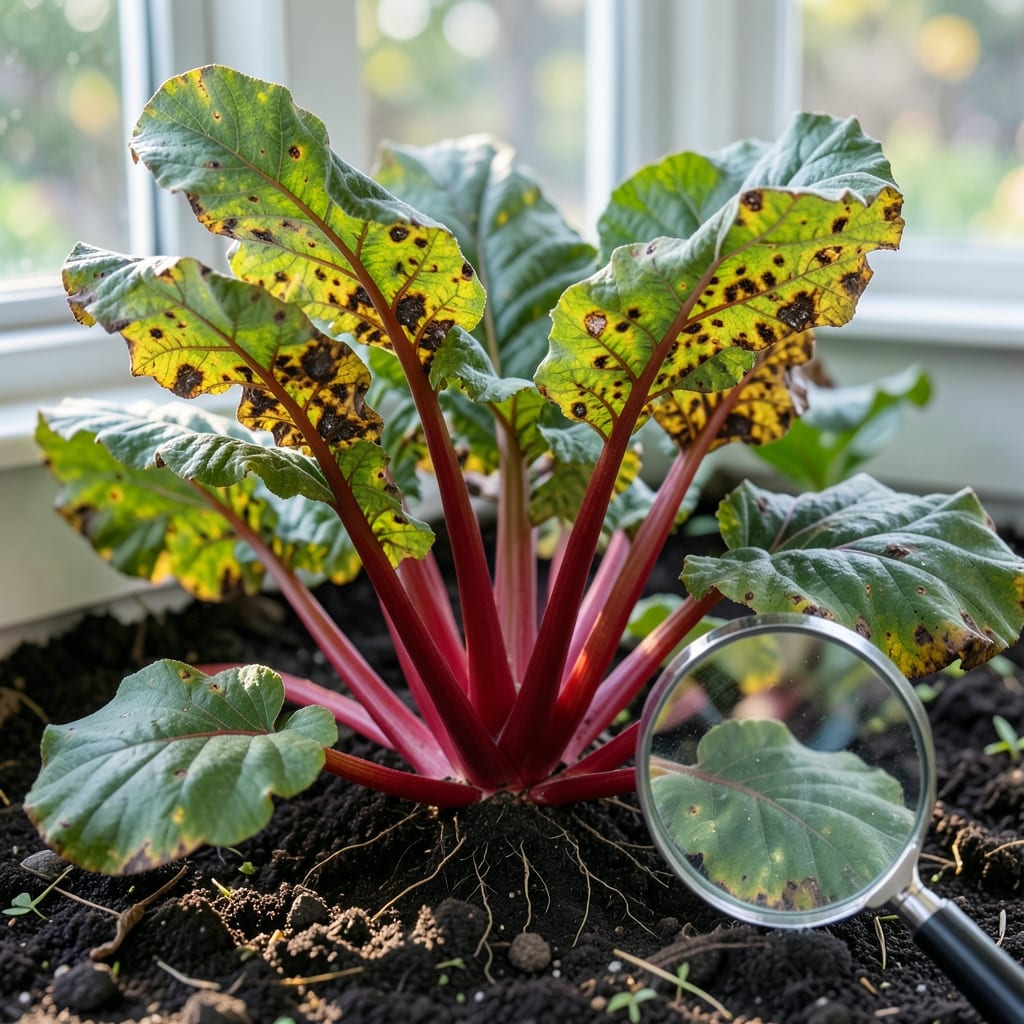
Spotted yellowing leaves or stunted growth in your rhubarb patch? I’ve been there—watching healthy plants decline is heartbreaking, but most issues are fixable if caught early.
This guide covers the 3 most common diseases, their telltale signs, and simple steps to stop them in their tracks. No fancy equipment needed, just a sharp eye and quick action.
📚 In This Guide
Use this method to catch problems early and keep your plants thriving for years.
Begin with a weekly leaf examination, focusing on the undersides where pests and diseases first appear. Look for yellowing edges, brown spots, or white powdery coatings—these are classic indicators of fungal infections like powdery mildew or leaf spot.
I always check after rain, since damp conditions accelerate disease spread. If you see tiny black dots in the center of brown spots, that’s a red flag for anthracnose. Early detection means you can remove affected leaves before the problem spreads to healthy foliage.
Real talk: Most rhubarb diseases start small. A few spotted leaves might not seem urgent, but ignoring them leads to defoliation and weakened plants.
Run your fingers along the stems, feeling for soft, mushy sections or dark, sunken lesions. Crown rot often begins at the base, where stems meet the soil, and can quickly kill the entire plant if left unchecked.
I’ve found that healthy rhubarb stems are firm and vibrant green. If you notice reddish-brown streaks or oozing sap, it’s likely bacterial leaf spot or stem rot. These symptoms require immediate action—remove and destroy infected stems to prevent further contamination.
Gently dig around the base of the plant to inspect the roots. Healthy rhubarb roots are white or pale tan and firm to the touch. If they appear dark, slimy, or foul-smelling, root rot is likely the culprit, often caused by poorly draining soil or overwatering.
I always test soil moisture with my finger—2 inches down should feel damp but not soggy. If the soil stays waterlogged, consider amending with compost or relocating the plant to a better-draining spot. Rhubarb thrives in moist but well-drained conditions.
For fungal issues like powdery mildew, apply a copper-based fungicide or a homemade solution of 1 tablespoon baking soda per gallon of water, spraying thoroughly on both sides of the leaves. Repeat every 7-10 days until symptoms disappear.
If crown rot or bacterial diseases are present, remove and destroy all infected plant material immediately. Do not compost it—this prevents reinfection. For severe cases, you may need to discard the entire plant and replant in a new location.
Here’s the thing—prevention is easier than cure. Space plants 3-4 feet apart for airflow, and avoid overhead watering to keep foliage dry.
These insights will help you catch problems early and keep your plants healthy for years to come.
Early Detection Strategy: In Step 1, focus on the undersides of leaves where issues first appear. I learned this the hard way after losing several plants to unnoticed powdery mildew. The weekly exam is non-negotiable, especially after rain when fungal spores spread most aggressively.
Crown Inspection Technique: For Step 2, don’t just look—feel. Soft, mushy sections in stems are often invisible until it’s too late. I run my fingers along every stem, paying special attention to the base where crown rot begins. Catching this early can save the entire plant.
Soil Moisture Wisdom: Step 3’s 2-inch moisture test is critical. Here’s what nobody tells you—rhubarb roots will rot in soggy soil faster than they’ll suffer from drought. I test both the surface and 2 inches down; if there’s a discrepancy, I know my watering needs adjustment.
Treatment Timing: The 7-10 day repetition for fungicide in Step 4 isn’t arbitrary. Missing a cycle gives fungi time to establish. I set calendar reminders and treat on the shorter end (7 days) if we’ve had wet weather, as this is when reinfection risk peaks.
Common rhubarb diseases include crown rot, leaf spot (Ramularia or Ascochyta), powdery mildew, and rust. These often appear as discolored leaves, wilting, or moldy growth. Early detection and proper sanitation can help manage them.
Prevent diseases by ensuring good airflow, avoiding overhead watering, and removing infected debris. Plant disease-resistant varieties and rotate crops if possible. Healthy soil and proper spacing also reduce risks.
Treat rhubarb at the first sign of disease, like spots or wilting. Early spring is ideal for preventive fungicides. Remove and destroy infected leaves or stems immediately to stop the spread.
Avoid eating rhubarb leaves—they’re toxic due to oxalic acid. If only the leaves are spotted (not the stalks), the stalks are safe to harvest if the plant is otherwise healthy. Always wash stalks thoroughly.
Use neem oil, copper sprays, or baking soda solutions for fungal issues. Remove infected plant parts and improve airflow. Companion planting with garlic or chives may also deter pests and diseases naturally.