
Beautiful Plants For Your Interior
Beautiful Plants For Your Interior
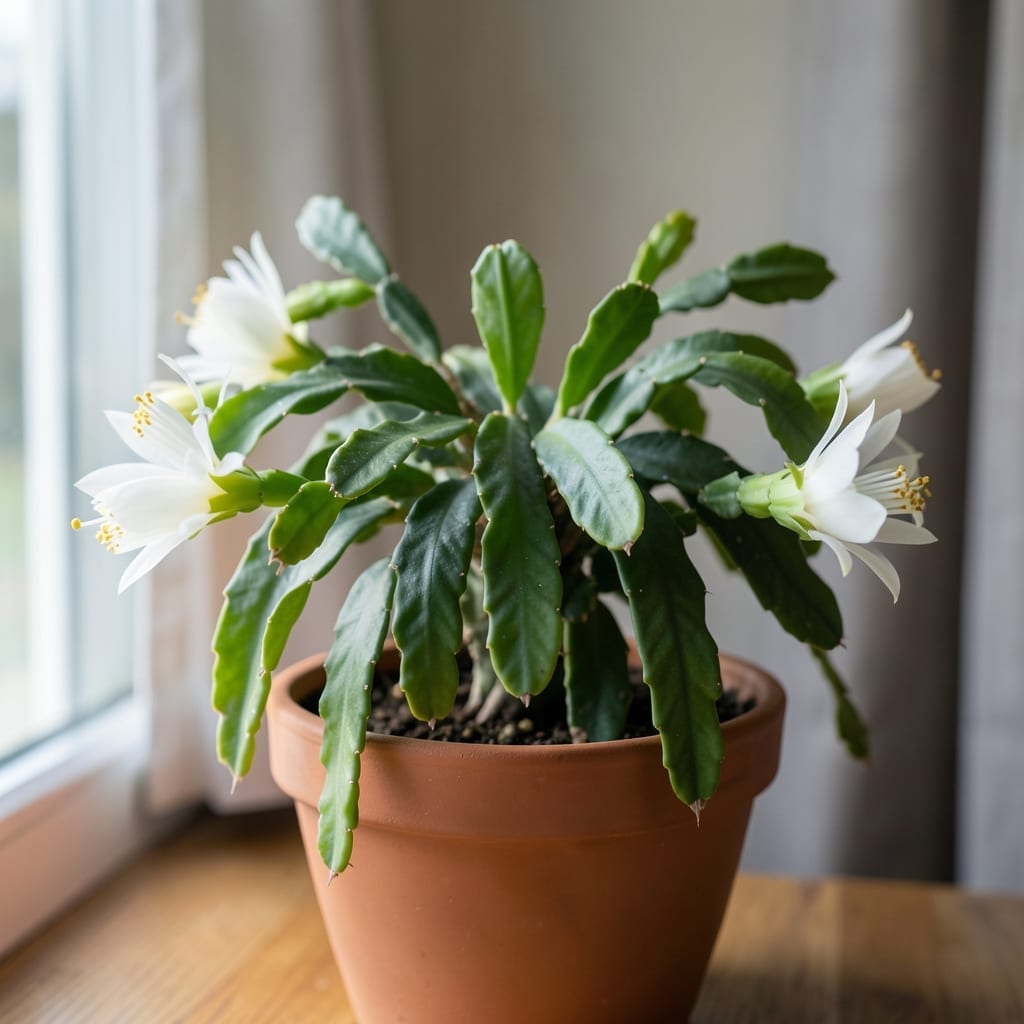
White holiday cactus blooms are pure magic in winter. I’ve grown Schlumbergera truncata ‘White’ for years, and its pristine flowers brighten even the darkest December days.
This plant thrives with simple care: bright but indirect light, well-draining soil, and a watering routine that lets the soil dry between drinks. You’ll get reliable blooms year after year with minimal effort.
📚 In This Guide
Here’s my professional method for keeping your white blooming cactus thriving through the seasons.
Place your plant in bright, indirect light—an east or north-facing window works perfectly. Direct afternoon sun burns the segments, while too little light prevents the spectacular white blooms you’re growing for. In my experience, a sheer curtain diffuses harsh rays beautifully.
During fall, give it 12-14 hours of darkness daily to trigger bud formation. This photoperiod sensitivity is what makes it such a reliable holiday performer. You’ll see flower buds forming at the segment joints after 6-8 weeks of this treatment.
Water when the top 1-2 inches of soil feels dry to the touch—about every 7-10 days in average conditions. This plant stores moisture in its segments, so it prefers slight drought to constant dampness. I always check with my finger rather than relying on a schedule.
Use room-temperature water and pour until it runs from the drainage holes, then empty the saucer after 15 minutes. Soggy roots lead to segment rot, which spreads quickly through the plant. The segments should feel plump, not shriveled or mushy.
Keep your plant in temperatures between 60-75°F during active growth. For bud set in fall, a cooler period of 50-60°F at night works wonders. I’ve found that a basement or garage with a window provides perfect conditions during this crucial phase.
Aim for 40-50% humidity. If your air is dry, place the pot on a tray of pebbles with water, ensuring the pot sits above the waterline. Brown segment tips often indicate low humidity, while yellowing suggests too much moisture in the air.
Prune after flowering by twisting off segments at the joints or using clean scissors. This encourages branching and creates a fuller plant. I always remove 1-2 segments from each stem, which also provides cuttings for propagation. The best time is when new growth begins in spring.
Avoid pruning during bud formation or the plant may drop its flower buds. The cut ends will callous over in 2-3 days, at which point they’re ready for propagation if desired. This maintenance keeps your plant healthy and promotes more abundant holiday blooms.
Feed with a balanced 10-10-10 or 20-20-20 liquid fertilizer diluted to half strength every 2-4 weeks during active growth (spring through summer). I switch to a low-nitrogen formula in fall to support bud development rather than leafy growth.
Withhold fertilizer during winter rest and for 6-8 weeks before you want buds to form. Over-fertilizing leads to lush growth at the expense of flowers, while under-fertilizing results in weak stems that can’t support the stunning white blooms. The right balance ensures vigorous plants and spectacular holiday displays.
Small adjustments in your care routine can make a world of difference for this holiday beauty.
The Light Factor: In Step 1, that 12-14 hours of darkness daily during fall isn’t just important—it’s non-negotiable for bud formation. Even a brief exposure to light during this period can disrupt the photoperiod sensitivity. I use a dark closet or cover mine with a light-blocking cloth to ensure complete darkness.
Watering Wisdom: The 15 minutes you wait to empty the saucer after watering in Step 2 prevents root rot, but here’s what nobody tells you—room temperature matters. Cold water can shock the roots, while water that’s too warm may encourage bacterial growth. Always use water that feels neutral to your wrist.
Temperature Transition: When moving from the active growth range of 60-75°F to the cooler 50-60°F for bud set in Step 3, do it gradually. A sudden temperature drop can cause bud drop. I start by moving my plant to a cooler room for a few hours each day, gradually increasing the time over a week.
Pruning Precision: For Step 4, those 2-3 days for callousing are critical before propagation. If you try to root segments too soon, they’ll absorb too much moisture and rot. I’ve found that placing cut segments in a dry, shaded spot speeds up the callousing process beautifully.
Water when the top 1-2 inches of soil feel dry, typically every 1-2 weeks. Overwatering can cause root rot, so ensure proper drainage and reduce watering in winter.
Lack of blooms often results from insufficient light or improper temperature. Provide bright, indirect light and cooler temps (50-60°F) for 6-8 weeks before the blooming season.
Yes, but only in USDA zones 10-12. It thrives in partial shade outdoors during warm months. Bring it inside before temperatures drop below 50°F to prevent damage.
Watch for mealybugs, spider mites, and scale insects. Treat infestations with neem oil or insecticidal soap, and isolate the plant to prevent spreading.
Propagate by cutting a segment of 2-3 stem sections, letting it dry for a day, then planting in well-draining soil. Keep the soil lightly moist until roots develop, usually in 3-4 weeks.