
Beautiful Plants For Your Interior
Beautiful Plants For Your Interior
I killed three orchids before mastering the spray bottle method. The problem wasn’t neglect—it was overwatering with the wrong technique. A fine mist mimics tropical humidity, giving roots exactly what they crave without the drowning risk of traditional watering. My Phalaenopsis now produces double the blooms since switching to this approach. Here’s the thing—orchids hate […]
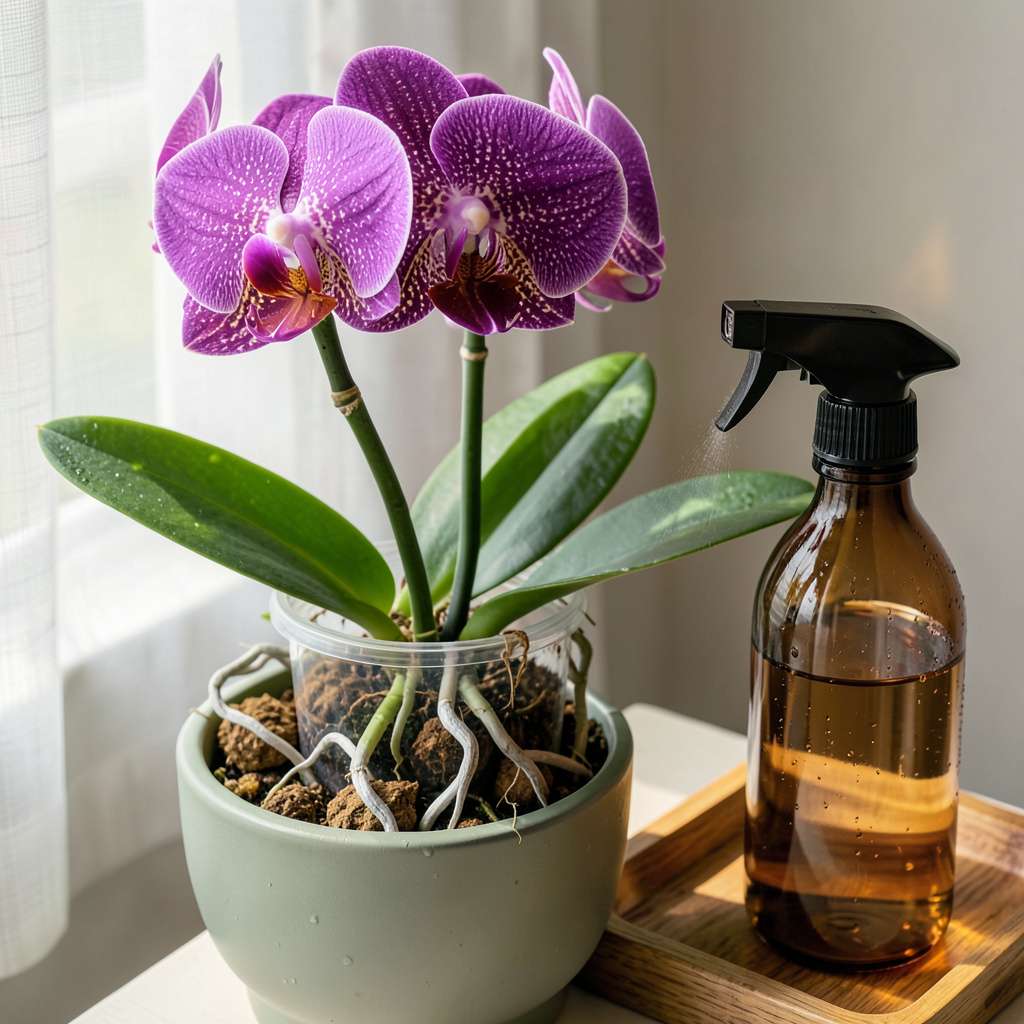
I killed three orchids before mastering the spray bottle method. The problem wasn’t neglect—it was overwatering with the wrong technique. A fine mist mimics tropical humidity, giving roots exactly what they crave without the drowning risk of traditional watering. My Phalaenopsis now produces double the blooms since switching to this approach.
Here’s the thing—orchids hate soggy roots but need consistent moisture. A spray bottle delivers water in tiny, controlled amounts that absorb gradually. I use it every 3-4 days in summer, stretching to weekly in winter when growth slows. The key is watching for silver-green roots (thirsty) versus bright green (happy).
You’ll notice healthier leaves within weeks—firm, vibrant, and free from yellowing. New flower spikes emerge faster because the plant isn’t stressed by root rot or dehydration. My collection went from struggling to showstopping once I nailed this simple routine.
Works for any orchid variety, from grocery-store Phals to rare Cattleyas. The only supplies you need? A clean spray bottle and 5 minutes of attention each week. Let’s get those roots perfectly hydrated!
📚 In This Guide
This gentle method keeps roots perfectly hydrated without the risks of overwatering or rot—ideal for delicate orchid varieties.
Begin by examining your orchid’s roots and growing medium. Healthy roots should appear silver-green when dry and bright green when hydrated. If you see mushy brown roots, hold off on watering—this indicates rot, and additional moisture will worsen the issue.
Place your orchid in a room with moderate humidity (40-70%) and temperatures between 65-80°F. Avoid direct sunlight during watering, as wet leaves can scorch under intense light. I like to water in the morning so foliage dries completely by evening, preventing fungal issues.
Fill your spray bottle with room-temperature water—cold water shocks orchid roots, while hot water damages cells. Set the nozzle to a fine mist setting to avoid dislodging bark or moss in the potting medium. Hold the bottle 8-12 inches away from the plant to ensure even coverage without forceful streams.
Focus the spray on the root zone and potting medium, not just the leaves. Mist until the medium glistens but isn’t dripping—over-saturation leads to root suffocation. For mounted orchids, spray the roots directly until they shift from silver to green, a clear sign they’ve absorbed enough moisture.
After misting, wait 5-10 minutes and check the medium’s surface. It should feel slightly damp but not soggy. If water pools in the pot’s saucer, tilt the container to drain it immediately—standing water invites bacterial growth and root rot.
For orchids in bark mixes, you’ll notice the medium darkens as it absorbs water. Sphagnum moss retains moisture longer, so adjust your frequency: bark may need misting every 2-3 days in dry climates, while moss might stay damp for 5-7 days. Always let the top layer dry slightly between waterings.
Phalaenopsis and Paphiopedilum orchids thrive with this method, but Vandas and Dendrobiums often need more frequent misting due to their exposed roots. In arid environments, you might mist daily; in humid climates, every 3-4 days suffices. Watch the roots—they’ll turn silver when thirsty.
If your tap water is hard, use filtered or distilled water to prevent mineral buildup on leaves and roots. I’ve found that orchids in clay pots dry out faster than those in plastic, so adjust your schedule accordingly. During active growth (spring/summer), increase frequency slightly; reduce it in winter when dormancy slows water uptake.
Mastering the spray bottle method for orchids comes down to observing subtle details—here’s what we’ve learned through years of trial and error.
Root Observation Technique: In Step 1, don’t just glance at the roots—examine them under good lighting. The color shift from silver to bright green when hydrated is more reliable than any watering schedule. I’ve found that roots showing even slight grayish tones need moisture, while deep green indicates they’re still well-hydrated. This visual cue prevents both overwatering and underwatering better than any calendar reminder.
Misting Precision: The 8-12 inch distance mentioned in Step 2 isn’t arbitrary. Too close creates forceful streams that compact bark mediums, while too far results in uneven coverage. I recommend practicing on your hand first—you should feel a gentle, even mist that settles like morning dew. For mounted orchids, focus on the root crown where new growth emerges, as this area dries fastest.
Absorption Timing: That 5-10 minute wait in Step 3 reveals everything about your watering technique. If the medium surface feels dry after this time, you didn’t mist enough. If it’s soggy, you overdid it. Perfect misting leaves the surface slightly damp with no visible pooling. In dry climates, I often see the bark medium absorb all moisture within 5 minutes, while moss mixes may still show dampness at 10 minutes—this tells me when to adjust my next watering.
Seasonal Adjustment: The climate guidelines in Step 4 become even more critical during seasonal transitions. I’ve noticed orchids often need 25% more frequent misting during the first two weeks of summer as they adjust to increased evaporation. Conversely, when indoor heating kicks in during winter, the air becomes deceptively dry—check roots daily even if your schedule suggests every 3-4 days. A simple hygrometer near your orchids removes all guesswork about humidity levels.
Tap water works, but it’s best to let it sit for 24 hours first to allow chlorine to evaporate. If your water is hard (high in minerals), use filtered, rainwater, or distilled water to prevent salt buildup on roots. Cold tap water can shock orchids—always use room-temperature water!
Spray 2–3 times per week in warm climates or dry indoor air, but reduce to once a week in humid conditions. Check the roots: if they’re silvery-green, it’s time to mist! Avoid overwatering—orchids hate soggy roots. Adjust based on your orchid type (e.g., Phalaenopsis needs less than Dendrobium).
Spraying works for light hydration and humidity, but orchids need a deep soak every 1–2 weeks. Submerge pots in water for 10–15 minutes, then drain. Combine both methods: mist between soaks to mimic their tropical habitat. Skip soaking if your orchid is in bark mix—it dries faster!
Yellow leaves often mean overwatering or poor drainage. If you’re spraying daily, cut back! Check for root rot (mushy, brown roots) or sunburn (water droplets act like magnifiers). Use a well-ventilated area and spray in the morning so leaves dry by night.
Yes! Mix water-soluble orchid fertilizer at ½ the recommended strength and spray lightly on roots/leaves. Do this every 2–4 weeks during growing season (spring–fall). Avoid fertilizing dry roots—mist with plain water first. Rinse leaves occasionally to prevent salt buildup.
Mastering how to water orchids with a spray bottle is a game-changer for keeping these stunning plants happy and blooming! 🌸 By focusing on gentle misting, proper timing, and root health, you’ll avoid common pitfalls like overwatering or rot. Remember: consistency and observation are your best tools—adjust as your orchid grows and its needs change.
Ready to take your orchid care to the next level? Start a misting schedule today, and watch your plant reward you with vibrant, long-lasting flowers. For even more tips, explore our guide on orchid fertilization to keep those blooms thriving! 🌱
