
Beautiful Plants For Your Interior
Beautiful Plants For Your Interior
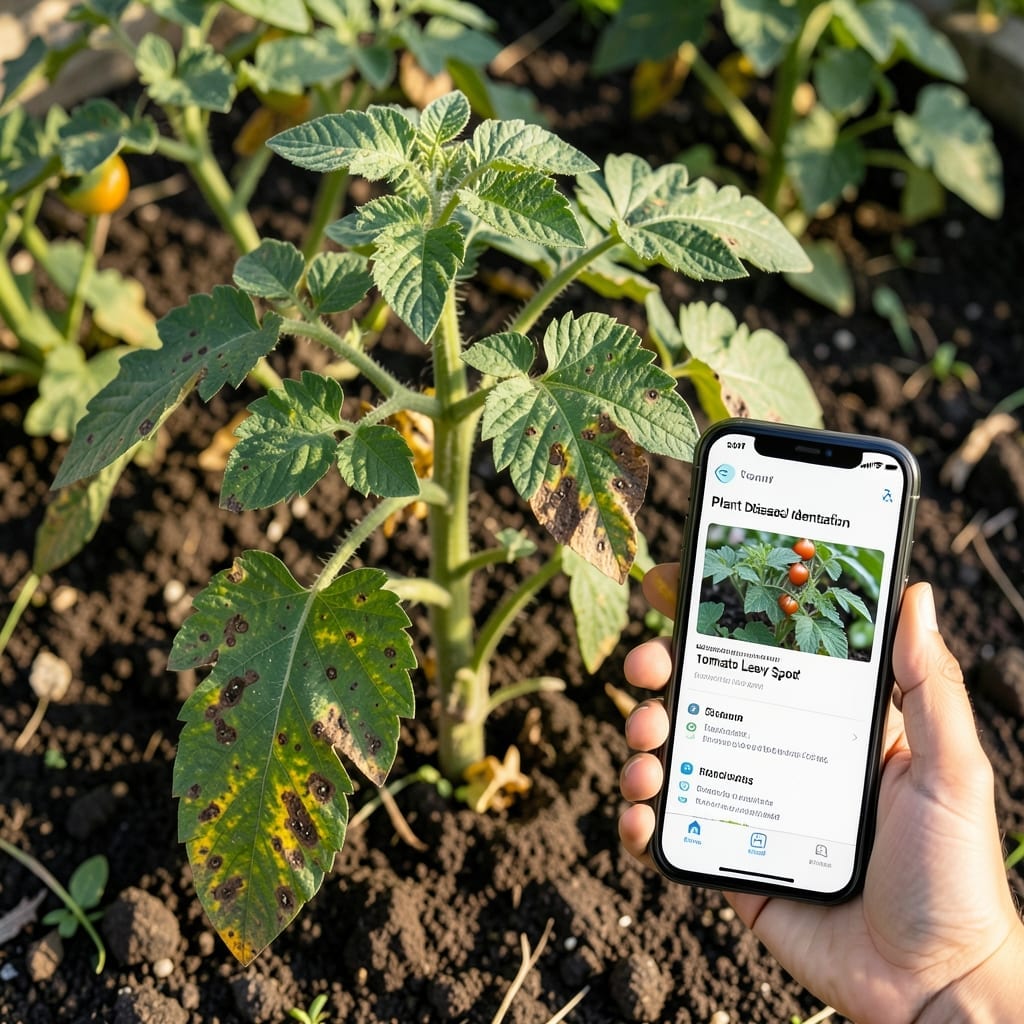
Plant disease identification apps use AI and image recognition to analyze leaf discoloration, spots, or growth patterns, providing instant diagnoses and treatment suggestions for gardeners.
I’ve seen these tools save countless gardens by catching issues early before they spread. The technology compares your plant’s symptoms against vast databases of known diseases, often in seconds. What makes them invaluable is their ability to suggest organic or chemical treatments tailored to your specific plant type. ✨
Many also include prevention tips, so you can adjust watering or soil conditions to avoid future problems. 🌟
💡 In This Article
These apps leverage convolutional neural networks, a type of deep learning algorithm trained on thousands of plant images. The AI examines pixel-level details like color gradients, spot patterns, and texture changes that human eyes might miss.
For example, it can distinguish between fungal spots (often circular with defined edges) and bacterial lesions (more irregular and water-soaked).
After capturing an image, the app compares it against a database of over 30,000 documented plant diseases. Each comparison runs through multiple filters including leaf color histograms, vein patterns, and growth stage markers. The system then assigns probability scores to potential matches, typically returning results with 90%+ accuracy for common conditions. 🌟
What happens behind the scenes involves more than just image matching. The apps analyze environmental metadata too—like your location’s humidity and recent weather—since many diseases thrive under specific conditions. This contextual analysis helps differentiate between similar-looking issues, such as powdery mildew versus downy mildew.
Some advanced versions even use hyperspectral imaging simulations, which can detect disease signs in the infrared spectrum before they’re visible to the naked eye. This early detection capability can catch problems 3-5 days before symptoms appear, giving you a critical head start on treatment. ⚡
The most sophisticated apps incorporate crowdsourced data from other users in your region. When multiple gardeners report similar symptoms within a 5-mile radius, the system flags potential outbreaks and updates its diagnostic models in real-time. This community-driven approach continuously improves accuracy as more data pours in.
Some do! Look for apps with offline modes that store disease databases locally. This is perfect for gardeners in rural areas with spotty service. Just download the necessary data packs first.
Most achieve 85-95% accuracy for common issues when you provide clear, well-lit photos. Rare diseases or early-stage symptoms may require expert confirmation. Always double-check with multiple angles.
Top-tier apps cover 500+ plant species, but check the database before downloading. Some specialize in vegetables, ornamentals, or crops. For rare plants, community features help fill knowledge gaps.
Capture close-ups of symptoms plus a full-plant shot. Use natural light and avoid shadows. Include undersides of leaves where many diseases first appear.