
Beautiful Plants For Your Interior
Beautiful Plants For Your Interior
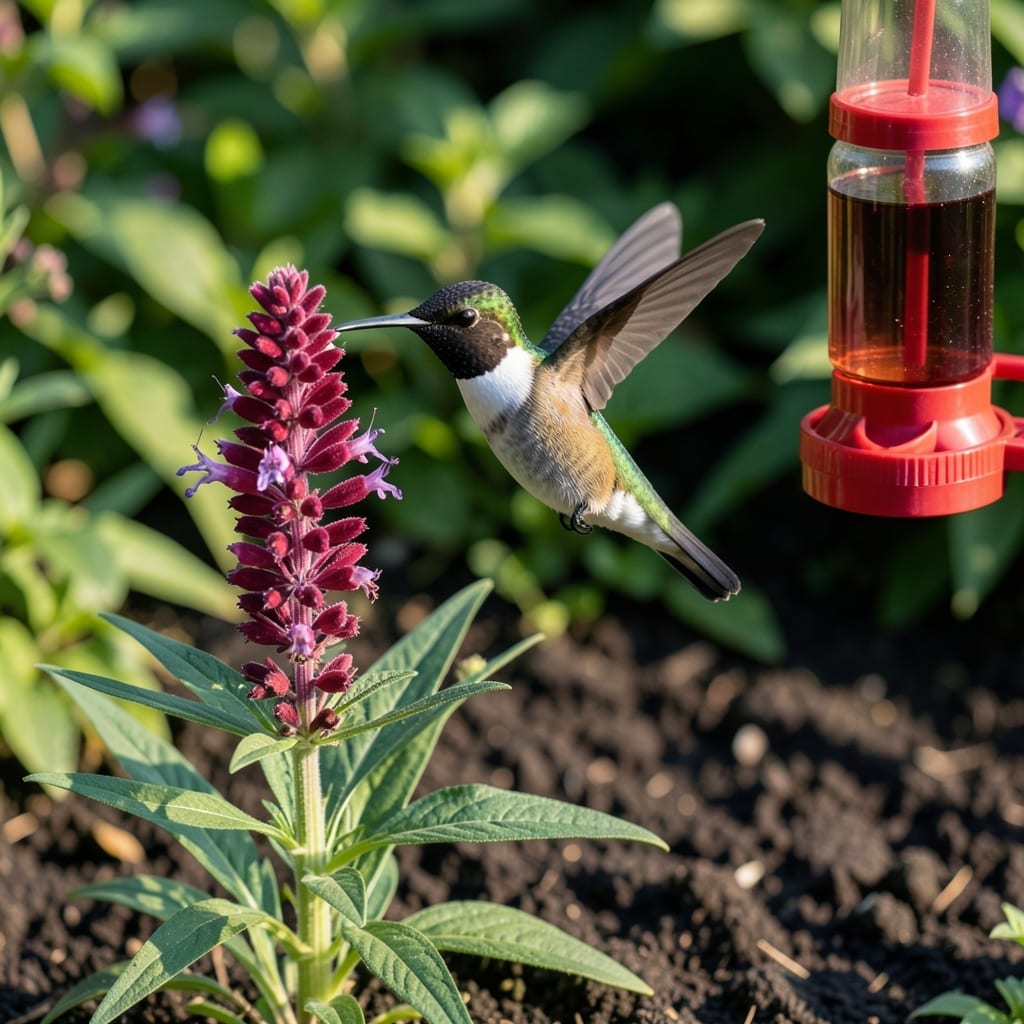
Yes, the black-chinned hummingbird is the most common all-black species, though many appear dark due to iridescent feathers. True solid black hummingbirds are extremely rare in nature.
What often fools observers is the play of light on green or purple feathers, creating a deep black appearance from certain angles. 💫 The black-chinned hummingbird sports a distinctive dark throat patch that looks solid black in low light, though it shimmers with vibrant purple under direct sunlight. I’ve spotted these birds most frequently in open woodlands and gardens across the western U.S.
💡 In This Article
The perceived black color often comes from iridescent feathers that refract light differently depending on the angle. A ruby-throated hummingbird’s green back can appear deep black in shadow, while direct sunlight reveals its true emerald hue. This optical effect is caused by microscopic structures in the feathers that scatter light waves. 🌟
The black-chinned hummingbird stands out with its namesake dark throat patch, or gorget. This patch contains specialized feathers that absorb most light wavelengths, creating a velvety black appearance. However, in bright light, these same feathers reveal hidden purple iridescence, especially striking during courtship displays.
True solid black hummingbirds are nearly nonexistent in nature. The closest is the black-breasted hillstar of South America, which has extensive dark plumage but still shows some green or blue iridescence on its wings. These birds inhabit high-altitude cloud forests at 8,000-13,000 feet, making them rarely seen by casual observers. ✨
Lighting conditions dramatically affect color perception. Early morning or late afternoon light enhances the black appearance, while midday sun reveals the full spectrum of iridescent colors. This is why birdwatchers often carry notebooks to document observations at different times of day, noting how the same bird can look completely different.
Habitat also plays a role in spotting these dark-plumaged birds. The black-chinned hummingbird prefers open woodlands and edges, while the black-breasted hillstar sticks to remote Andean slopes. Their dark coloration may serve as camouflage in dimly lit forest understories, helping them evade predators while foraging for nectar. 🔥
Iridescent feathers refract light differently at various angles. In shadow or dim light, green or purple feathers can appear deep black. This optical trick happens because microscopic structures in the feathers scatter light waves.
These birds thrive in open woodlands and garden edges across the western U.S. They’re most active during dawn and dusk when their dark throat patches appear solid black. Look for them near native flowering plants.
Check for the distinctive dark throat patch that shimmers purple in direct sunlight. The black-breasted hillstar has more extensive dark plumage but inhabits high-altitude Andean forests. Most black appearances are just light effects.
Early morning and late afternoon offer ideal lighting to observe the black appearance. Midday sun reveals their true iridescent colors. Birdwatchers recommend keeping notes at different times to track color changes.