
Beautiful Plants For Your Interior
Beautiful Plants For Your Interior
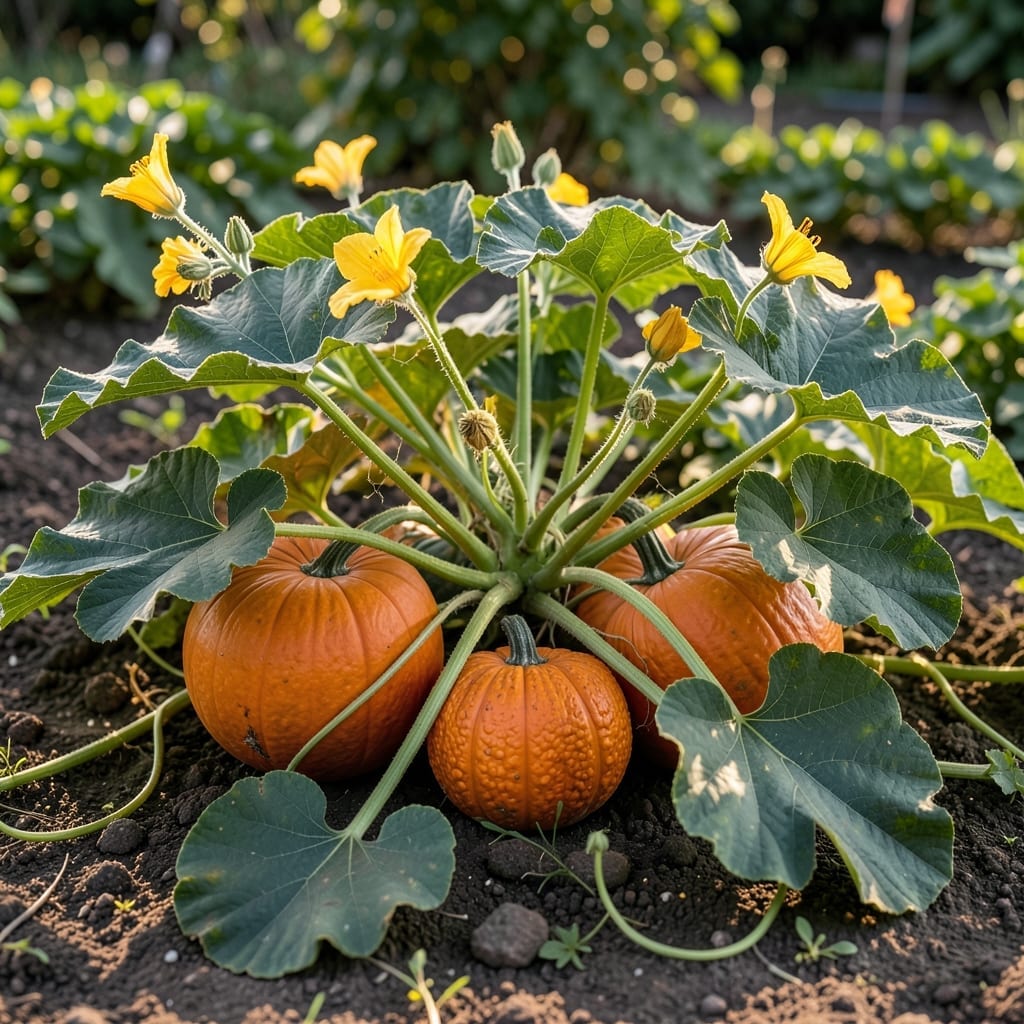
Those yellow spots on your pumpkin leaves aren’t just ugly—they’re a cry for help. I’ve seen powdery mildew, downy mildew, and squash bugs turn healthy vines into skeletal remains in days.
This visual guide helps you spot trouble early, before it spreads. Match the patterns on your leaves to the photos, then take action with the solutions I’ve tested myself. No guesswork, just results.
📚 In This Guide
Here’s how I examine leaves to spot trouble before it spreads through the patch.
Start by looking at the overall color of the foliage. Healthy pumpkin leaves are a deep, uniform green. If you notice yellowing between the veins, that’s often a sign of manganese deficiency or early downy mildew infection.
Check for mottling or mosaic patterns—light and dark green patches that look like someone splattered paint. This usually indicates a viral infection like cucumber mosaic virus. I’ve found these patterns often appear on newer growth first, so focus your attention there.
Flip the leaves over carefully. The undersides often reveal problems before the tops do. Look for tiny white or yellow spots—these could be spider mite damage or the beginning of powdery mildew.
Run your fingers gently over the surface. A rough, sandpaper-like texture might mean rust disease, while a sticky residue often points to aphid infestation. I always carry a magnifying glass to spot these early warning signs before they become visible to the naked eye.
Pay close attention to the edges of the leaves. Brown, crispy margins typically indicate underwatering or salt burn from fertilizer. If the edges curl upward, that’s often a response to heat stress or herbicide drift.
Look for any unusual leaf shapes. Cupped or distorted leaves can signal herbicide damage or viral infection. I’ve seen pumpkin leaves develop a shoestring appearance when infected with certain viruses—this is a sure sign something’s seriously wrong.
Scan each leaf for circular or irregular spots. Small, water-soaked spots that turn brown or black often indicate bacterial leaf spot. Larger, concentric ring patterns are characteristic of anthracnose or alternaria leaf blight.
Don’t overlook any unusual growths. White, powdery patches are classic powdery mildew, while orange pustules might be rust. I once missed a small cluster of eggs on the underside of a leaf—turned out to be squash bug nymphs that later caused significant damage.
Never diagnose based on a single leaf. Check multiple leaves on the same plant and compare with neighboring plants. Patterns that repeat across the patch are more likely to be environmental or cultural issues, while isolated problems often indicate pests or diseases.
I take photos of problematic leaves next to healthy ones for comparison. This helps track progression over time and provides valuable information if I need to consult with a local extension office. Remember that some leaf variations are normal—don’t panic over minor differences.
Here’s what I’ve learned from years of diagnosing pumpkin leaf problems in my own patch.
Lighting Matters: Always examine leaves in natural daylight. Artificial light can distort colors, making it harder to spot subtle yellowing or mottling patterns described in Step 1. I keep a small white poster board handy to place behind leaves—this helps me see true color variations against a neutral background.
The Magnification Advantage: As mentioned in Step 2, a magnifying glass is essential for early detection. I recommend a 10x handheld magnifier to spot spider mite webbing or powdery mildew spores before they become visible to the naked eye. The undersides of leaves often show problems first, so don’t skip this crucial step.
Documentation System: Following Step 5’s advice, I created a simple photo journal system. Take dated photos of problematic leaves next to healthy ones using a ruler for scale. This visual record helps track disease progression and provides clear evidence when consulting with agricultural experts.
Timing is Everything: Check your pumpkin leaves at the same time each day, preferably in the morning when dew has dried but before the heat of midday sets in. This consistency helps you notice subtle changes more quickly. I’ve found that morning inspections reveal fresh damage from overnight pests before they have a chance to hide.
Healthy pumpkin leaves are deep green, broad, and free of spots or holes. They have a slightly rough texture and prominent veins, with no yellowing or wilting.
Look for signs like yellow or brown spots, white powdery coatings (mildew), or black lesions. Compare images to known disease symptoms like powdery mildew or downy mildew.
Check leaves early in the morning when dew is present, as this highlights fungal growth. Regular inspections, especially after rain, help catch issues early.
Common diseases include powdery mildew (white patches), downy mildew (yellow spots), and leaf blight (brown lesions). Pictures help distinguish these visually.
Yes! Remove infected leaves, improve air circulation, and use neem oil or baking soda sprays. Prevention is key, so water at the base and avoid overhead irrigation.