
Beautiful Plants For Your Interior
Beautiful Plants For Your Interior
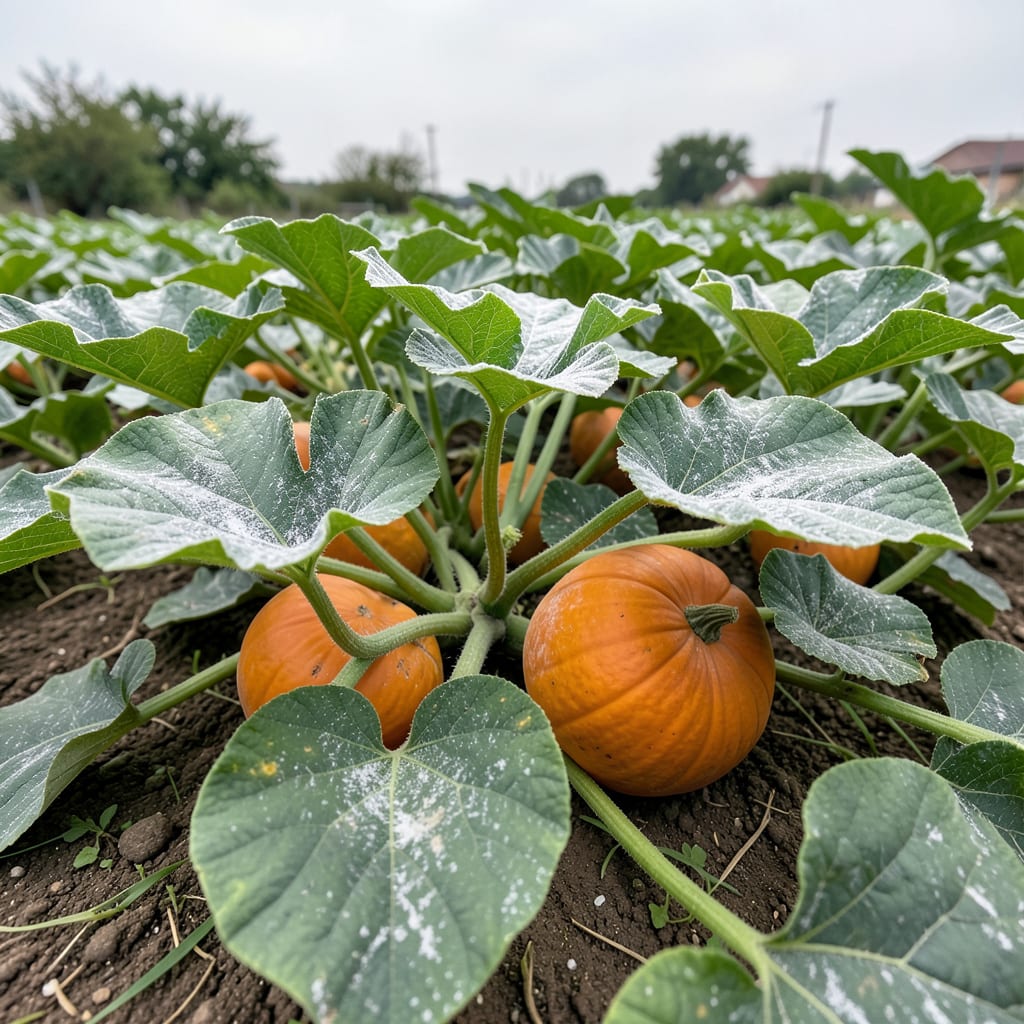
White powder on your pumpkin leaves means trouble. I’ve lost entire crops to this fungus before learning the simple fixes that actually work.
Powdery mildew spreads fast in warm, dry conditions, but it’s preventable with good air flow and morning watering. The key is catching it early—before it chokes your vines.
Natural sprays like milk or baking soda solutions slow it down, while fungicides stop it cold. Either way, you’ll see healthier vines within days of treatment.
Don’t wait until it’s too late. A little attention now saves your pumpkins for harvest season.
Powdery mildew on pumpkin plants thrives under specific environmental conditions and cultural practices. Understanding these triggers helps you prevent and manage outbreaks effectively.
The fungus Podosphaera xanthii (the most common culprit for pumpkins) prospers in environments with 60–80% relative humidity. However, unlike many fungal diseases, powdery mildew does not require free water to germinate—just high humidity. Crowded plantings or dense foliage restrict airflow, creating a stagnant microclimate that encourages spore growth. Space vines 3–4 feet apart and prune excess leaves to improve circulation.
This disease flourishes in temperatures between 60–80°F (15–27°C), with ideal infection occurring during warm days followed by cool, dewy nights. The temperature swing stress the plant, weakening its defenses. In regions with fluctuating autumn weather, pumpkins become especially vulnerable. Use row covers in early growth stages to moderate temperature extremes.
While powdery mildew doesn’t need wet leaves to spread, overhead irrigation can worsen the problem by increasing humidity around the foliage. Water droplets on leaves also reflect sunlight, potentially scorching tissues and creating entry points for spores. Water at the base of plants using drip irrigation or soaker hoses to keep leaves dry.
Some pumpkin cultivars lack genetic resistance to powdery mildew. Heirloom and large-fruited varieties (e.g., ‘Howden’ or ‘Jack-O’-Lantern’) are often more susceptible than hybrid types bred for disease resistance (e.g., ‘Gladiator’ or ‘Magic Lantern’). Choose resistant seeds labeled with _PM_ (powdery mildew) tolerance for a stronger starting defense.
Powdery mildew doesn’t have to spell the end for your pumpkin patch. Here’s how to tackle it head-on, with fixes tied to the root causes and smart prevention to keep it from coming back.
Crowded vines trap humidity, creating a playground for spores. Thin out dense foliage with clean shears, removing the oldest or most infected leaves first. Prevention tip: Space plants 3–4 feet apart at planting to let air flow freely. A small fan on low can also boost circulation in greenhouses or raised beds.
Wet leaves are an open invitation for powdery mildew. Water at the base of plants using a soaker hose or drip irrigation to keep foliage dry. If overhead watering is unavoidable, do it early in the morning so leaves dry quickly in the sun. Pro tip 💡: Avoid watering in the evening—damp nights are mildew’s favorite.
At the first sign of white spots, remove infected leaves and destroy them (don’t compost!). For mild cases, spray plants with a homemade solution of 1 tablespoon baking soda + 1 teaspoon dish soap + 1 gallon water. For tougher outbreaks, use neem oil or a copper-based fungicide, following label instructions. Reapply every 7–10 days or after rain.
Stressed plants are more vulnerable. Fertilize lightly with a balanced organic option to avoid overfeeding (too much nitrogen promotes leafy growth, which traps moisture). Prevention tip ✨: Mulch with straw to reduce soil splashing, which can spread spores upward. Rotate crops yearly to break the fungal cycle.
Consistency is key—combine these fixes with regular scouting (check leaves weekly) to catch problems early. A little effort now means a healthier harvest later!
That white powder is powdery mildew, a common fungal disease. It starts as small spots but spreads quickly, weakening your plants if left untreated.
Yes, a mix of 1 tablespoon vinegar + 1 gallon water can help. Spray lightly on leaves every 5-7 days for mild cases. Avoid high concentrations, as they may harm foliage.
The fungus overwinters in plant debris. Remove all infected leaves and vines at season’s end. Rotate crops yearly and avoid planting pumpkins in the same spot.
Yes, the fruit remains edible if the plant is treated early. Wash pumpkins thoroughly before use. Severe infections may reduce yield but won’t contaminate the flesh.
