
Beautiful Plants For Your Interior
Beautiful Plants For Your Interior
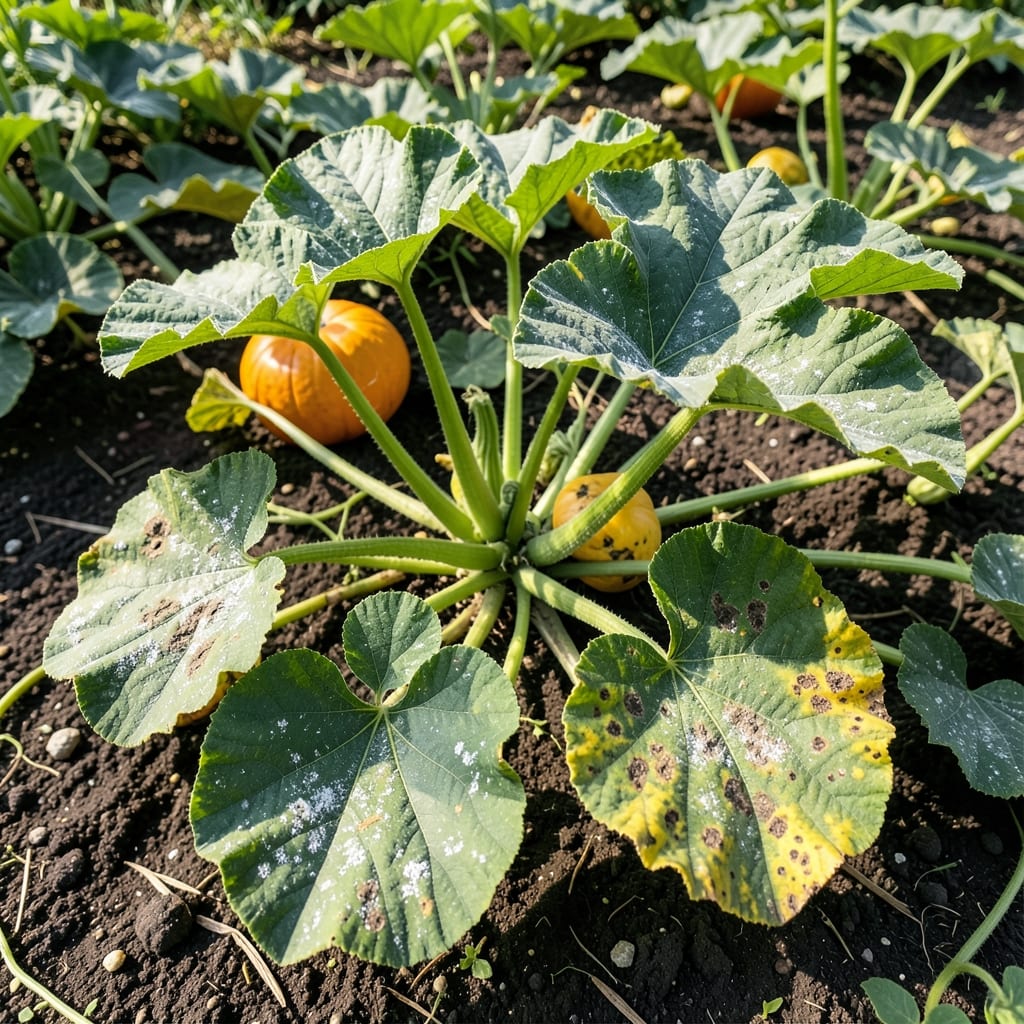
Spotted, yellowed, or powdery pumpkin leaves mean trouble. I’ve lost entire crops to leaf diseases that started as small spots but spread overnight in wet weather.
The key is catching symptoms early—downy mildew’s yellow patches, powdery mildew’s white coating, or anthracnose’s dark lesions. Each tells a different story about what’s attacking your plants.
Organic treatments work, but timing matters. Copper sprays stop fungal spread, while neem oil disrupts insect vectors. I always start with prevention: proper spacing and morning watering to keep leaves dry.
Healthy pumpkins start with vigilant leaves. One infected plant can take down your whole patch if you let it.
Pumpkin leaf diseases often stem from a mix of environmental, biological, and cultural factors. Understanding these root causes helps in prevention and targeted treatment. Below are the primary reasons behind these issues.
Fungi like Podosphaera xanthii (powdery mildew) and Pseudoperonospora cubensis (downy mildew) thrive in humid, wet conditions. These pathogens spread via spores, which germinate on leaf surfaces when moisture persists for 6+ hours. Overhead watering and poor air circulation exacerbate fungal growth.
Bacteria such as Xanthomonas campestris (bacterial leaf spot) enter through wounds or stomata (leaf pores). Splashing water, contaminated tools, or infected seeds spread these pathogens. Warm, wet weather (75–85°F) accelerates bacterial multiplication, leading to necrotic spots or blights.
Insects like aphids, cucumber beetles, and spider mites weaken pumpkin plants by feeding on leaves, creating entry points for secondary infections. Their honeydew (a sticky residue) also promotes sooty mold growth, further stressing the plant.
Overcrowding, lack of crop rotation, and improper sanitation (e.g., leaving infected debris in the field) create ideal conditions for disease recurrence. Nutrient deficiencies, particularly calcium or potassium, can also reduce plant resilience.
Extreme temperatures, drought, or waterlogging stress pumpkins, making them more susceptible to diseases. For example, sudden temperature drops can trigger powdery mildew outbreaks, while waterlogged soil encourages root rot.
Tackling pumpkin leaf diseases starts with quick action and smart care. Below are targeted fixes for common issues, paired with prevention tips to keep your plants thriving.
Mix 1 tablespoon baking soda + 1 teaspoon dish soap + 1 gallon water and spray affected leaves weekly. Prevention tip: 💡 Improve airflow by spacing plants 3–4 feet apart and watering at the base to keep foliage dry.
Apply copper-based fungicide every 7–10 days at the first sign of yellow spots. Prevention tip: ✨ Plant disease-resistant varieties like ‘Howden’ or ‘Jarrahdale’ and rotate crops yearly to break the disease cycle.
Use yellow sticky traps or kaolin clay sprays to deter beetles. For severe cases, cover young plants with floating row covers until flowering. Prevention tip: 🎯 Remove plant debris after harvest to eliminate overwintering sites.
Cut off infected leaves with sterilized shears (dip in rubbing alcohol between cuts) and dispose of them in sealed bags. Prevention tip: 🌡️ Avoid overhead watering and apply a thin layer of mulch to prevent soil-borne spores from splashing onto leaves.
Look for white, powdery spots on the upper leaf surfaces. These patches spread quickly in humid conditions and can cover entire leaves if untreated. Early detection is key to stopping the spread.
Yellowing leaves often signal downy mildew or nutrient deficiencies. Downy mildew causes yellow patches on top with grayish growth underneath. Check soil moisture and air circulation too.
A baking soda solution (1 tablespoon per gallon of water plus a drop of dish soap) works well for mild cases. For severe outbreaks, use copper-based fungicides as a last resort.
Yes, if caught early. Remove infected leaves immediately with sterilized tools and dispose of them in sealed bags. Avoid overhead watering to prevent further spread.