
Beautiful Plants For Your Interior
Beautiful Plants For Your Interior
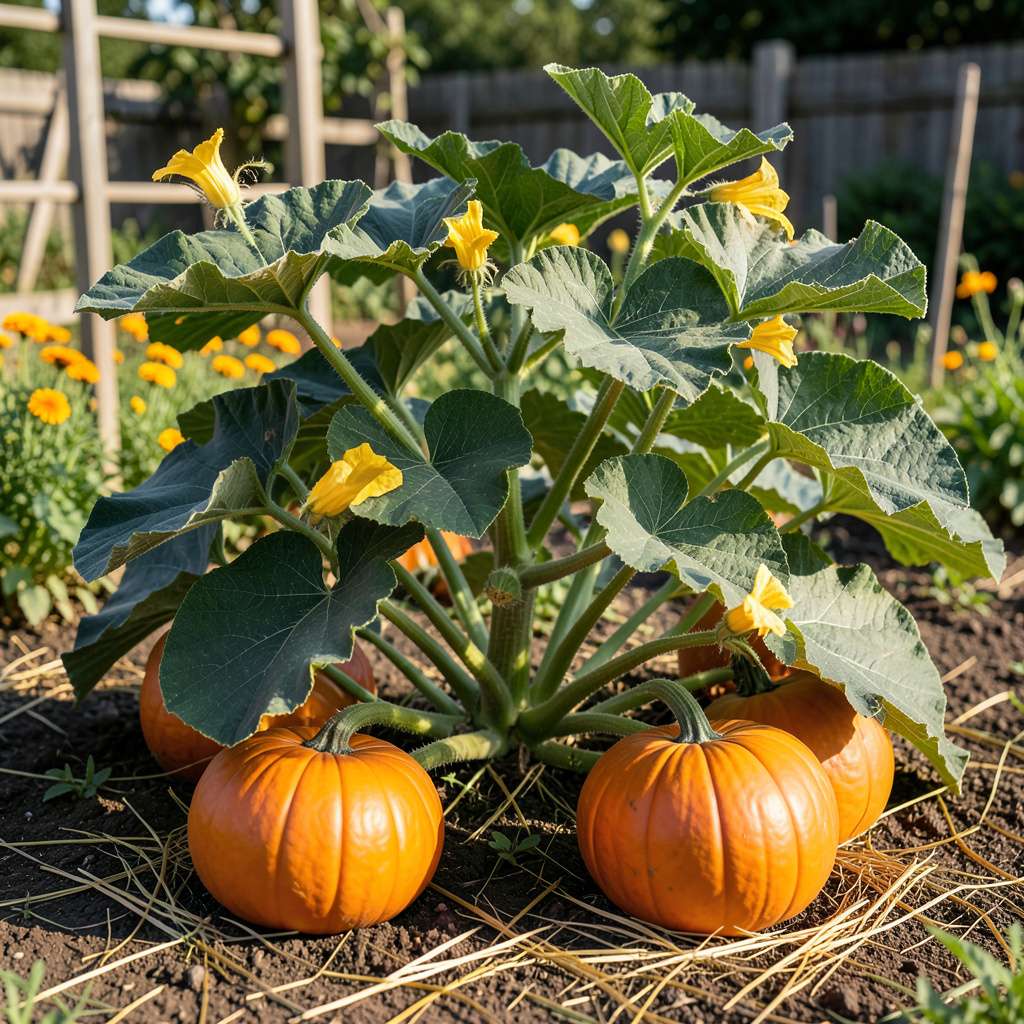
Pumpkin plants feature large, broad, lobed leaves with rough texture, sprawling vines that can stretch 10-20 feet, and bright yellow flowers. The vines are thick, hairy, and produce tendrils for climbing. Fruits develop from pollinated flowers, starting green and turning orange as they mature.
What fascinates me most about these plants is how their aggressive growth pattern serves a purpose. Those sprawling vines aren’t just random—they’re nature’s way of maximizing sun exposure and root development. 🌱 The leaves’ rough, sandpaper-like texture actually helps deter pests while their broad surface area captures maximum sunlight for photosynthesis.
I’ve noticed that gardeners often mistake young pumpkin plants for cucumbers or squash until the flowers appear. The key difference? Pumpkin leaves typically have deeper lobes and more pronounced white veins than their relatives. Those vibrant yellow blossoms aren’t just pretty—they’re your first clue that fruits will soon follow if pollination occurs successfully.
💡 In This Article
When you run your fingers across a pumpkin leaf, you’ll immediately notice its distinctive sandpaper-like texture. This roughness comes from tiny, stiff hairs called trichomes that cover both surfaces. The leaves typically span 8-12 inches wide with 3-5 deep lobes, resembling an oversized maple leaf.
Their dark green color is punctuated by prominent white veins that create a striking contrast—this vein pattern helps distinguish them from similar plants like butternut squash, which has less pronounced venation. ✨
The vines themselves are engineering marvels. They can grow 1-2 inches per day under ideal conditions, reaching lengths of 15-20 feet or more. These vines aren’t just long—they’re sturdy, with diameters up to 1 inch and covered in coarse hairs. Every 12-18 inches, you’ll find nodes where leaves, tendrils, and eventually flowers emerge.
The tendrils are particularly fascinating—they’re sensitive to touch and will curl around anything they contact within 2-3 hours, anchoring the plant as it spreads. 🌿
What truly sets pumpkin vines apart are their growth habits. Unlike bush-type plants, they follow a “runner” pattern where the main vine produces secondary vines at each node. These secondary vines can themselves produce tertiary vines, creating a complex network.
The leaves arrange themselves in a spiral pattern along the vine, with each leaf rotated about 137.5 degrees from the previous one—a mathematical pattern known as the Fibonacci angle that maximizes sunlight exposure. This growth strategy explains why a single plant can cover 25-50 square feet of garden space. 💛
The undersides of pumpkin leaves reveal another identification secret. Flip one over and you’ll see a lighter green color with raised veins and sometimes purple tinges—especially in cooler weather. This color variation occurs because the underside has fewer chlorophyll-containing cells.
The leaf stems (petiole) are another clue: they’re hollow and can grow 4-6 inches long, with a rough, ridged texture that matches the leaf surface. When crushed, healthy pumpkin leaves release a distinct cucumber-like aroma, though stronger and slightly earthier. 🌱
For comparison with similar plants, note that cucumber leaves are smaller (4-6 inches wide) with shallower lobes, while squash leaves are intermediate in size but lack the pronounced white veining. The vines of all three are hairy, but pumpkin vines are noticeably thicker and more robust.
A handy trick: pumpkin tendrils are typically 6-8 inches long when fully extended, while cucumber tendrils max out around 4 inches. This size difference becomes obvious when plants are mature. 💫
The leaf edges provide another identification marker. Pumpkin leaves have a slightly serrated margin that feels sharp if you run your finger along it from stem to tip. This differs from zucchini leaves which have smoother edges.
The leaf surface also collects morning dew differently—pumpkin leaves hold visible water droplets in their vein depressions, creating a beaded appearance that lasts until mid-morning. This dew retention actually helps the plant absorb moisture through its leaves during dry periods. ⚡
As the plant matures, the oldest leaves near the base often develop white powdery spots—this is completely normal and caused by natural mineral deposits from water evaporation. Don’t confuse this with powdery mildew, which appears as fuzzy white patches on younger leaves.
The vines also develop a woody texture at their base as they age, becoming more rigid while the growing tips remain flexible and green. This woody base can reach diameters of 1.5 inches in large varieties like Atlantic Giant pumpkins. 🌟
Pumpkin seedlings have distinct heart-shaped cotyledons (first leaves) that are smooth and bright green. Within 2-3 weeks, true leaves emerge with deep lobes and rough texture. Weeds typically have thinner, simpler leaves without this lobed pattern or sandpaper-like feel.
Small white spots on older leaves are usually mineral deposits from water evaporation—completely normal! However, fuzzy white patches on younger leaves indicate powdery mildew. Improve air circulation and apply neem oil if needed. The spots shouldn’t spread if they’re just mineral deposits.
Yes, but choose compact varieties like ‘Jack Be Little’ or ‘Baby Boo’. Use at least a 5-gallon container per plant and train vines vertically. Container plants need more frequent watering—check soil moisture daily during hot weather. Expect smaller yields than in-ground plants.
Under ideal conditions, pumpkin vines can grow 1-2 inches per day, reaching 15-20 feet total. Growth slows as fruits develop. The most rapid expansion occurs between weeks 4-8 when the plant establishes its vine network before flowering.
Male flowers appear first with straight stems and no swelling at the base. Female flowers have a tiny pumpkin-shaped bulb at their base. Both are bright yellow, but females bloom about a week after males appear. Only pollinated female flowers develop into pumpkins.
