
Beautiful Plants For Your Interior
Beautiful Plants For Your Interior
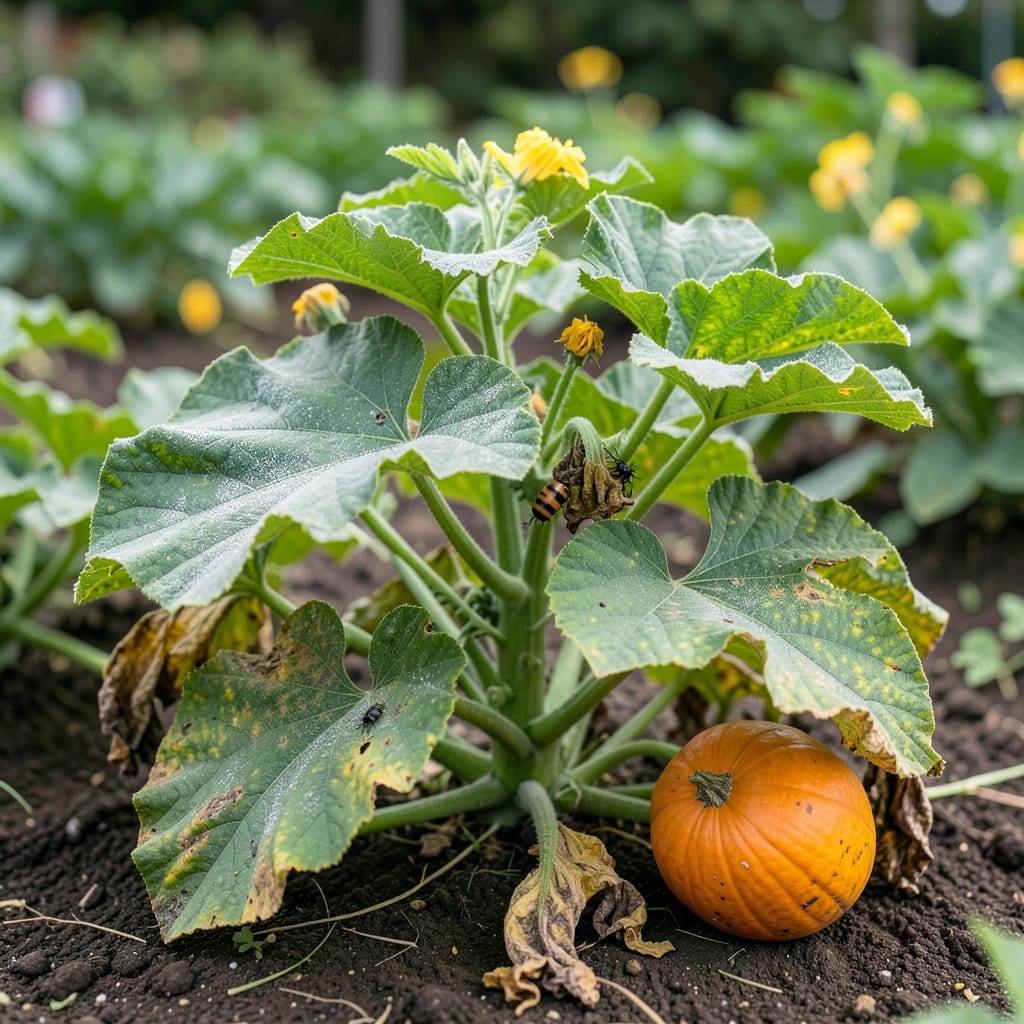
Spotted yellow leaves or white powder on your pumpkin vines mean trouble. I’ve saved entire crops by catching problems early—before they spread to the whole patch.
This guide shows you exactly what to look for, from powdery mildew to downy mildew and beyond. Clear photos make symptoms impossible to miss, even if you’re new to growing pumpkins.
You’ll learn which issues need immediate action and which you can manage with simple fixes. No guesswork, just straightforward solutions that work in any climate.
Early detection is your best defense. Here’s how to spot the warning signs before it’s too late.
Pumpkin diseases often stem from a mix of environmental, biological, and cultural factors. Understanding these causes helps you prevent and manage issues before they spread.
Excessive moisture, poor drainage, or extreme temperatures create ideal conditions for fungal and bacterial growth. Powdery mildew thrives in high humidity, while Phytophthora blight flourishes in waterlogged soil. Drought stress, on the other hand, weakens pumpkin plants, making them more susceptible to infections like Alternaria leaf spot.
Many pumpkin diseases originate from soil-borne pathogens. Fusarium wilt and Verticillium wilt are caused by fungi that persist in the soil for years, infecting plants through their roots. Crop rotation and resistant varieties are key to breaking this cycle.
Insects like cucumber beetles and aphids don’t just damage plants—they also spread viral diseases such as Cucumber mosaic virus (CMV). These pests introduce pathogens directly into plant tissues as they feed, accelerating disease spread across your pumpkin patch.
Overcrowding plants, improper spacing, or failing to remove infected debris can exacerbate disease outbreaks. Poor air circulation increases humidity around foliage, while leftover plant debris harbors overwintering pathogens. Sanitation and proper plant spacing are simple yet effective preventive measures.
Dealing with pumpkin diseases can feel overwhelming, but with the right approach, you can nurse your plants back to health. Below are practical solutions for common pumpkin issues, along with prevention tips to keep your garden thriving. 🌱
If you spot white, powdery spots on leaves, act quickly. Spray affected areas with a mix of 1 tablespoon baking soda, 1 quart of water, and a few drops of dish soap. Repeat every 7–10 days. For severe cases, use a fungicide labeled for edible plants.
Prevent it: Improve air circulation by spacing plants 3–4 feet apart. Water at the base to keep leaves dry.
Yellow patches on top of leaves with fuzzy growth underneath? Remove infected leaves immediately and avoid overhead watering. Apply copper-based fungicides as a protective measure.
Prevent it: Rotate crops yearly and use drip irrigation. Plant resistant varieties like ‘Cinderella’ or ‘Jarrahdale’.
Crush eggs and nymphs by hand or use neem oil in the early morning or late evening. For heavy infestations, apply pyrethrin-based insecticides (follow label instructions).
Prevent it: Lay cardboard traps under plants to catch adults. Clean up garden debris in fall to remove hiding spots.
Wilting vines with sticky residue? Pull and destroy infected plants to prevent spread. Cucumber beetles transmit this disease, so control them with row covers or kaolin clay.
Prevent it: Use reflective mulch to deter beetles. Plant trap crops like radishes nearby.
💡 Pro Tip: Always sanitize tools with rubbing alcohol between uses to avoid spreading pathogens. Healthy soil and proper spacing are your best defenses! ✨
Yellow spots, white powder, or brown lesions are common early warnings. Powdery mildew appears as white dust, while downy mildew shows yellow patches with fuzzy undersides.
Check leaves and vines 2-3 times per week during growing season. Early morning is ideal when dew makes symptoms more visible.
Mild cases often recover with treatment and improved care. Severe infections like bacterial wilt usually require removing the plant to protect others.
Waiting too long to act! Many gardeners miss early signs or try to save severely infected plants. Remove and destroy badly diseased foliage immediately.