
Beautiful Plants For Your Interior
Beautiful Plants For Your Interior
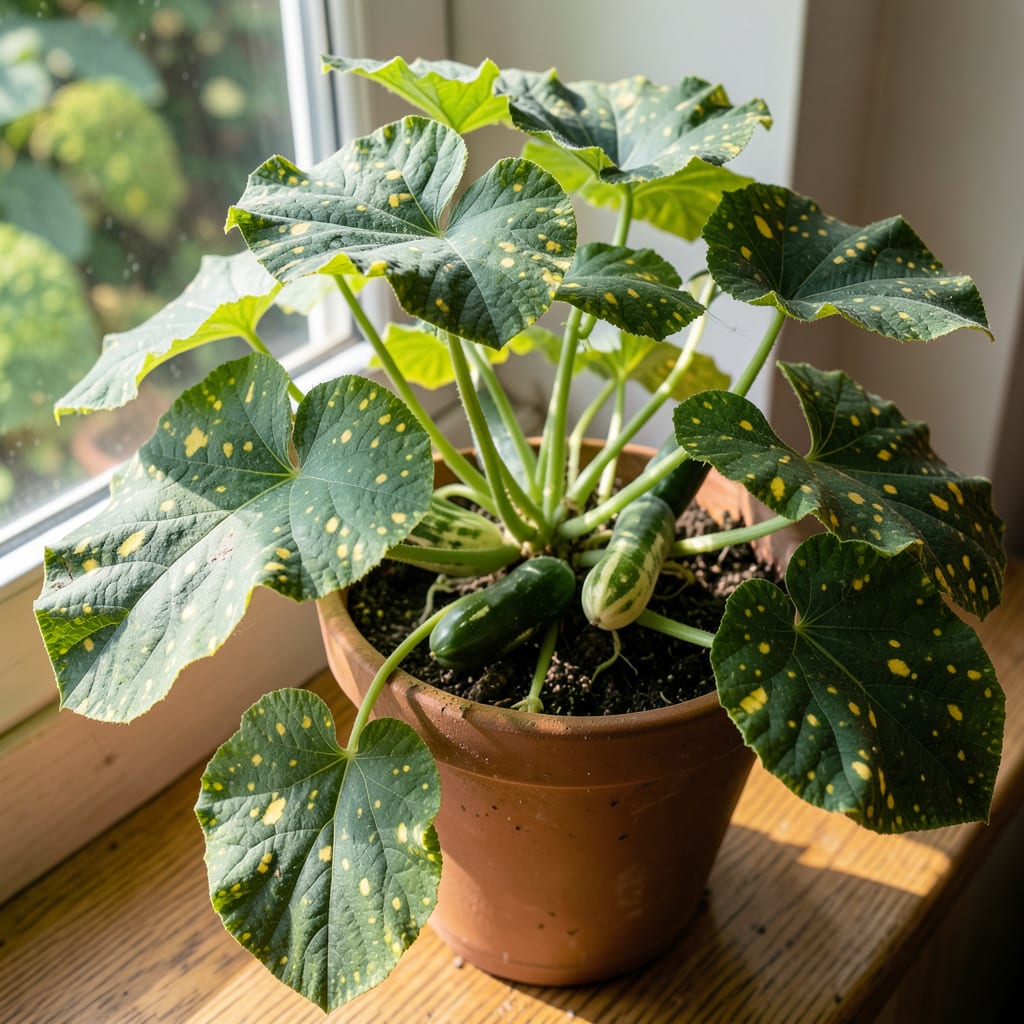
Yellow spots on cucumber leaves always mean trouble. I’ve seen this problem wipe out entire plants in 48 hours if ignored, so catching it early saves your harvest.
Most times, it’s a fungal issue or pest damage, but nutrient shortages can cause similar marks. The good news? You can fix this with simple changes to watering, air flow, or soil.
Once you spot those first yellow patches, act fast. A little observation and the right treatment will turn things around before the plant weakens.
Works for container or ground-grown cucumbers. Here’s how to diagnose and stop it for good.
Yellow spots on cucumber leaves are often a sign of underlying issues affecting plant health. Below are the most common causes, explained with actionable insights.
Powdery mildew and downy mildew thrive in humid conditions, leading to yellow or white spots on leaves. These fungi block sunlight absorption, weakening the plant. Action: Improve airflow, avoid overhead watering, and apply fungicides like copper-based sprays.
Spider mites and aphids suck sap from leaves, causing yellow stippling or spots. Check leaf undersides for webbing or tiny insects. Action: Spray with neem oil or insecticidal soap to disrupt their life cycle.
Lack of magnesium or nitrogen can trigger yellowing between leaf veins (interveinal chlorosis). A soil test confirms imbalances. Action: Use balanced fertilizers or Epsom salt (for magnesium) to restore nutrients.
Excessive sun, waterlogged soil, or temperature swings stress cucumbers, leading to yellow patches. Action: Provide shade cloth, ensure proper drainage, and maintain consistent watering.
Pseudomonas syringae causes small, water-soaked yellow spots that turn brown. It spreads via splashing water. Action: Remove infected leaves, avoid wet foliage, and use copper bactericides.
If your cucumber plants are showing yellow spots on their leaves, act fast to restore their health. Below are targeted fixes for the most common causes, along with prevention tips to keep your garden thriving.
Fix: Remove infected leaves immediately to prevent spread. Apply a copper-based fungicide or a baking soda spray (1 tsp baking soda + 1 quart water + a drop of dish soap) every 5–7 days. For bacterial issues, use a neem oil solution (2 tbsp neem oil + 1 gallon water + 1 tsp dish soap).
Prevention: Improve air circulation by spacing plants 18–24 inches apart. Water at the base of the plant (not the leaves) and avoid overhead watering in the evening. 💡 Pro tip: Rotate crops yearly to break disease cycles.
Fix: Test your soil (DIY kits are inexpensive). For nitrogen deficiency (pale yellow spots), apply a balanced fertilizer (10-10-10) or compost. For magnesium deficiency (yellow patches between veins), use Epsom salt (1 tbsp per gallon of water, sprayed on leaves).
Prevention: Enrich soil with organic matter before planting. Feed cucumbers every 3–4 weeks with a slow-release fertilizer. ✨ Pro tip: Mulch with compost to retain nutrients.
Fix: Check undersides of leaves for spider mites, aphids, or whiteflies. Blast them off with water or apply insecticidal soap (1 tbsp mild soap + 1 quart water). For severe cases, introduce beneficial insects like ladybugs.
Prevention: Encourage natural predators by planting companion flowers (e.g., marigolds, nasturtiums). Inspect plants weekly for early signs of pests. 🎯 Pro tip: Yellow sticky traps can catch whiteflies early.
Fix: If leaves are scorched (yellow-brown spots), provide shade cloth during peak sun (12–3 PM). For water stress, deep-water plants 1–2 inches per week (more in heatwaves). Adjust soil pH to 6.0–6.8 with lime (to raise) or sulfur (to lower).
Prevention: Use drip irrigation to maintain consistent moisture. Apply a 2–3 inch mulch layer to retain water and regulate soil temperature.
Yes! Waterlogged roots can’t absorb oxygen, leading to yellow spots. Allow soil to dry slightly between waterings. Use drip irrigation for consistent moisture.
Check leaf undersides for tiny bugs or webbing. Fungal spots often have fuzzy growth, while bacterial ones appear water-soaked.
Fungal and bacterial issues can spread quickly through splashing water or close contact. Remove infected leaves and avoid overhead watering.
With proper treatment, new growth appears healthy in 7-14 days. Damaged leaves won’t heal but new ones will be spot-free.
