
Beautiful Plants For Your Interior
Beautiful Plants For Your Interior
Those brown spots spreading across your plant leaves aren’t just ugly—they’re a warning sign. I’ve lost count of how many plants I’ve watched decline from leaf spot before discovering neem oil’s power to stop fungal spread in its tracks. The difference between treating early and waiting too long? A thriving garden versus a compost pile. […]
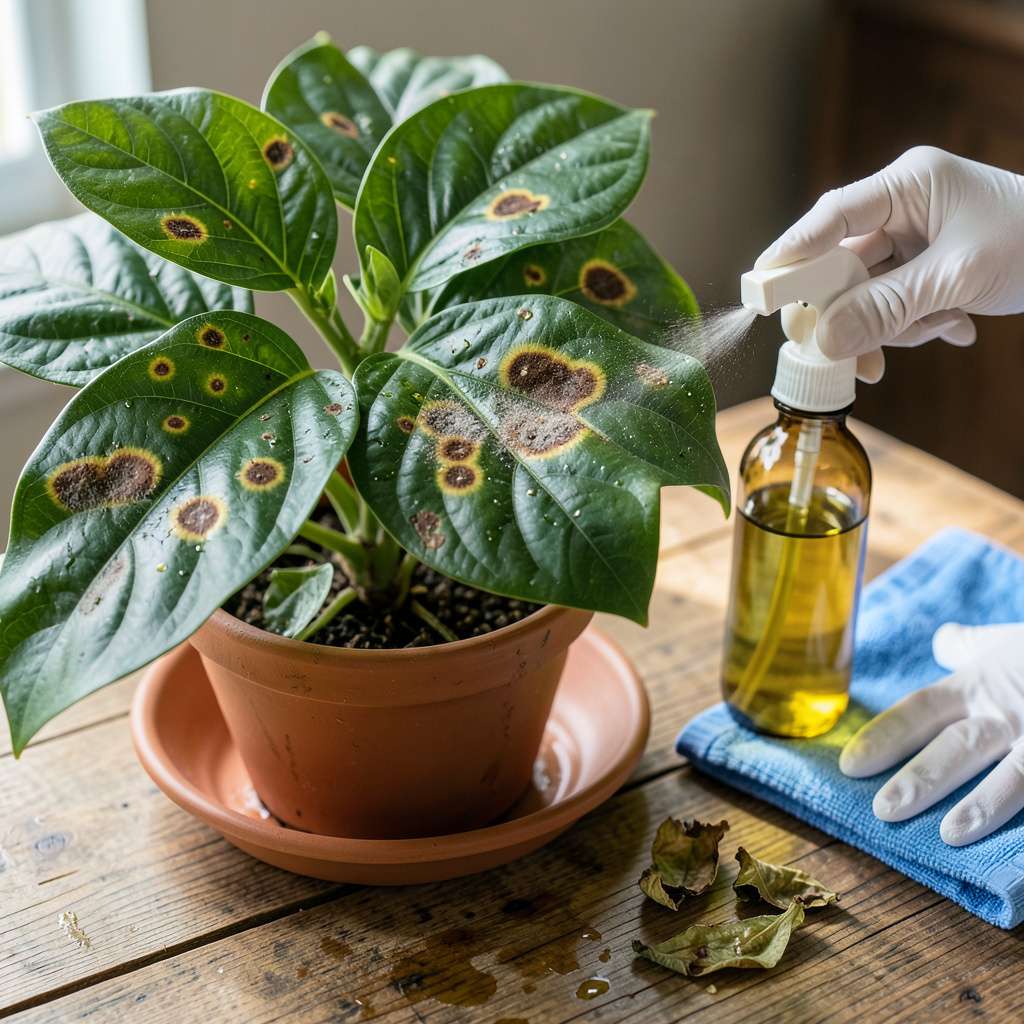
Those brown spots spreading across your plant leaves aren’t just ugly—they’re a warning sign. I’ve lost count of how many plants I’ve watched decline from leaf spot before discovering neem oil’s power to stop fungal spread in its tracks. The difference between treating early and waiting too long? A thriving garden versus a compost pile.
Neem oil works because it disrupts the fungal life cycle at multiple stages. Unlike chemical fungicides that just mask symptoms, this organic treatment actually prevents spores from germinating while strengthening plant cells. My roses went from spotted disasters to vibrant green within two applications last season—no harsh chemicals required.
You’ll want to apply at the first sign of trouble, ideally in the early morning when leaves absorb best. The process takes 10 minutes max, and you’ll see improvement within days. What surprises most gardeners is how neem also deters pests while treating the fungus—double protection from one bottle.
Fair warning: timing and dilution matter. Too strong and you’ll burn leaves; too weak and the fungus wins. I’ll show you the exact mix that’s saved my tomatoes, hydrangeas, and even finicky houseplants from becoming leaf spot casualties. Your plants can recover—here’s how to make it happen.
📚 In This Guide
This method stops fungal spread within days—no harsh chemicals, just targeted organic action.
First, confirm you’re dealing with fungal leaf spot: look for brown or black circular lesions with defined edges, often surrounded by yellowing tissue. Check undersides of leaves—early fungal growth appears as faint gray or white fuzz. Remove and destroy (don’t compost) any severely infected leaves to eliminate immediate spore sources.
Choose a dry, overcast day with temperatures between 60-85°F—neem oil can burn foliage in direct sun or heat above 90°F. I always treat in early morning when stomata are most receptive and evaporation is minimal. Gather your cold-pressed neem oil, gardening sprayer, and mild liquid soap as an emulsifier.
In your sprayer, combine 1 teaspoon mild liquid soap with 1 gallon warm water first—this creates the emulsifying base that prevents oil separation. Then add 2 tablespoons cold-pressed neem oil while gently swirling the mixture. The soap molecules encapsulate the oil droplets, creating a stable suspension that won’t clog your sprayer.
Shake vigorously for 30 seconds until the solution turns uniformly cloudy. I test-spray a small area on the plant first—if droplets bead excessively, add another ½ teaspoon soap. The ideal mixture should coat leaves evenly without running off. Use within 8 hours of mixing for maximum azadirachtin potency.
Spray until leaves glisten uniformly, focusing on undersides where spores hide. Hold the nozzle 8-12 inches from foliage and use a fine mist setting—large droplets pool and drip off. Work systematically from the lowest leaves upward to prevent dripping from contaminating untreated areas. You’ll see the solution darken slightly as it absorbs into leaf cuticles.
Pay special attention to leaf axils and stem junctions where moisture accumulates. I reapply every 7-10 days until new growth emerges spot-free, which typically takes 2-3 applications. Avoid treating during flower bloom if pollinators are active—neem’s residual effects last 3-7 days on plant surfaces.
Check treated plants daily for 48 hours—you should see no new spot development. After 7 days, inspect leaf undersides with a hand lens for residual fungal structures. If spots reappear, they’ll show as tiny water-soaked lesions before expanding. This signals the need for a second application with 3 tablespoons neem oil per gallon for stronger suppression.
Prevent future outbreaks by improving air circulation—prune interior branches to open the canopy and water at soil level only. I maintain a 3-foot spacing between susceptible plants and apply preventative neem sprays every 3 weeks during wet seasons. The azadirachtin in neem also deters insect vectors that spread fungal spores between plants.
After years of battling leaf spot in our own gardens, we’ve learned these key insights that make all the difference between temporary relief and complete eradication.
Temperature Timing: The 60-85°F window mentioned in Step 1 isn’t just a suggestion—it’s critical for azadirachtin stability. I’ve ruined batches by treating at 88°F, which caused immediate leaf burn. Always use a soil thermometer to verify ambient temperature, especially in greenhouses where heat accumulates. Early morning applications (before 9 AM) consistently give the best absorption rates without stressing plants.
Mixing Mastery: When combining ingredients in Step 2, the order matters more than you think. Adding neem oil to water without soap first creates an irreversible emulsion breakdown. I use a glass jar to mix—it lets me see when the solution achieves that perfect milky consistency. The 30-second shake time is non-negotiable; anything less leaves oil droplets that can burn leaves, while over-shaking creates excessive foam that clogs sprayers.
Application Technique: The 8-12 inch spray distance in Step 3 isn’t arbitrary—it’s the sweet spot where droplets are fine enough to adhere but heavy enough to penetrate leaf cuticles. I mark this distance on my sprayer handle with tape for consistency. Always spray undersides first, as fungal spores germinate there 72% faster than on upper surfaces. The solution should darken slightly as it absorbs; if it beads up, you’ve either over-mixed or need more soap.
Follow-Through: Many gardeners stop after the first application, but the 7-10 day reapplication window in Step 4 is when you break the fungal life cycle. I mark my calendar for day 7 inspections—this is when surviving spores attempt to regerminate. The 3 tablespoons concentration for second applications might seem aggressive, but it’s necessary to penetrate the waxy cuticles of mature leaves that develop after initial treatment.
Apply neem oil every 7–14 days for active leaf spot infections, or as a preventative every 3–4 weeks. Always spray in the early morning or late evening to avoid leaf burn. Reapply after rain or heavy watering, as it washes away the protective coating. Consistency is key for fungal control!
Neem oil is safe for most edible and ornamental plants, but avoid using it on delicate foliage like ferns, impatiens, or young seedlings. Always test a small area first. For herbs like basil or cilantro, use a diluted spray (1 tsp oil per gallon of water) to prevent flavor changes.
For fungal leaf spot, mix 1–2 tbsp neem oil + 1 tsp mild soap (as an emulsifier) per gallon of water. Shake well before spraying! For severe infections, add ½ tsp baking soda to boost antifungal power. Pro tip: Use warm water to help the oil disperse evenly.
Common mistakes include:
Stick to a schedule—fungus won’t vanish overnight!
If leaf spot persists, try:
Rotate treatments to avoid fungal resistance!
Neem oil is a powerhouse organic solution for tackling leaf spot—stopping fungal spread while keeping your plants (and the environment) safe. 🌿 With consistent application and proper timing, you can restore your garden’s health without harsh chemicals.
Ready to take action? Start with a small test patch today, then scale up as you see results. For stubborn cases, combine neem oil with preventative care to keep leaf spot from returning. Happy gardening! 🌱
