
Beautiful Plants For Your Interior
Beautiful Plants For Your Interior
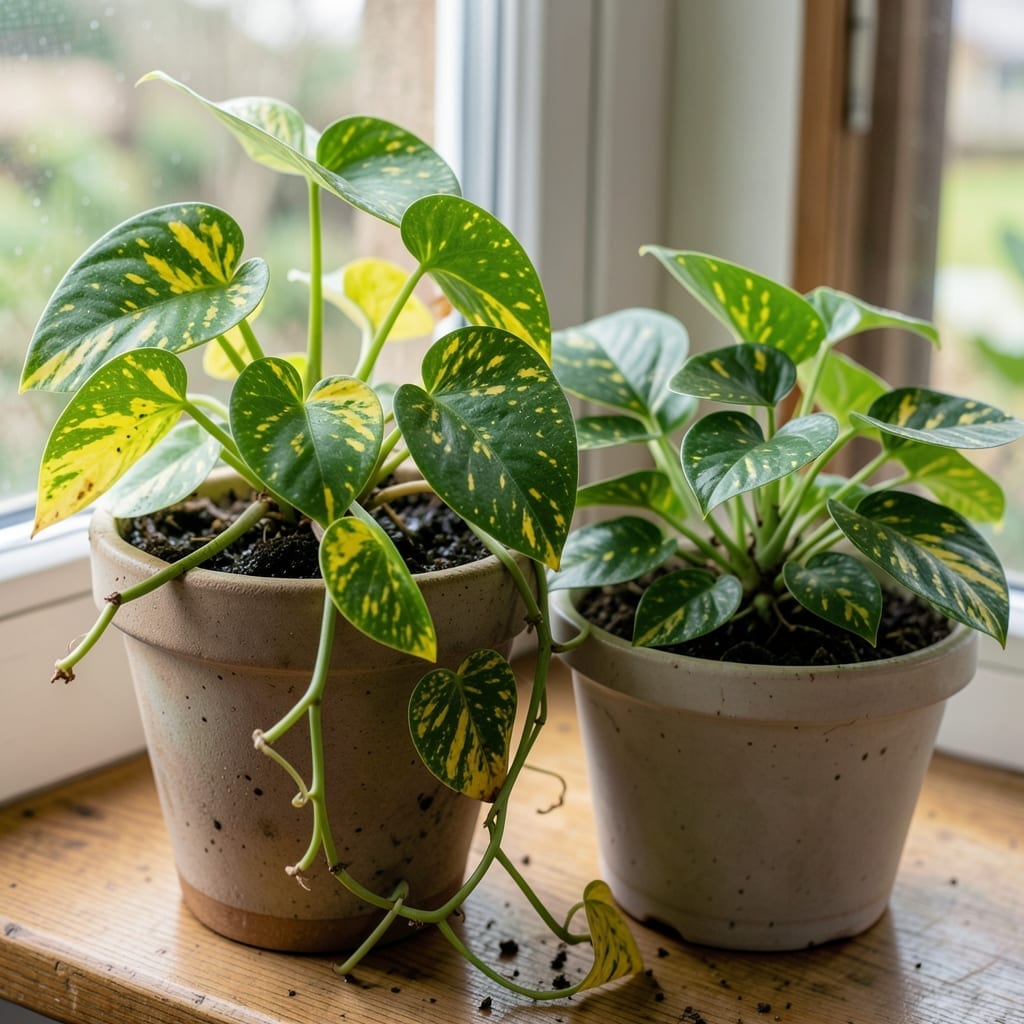
Yellow leaves and mushy stems mean your money plant is drowning. I’ve nursed dozens back from the brink by catching this early.
The fix starts with stopping all water immediately. Move it to bright, indirect light and check the roots for rot—black, squishy ones need trimming with clean scissors.
Repot in fresh, well-draining soil with a pot that has drainage holes. Water only when the top 2 inches of soil feel dry.
Most bounce back within 2-3 weeks with this approach. Prevention is simpler than rescue, so let’s get that watering schedule right.
Overwatering a money plant (Epipremnum aureum) isn’t just about giving it too much water—it’s often the result of misaligned care habits. Below are the most common causes, rooted in plant biology and environmental factors.
Money plants thrive in well-draining soil and containers. When pots lack drainage holes or the soil retains too much moisture (e.g., dense clay or peat-heavy mixes), water pools around the roots. This suffocates the root system, preventing oxygen uptake and fostering root rot—a fungal or bacterial infection that decays roots in anaerobic conditions.
Many plant owners water on a rigid schedule (e.g., “every Monday”) rather than checking soil moisture. Money plants prefer their top 1–2 inches of soil to dry out between waterings. Overwatering disrupts the osmotic balance in root cells, leading to edema (cell bursting) and nutrient uptake issues.
In dimly lit or highly humid environments, evaporation slows, leaving soil soggy for longer. Money plants in such conditions need less frequent watering because their photosynthesis and transpiration rates drop, reducing their water demand.
Large containers hold excess soil, which retains moisture longer than the plant can use. This creates a waterlogged microclimate around the roots, increasing the risk of rot. Always match pot size to the plant’s root ball.
If your money plant is showing signs of overwatering, quick action is key. Below are targeted solutions for common symptoms, along with prevention tips to keep your plant thriving.
If the leaves are turning yellow, it’s a classic sign of excess water. Stop watering immediately and let the top 1-2 inches of soil dry out completely before watering again. Use your finger to test moisture—if the soil feels damp, wait another day or two. For severe cases, repot the plant in fresh, well-draining soil to prevent root rot.
Prevention tip: 💡 Water only when the topsoil is dry to the touch, and always use pots with drainage holes.
Drooping leaves often mean the roots are suffocating. Remove the plant from its pot and inspect the roots. Trim any black, mushy roots with clean scissors, then repot in a mix of potting soil and perlite or sand to improve aeration. Avoid compacted soil, which traps excess moisture.
Prevention tip: ✨ Use a terracotta pot, which wicks away moisture faster than plastic.
White mold or a funky smell indicates fungal growth from overwatering. Move the plant to a breezy spot with indirect sunlight and reduce humidity around it. If mold is present on the soil surface, scrape off the top layer and replace it with fresh soil. For stubborn fungus, treat with a natural fungicide like neem oil.
Prevention tip: 🌡️ Keep your plant in a well-ventilated area and avoid misting it too often.
If the roots are brown, mushy, and falling apart, your plant may have root rot. Act fast: Remove all affected roots, disinfect the remaining healthy ones with hydrogen peroxide (1 part peroxide to 3 parts water), and repot in a clean container with fresh, dry soil. Avoid watering for at least a week to let the roots recover.
Prevention tip: 🎯 Always use a pot with drainage holes and a saucer to catch excess water—empty it after each watering.
Water only when the top 1-2 inches of soil feel completely dry. This usually means every 7-10 days in average conditions, but always check first.
Healthy roots are firm and white, while rotten ones turn brown or black and feel mushy. A foul odor from the soil is another telltale sign.
Yes, if you act quickly. Trim all rotten roots, repot in fresh soil, and hold off on watering for at least 1 week. Most bounce back within 2-3 weeks.
Cooler temperatures and lower light slow evaporation and plant growth, so the soil stays wet longer. Always reduce watering frequency during colder months.