
Beautiful Plants For Your Interior
Beautiful Plants For Your Interior
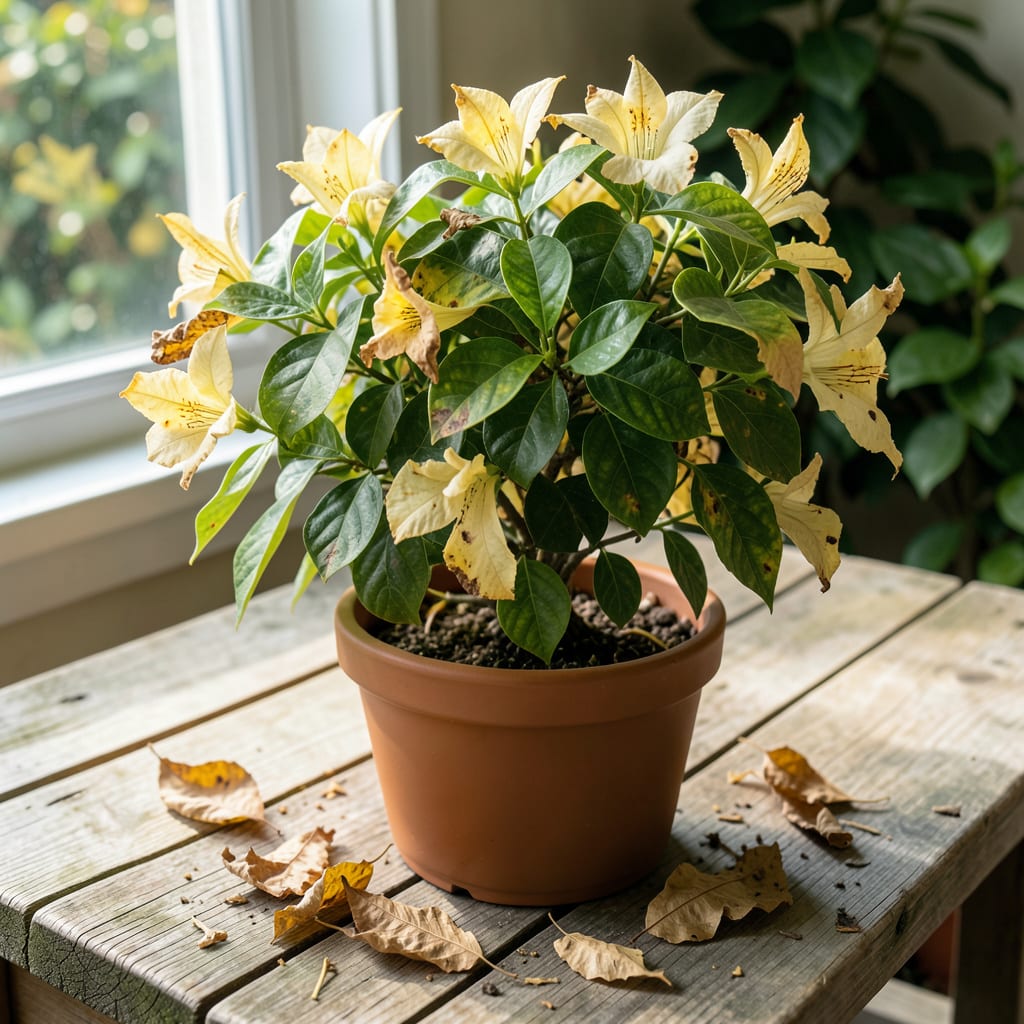
Watching your mandevilla’s vibrant leaves turn yellow and drop is frustrating, but it’s usually fixable. I’ve rescued countless plants from this exact issue, and the solution often comes down to adjusting your care routine.
Most cases stem from overwatering, inconsistent moisture, or a sudden change in environment. Sometimes it’s as simple as moving your plant to a spot with better light or adjusting your watering schedule to match the season.
Other culprits include nutrient deficiencies, pests hiding under leaves, or temperature stress. The good news? Mandevillas are tough and often bounce back quickly once you identify and address the problem.
With a few targeted changes, you’ll see fresh, vibrant green growth returning in 2-3 weeks. Let’s diagnose what’s happening with your plant.
Mandevilla leaves turning yellow and dropping is often a sign of stress. Several factors can trigger this, and identifying the root cause is key to reviving your plant. Below are the most common culprits:
Mandevillas thrive in warm climates (60–80°F). Exposure to cold drafts, frost, or sudden temperature drops disrupts chlorophyll production, causing yellowing (chlorosis) and leaf drop. Even indoor plants near AC vents or drafty windows can suffer.
Overwatering leads to root rot, which prevents nutrient uptake and turns leaves yellow. Underwatering, on the other hand, causes dehydration, leading to crispy, yellow leaves. Mandevillas prefer moist but well-draining soil—soggy or bone-dry conditions stress the plant.
A lack of nitrogen, magnesium, or iron can cause yellowing. Nitrogen deficiency starts with lower leaves turning pale, while magnesium or iron shortages often appear as interveinal chlorosis (yellowing between veins). Poor soil or infrequent fertilizing may be to blame.
Spider mites, aphids, or whiteflies sap plant juices, weakening the mandevilla. Their feeding damage often results in yellow spots, stunted growth, or leaf drop. Check the undersides of leaves for tiny pests or webbing.
Pathogens like powdery mildew or leaf spot can cause yellow patches or premature defoliation. These thrive in humid, poorly ventilated conditions. Waterlogged foliage (e.g., from overhead watering) increases infection risk.
Sudden changes—such as transplant shock, repotting, or moving the plant—can stress mandevillas, leading to temporary yellowing. Even excessive direct sun (without acclimation) can scorch leaves, turning them yellow or brown.
Once you’ve identified the cause, these targeted fixes will help nurse your mandevilla back to health.
Let the top 1–2 inches of soil dry out between waterings. Repot the plant in a container with drainage holes if it’s sitting in water. Use a well-draining potting mix with perlite or sand to improve aeration. Prevention tip: Stick your finger in the soil—if it feels damp, wait to water. 💡
Move your mandevilla to a spot with 6–8 hours of bright, indirect sunlight daily. If growing indoors, place it near a south- or west-facing window. For outdoor plants, ensure it’s not shaded by larger plants or structures. Prevention tip: Rotate the pot weekly for even light exposure. ✨
Feed your plant with a balanced, water-soluble fertilizer (10-10-10 or 20-20-20) every 2–4 weeks during the growing season. Yellow leaves may signal a lack of nitrogen (lower leaves) or magnesium (interveinal yellowing). For magnesium, add 1 tablespoon of Epsom salt per gallon of water and apply monthly. Prevention tip: Avoid over-fertilizing—flush the soil with water every few months to remove salt buildup. 🎯
Inspect the undersides of leaves for spider mites, aphids, or whiteflies. Spray off pests with a strong stream of water, then apply neem oil or insecticidal soap weekly until they’re gone. For severe cases, use a systemic insecticide. Prevention tip: Wipe leaves with a damp cloth regularly to deter pests. 🌡️
Mandevillas thrive in 60–80°F (15–27°C). If temperatures drop below 50°F (10°C), move potted plants indoors. Avoid placing them near cold drafts, air conditioners, or heaters. Prevention tip: Acclimate plants gradually when moving them outdoors in spring. 🌡️
Water when the top 1-2 inches of soil feel dry. Typically, this means 2-3 times per week in hot weather and once weekly in cooler months. Always check soil moisture first to avoid overwatering.
Yes, excessive direct sunlight can scorch leaves, causing yellow or brown patches. Acclimate your plant gradually to new light conditions. Mandevillas prefer bright, indirect light for 6-8 hours daily.
Use a balanced water-soluble fertilizer (10-10-10 or 20-20-20) every 2-4 weeks during growing season. For magnesium deficiency, add 1 tablespoon Epsom salt per gallon of water monthly.
Inspect the undersides of leaves for tiny bugs or webbing. Look for spider mites, aphids, or whiteflies. Use a magnifying glass if needed, and treat with neem oil if pests are found.
