
Beautiful Plants For Your Interior
Beautiful Plants For Your Interior
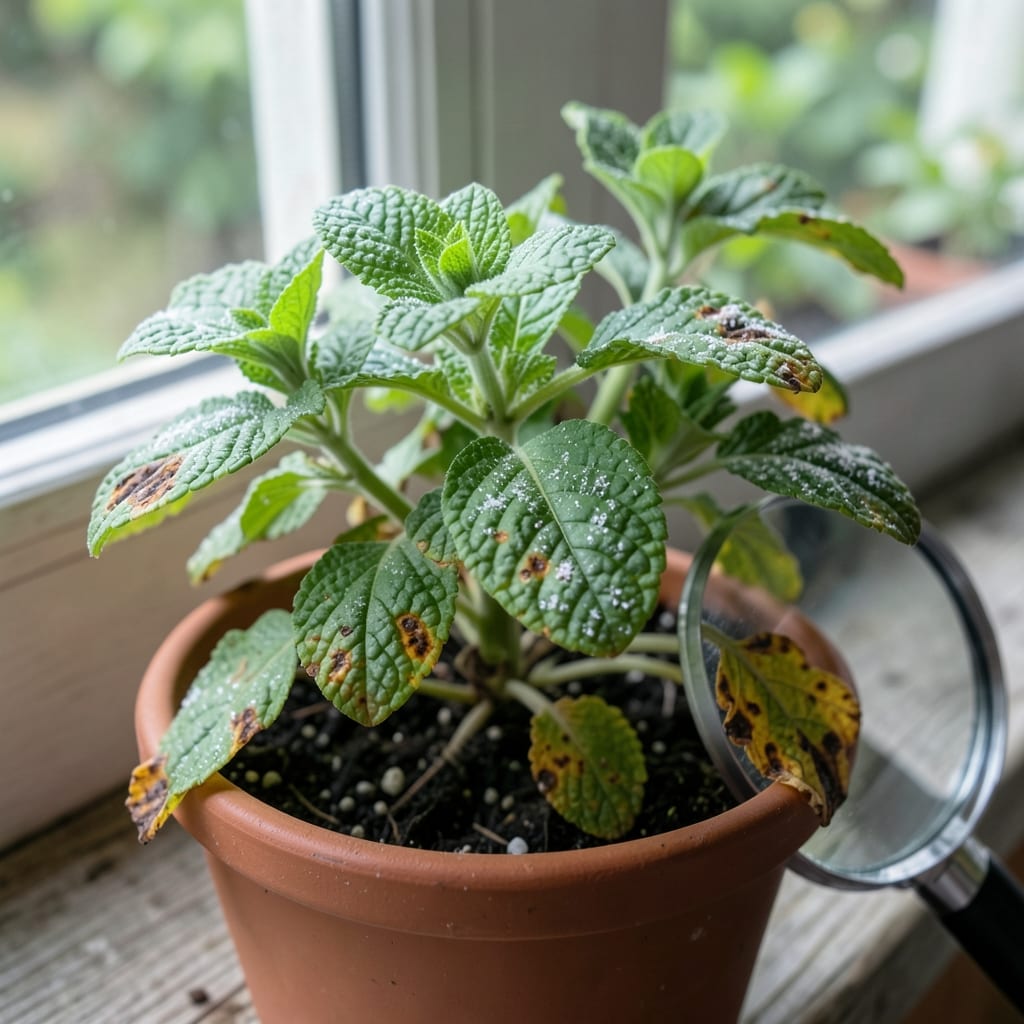
Nothing stings like watching healthy mint turn spotty overnight. I’ve lost entire patches to rust and powdery mildew when I missed the first warning signs. Early detection is your only defense.
Most mint diseases spread through overcrowding, wet foliage, or contaminated soil. The good news? You can stop them before they take hold with simple adjustments to airflow and watering habits.
You’ll learn to spot the subtle differences between anthracnose, verticillium wilt, and mint rust—each requiring a different approach. One treatment rarely fixes everything.
Prevention starts with spacing, clean tools, and morning watering. Even my most neglected beds stay healthy now with these basics.
Mint plants are hardy, but even they can fall prey to diseases when conditions aren’t ideal. Understanding the root causes helps you prevent issues before they start. Here’s why mint plant diseases take hold:
Excess moisture is a primary culprit. Mint thrives in consistently moist soil, but soggy conditions create the perfect breeding ground for fungal pathogens like Pythium and Phytophthora. These waterborne fungi attack the roots, leading to root rot, wilting, and yellowing leaves. Poor drainage exacerbates the problem, trapping water around the roots and starving them of oxygen.
Mint loves humidity, but stagnant air combined with high moisture levels invites foliar diseases such as powdery mildew and rust. These fungi spread quickly in crowded plantings or shaded areas where air circulation is limited. Without proper airflow, spores settle on leaves, germinate, and infect the plant.
Insects like spider mites, aphids, and whiteflies don’t just damage mint directly—they also spread viral diseases. For example, cucumber mosaic virus and mint virus X are often transmitted by pest vectors. Weakened plants are more susceptible to secondary infections, creating a vicious cycle of decline.
Extreme heat or cold can stress mint, making it vulnerable to disease. Heat stress weakens the plant’s natural defenses, while sudden frosts can damage foliage, providing entry points for pathogens. Mint prefers temperatures between 55–70°F (13–21°C); outside this range, its resistance drops.
Fungal and bacterial spores can linger in unsterilized soil or on gardening tools. Reusing contaminated pots, pruners, or even gloves can introduce diseases like Verticillium wilt or bacterial leaf spot to healthy plants. Always sanitize tools and use fresh, well-draining soil to minimize risk.
Keep your mint thriving with these targeted fixes for common issues. Act fast to save your plants and prevent future outbreaks.
Fix: Remove infected leaves immediately and spray the plant with a neem oil solution (1 tbsp neem oil + 1 tsp dish soap + 1 liter water). Reapply every 5–7 days until the issue clears.
Prevent: Improve airflow around plants by spacing them 12–18 inches apart. Water at the base in the morning to keep foliage dry. 💡 Pro tip: A baking soda spray (1 tsp baking soda + 1 quart water + a few drops of soap) can also deter mildew.
Fix: Blast mites off with a strong stream of water, then apply insecticidal soap or horticultural oil. Repeat every 3–4 days for 2 weeks to break their life cycle.
Prevent: Mist plants regularly to increase humidity (mites thrive in dry conditions). Introduce predatory mites or ladybugs for natural control. 🌡️ Keep an eye on plants in hot, dry weather—mites love these conditions.
Fix: Stop watering immediately and let the soil dry out. Trim black, mushy roots with sterilized scissors and repot in fresh, well-draining soil. Use a fungicide drench (like copper-based) if the rot is severe.
Prevent: Plant mint in containers with drainage holes and use a sandy loam mix. Water only when the top inch of soil is dry. ✨ Overwatering is the #1 cause—mint prefers moist but not soggy soil.
Fix: Prune infected leaves and dispose of them in the trash (not compost). Apply a copper fungicide or sulfur-based spray weekly until symptoms disappear.
Prevent: Avoid overhead watering and keep the garden clean of fallen debris. 🎯 Rotate crops if growing mint in the same spot yearly to reduce fungal spores in the soil.
Look for white powdery spots, orange rust-colored pustules, or blackened stems. Powdery mildew appears as white dust, while rust shows as tiny orange bumps on leaf undersides.
Remove infected leaves or stems immediately with sterilized tools. Isolate the plant and avoid overhead watering. Neem oil or copper fungicides can halt further spread.
Yes! Root rot from soggy soil is a common killer. Mint loves moisture but needs well-draining soil. Water only when the top inch feels dry to prevent fungal growth.
Fungal spores can winter in soil. Rotate planting spots yearly and clean up all debris. Sterilize tools and use fresh soil to reduce recurrence risk.